How Drone Cleaning Helps Maintain Warehouses and Large Commercial Buildings
TL;DR
- Drone power washing services offer a safer and faster alternative to traditional exterior cleaning by removing the need for scaffolding, lifts, and large on-site crews while improving efficiency and reducing operational disruption.
- They are ideal for high-rise buildings, warehouses, and industrial facilities, where tethered drone systems improve safety, reduce labor and setup time, and enable remote cleaning of hard-to-reach surfaces.
Why More Commercial Properties Are Switching to Drone Power Washing
Maintaining warehouses, industrial facilities, and large commercial buildings has traditionally required expensive scaffolding, suspended platforms, and significant labor. These methods can create operational delays, increase safety risks, and make regular exterior maintenance difficult.
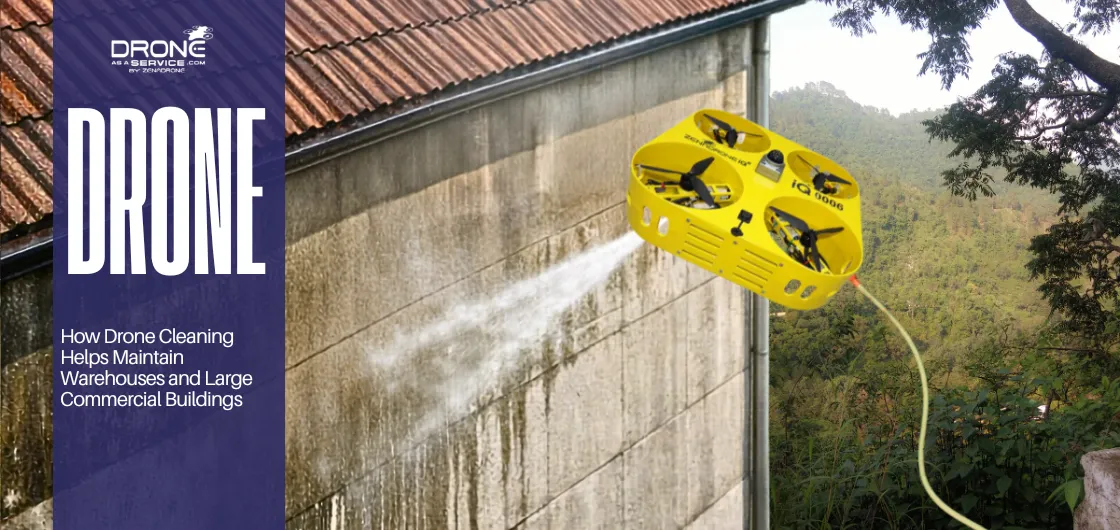
Drone power washing services are changing that approach. Instead of relying on workers operating at dangerous heights, companies can now use UAV-based cleaning systems that deliver high-pressure washing while operators remain safely on the ground.
For property managers, facility operators, and industrial maintenance teams, this creates a more practical way to clean exterior surfaces while minimizing disruption to daily operations.
In many commercial environments, drone-assisted cleaning has helped reduce setup complexity and improve maintenance efficiency compared to conventional cleaning methods. The technology is also becoming increasingly popular for buildings with difficult architectural layouts, sensitive industrial zones, and hard-to-access surfaces.
How Drone Power Washing Services Work
Pressure washing drone services use specialized UAVs (unmanned aerial vehicles) equipped with stabilized high-pressure spray systems designed for exterior surface cleaning.
Unlike traditional methods that depend on lifts or suspended crews, operators control the drone remotely from the ground while monitoring the cleaning process through live video feeds. This allows precise cleaning of building facades, roofs, storage tanks, solar installations, and industrial structures.
Many commercial systems also use tethered cleaning drones connected to a continuous ground-based water and power source. This setup supports longer operational periods without the limitations associated with onboard batteries or water tanks.
Modern drone cleaning systems are designed with:
- Stabilized flight controls for precise movement
- High-pressure nozzles for exterior surface cleaning
- Real-time monitoring systems
- Tethered power and water delivery
- Advanced obstacle awareness and positioning systems
Experienced operators can adjust water pressure, cleaning angles, and flight positioning depending on the material being cleaned, helping protect sensitive surfaces while maintaining consistent cleaning performance.
When Drone Cleaning Makes More Sense Than Traditional Methods
Choosing between drone cleaning and conventional pressure washing depends on the building layout, accessibility, safety requirements, and operational limitations of the site.
High-Rise Buildings
Cleaning tall commercial structures often requires extensive scaffolding installation or suspended rope systems. These setups increase labor costs and may interrupt building operations.
High-rise drone cleaning allows operators to access upper-level surfaces quickly while keeping technicians safely on the ground. This reduces setup requirements and minimizes reliance on heavy access equipment.
Hard-to-Reach Surfaces
Modern commercial buildings frequently include glass facades, curved structures, rooftop installations, and architectural elements that are difficult to clean manually.
Drone pressure washing systems can maneuver around these complex areas more efficiently while reducing the physical strain associated with manual cleaning operations.
Safety-Sensitive Industrial Environments
Industrial plants, refineries, logistics facilities, and processing centers often contain hazardous zones where minimizing worker exposure is critical.
Using drone cleaning for industrial facilities helps maintenance teams perform exterior cleaning tasks while limiting direct exposure to elevated surfaces, machinery, heat sources, or restricted operational areas.
In some industrial maintenance projects, remote cleaning technology has also helped reduce downtime by allowing certain cleaning tasks to be completed without major operational shutdowns.
How Drone Power Washing Improves Safety for Workers and Buildings
Traditional pressure washing methods often require workers to operate from ladders, suspended platforms, or elevated scaffolding for long periods of time. These environments increase physical fatigue and create additional safety risks.
Drone-assisted exterior cleaning significantly reduces those concerns by allowing operators to remain safely on the ground during the cleaning process.
Reduced Height-Related Risks
One of the biggest advantages of aerial cleaning systems is the ability to perform safe building cleaning without scaffolding. Operators maintain control of the drone remotely while avoiding direct exposure to dangerous heights.
This approach helps reduce the risks associated with falls, unstable platforms, and suspended equipment.
Lower Physical Strain on Workers
Manual cleaning crews often manage heavy hoses, repetitive movement, and physically demanding positioning for extended periods.
Drone cleaning systems handle much of the physical workload while maintaining steady cleaning performance across large surfaces.
Better Operational Visibility
Most commercial drone cleaning systems include real-time monitoring cameras that allow ground crews to observe cleaning progress continuously.
This visibility helps operators adjust positioning carefully around windows, coatings, solar installations, and other sensitive exterior materials.
For facilities with strict safety protocols, remote cleaning operations can also help simplify site safety management compared to large scaffold-based setups.
Common Commercial and Industrial Applications of Drone Cleaning
Drone cleaning services are now being used across multiple industries where large-scale exterior maintenance is difficult, time-consuming, or risky.
Commercial Buildings and Skyscrapers
Property managers use aerial power washing systems to maintain glass facades, office towers, shopping centers, and multi-story commercial properties.
Because drones require less setup infrastructure than conventional methods, cleaning operations can often be completed with less disruption to tenants, entrances, and pedestrian traffic.
Warehouses and Logistics Facilities
Large warehouses and distribution centers collect dust, pollution, and environmental buildup across exterior walls and roofing systems.
Drone-assisted cleaning allows facility managers to maintain these large surfaces more efficiently while avoiding the delays associated with large access equipment.
Industrial Facilities and Storage Tanks
Drone cleaning for industrial facilities is increasingly used around storage tanks, vertical infrastructure, processing facilities, and manufacturing plants.
The ability to navigate around piping systems, ventilation structures, and elevated industrial equipment makes drones useful in environments where traditional access methods are difficult.
Solar Panel Installations
Dust accumulation can affect solar panel efficiency over time.
Drone cleaning for solar panels provides a safer way to remove dirt and debris from large solar arrays while reducing the need for technicians to walk directly across panel installations.
Infrastructure Maintenance
Maintenance teams also use drones for cleaning bridges, towers, elevated structures, and public utility infrastructure.
Regular exterior cleaning can help improve inspection visibility while supporting long-term infrastructure maintenance programs.
Why Drone Cleaning Services Improve Speed and Operational Efficiency
One of the main reasons businesses adopt drone power washing services is the ability to complete cleaning operations more efficiently than traditional access-based methods.
Faster Deployment
Traditional cleaning projects often require extensive setup involving lifts, safety barriers, scaffolding, and multiple crew members.
Drone systems can typically be deployed much faster, allowing cleaning operations to begin with fewer logistical delays.
Continuous Cleaning Operations
Tethered cleaning drones receive continuous water and power from ground-based systems, allowing operators to maintain steady cleaning cycles across large areas.
This helps improve productivity while reducing interruptions associated with battery changes or equipment repositioning.
Reduced Operational Disruption
Commercial facilities benefit from reduced downtime because drone systems require less physical infrastructure around the building.
For warehouses, office complexes, and industrial sites, this means exterior maintenance can often be completed while normal operations continue.
In many cases, companies choose drone-assisted cleaning because it helps balance operational continuity with ongoing facility maintenance requirements.
Technologies Behind Modern Drone Power Washing Systems
Tethered cleaning drones combine several advanced technologies to support safe and controlled exterior cleaning.
Tethered Water and Power Delivery
Most commercial cleaning drones remain connected to a ground station that continuously supplies water and power.
This setup supports longer operational sessions while reducing aircraft weight.
Stabilized High-Pressure Spray Systems
Drone cleaning systems use specially engineered nozzles and stabilization controls that help counter water pressure recoil during operation.
These features allow the drone to maintain stable positioning while delivering consistent cleaning performance.
Precision Flight Control Systems
Modern UAV cleaning platforms use sensors, positioning systems, and flight-control software to maintain accurate movement around buildings and industrial structures.
This level of precision is especially important when operating near glass surfaces, rooftop equipment, or architectural features.
Drone Power Washing vs Traditional Cleaning Methods
Comparing drone power washing with traditional cleaning methods highlights major differences in safety, deployment speed, labor requirements, and operational flexibility.
| Feature | Drone Power Washing | Traditional Power Washing |
| Project Cost | Lower equipment and labor requirements in many commercial projects | Higher costs from scaffolding, lifts, and larger crews |
| Time Efficiency | Faster deployment and quicker surface coverage | Longer setup times and slower manual progress |
| Worker Safety | Remote ground-based operation reduces height exposure | Greater reliance on ladders, lifts, and elevated rigs |
| Accessibility | Effective for drone facade cleaning and elevated structures | Limited by physical reach and equipment access |
| Operational Disruption | Minimal obstruction around entrances and work zones | Larger equipment setups may affect site operations |
When evaluating drone cleaning vs. traditional cleaning, many businesses focus on reducing safety exposure, minimizing downtime, and improving long-term maintenance efficiency.
Is Drone Power Washing Cost-Effective for Large Properties?
For many commercial properties, drone-assisted exterior cleaning can provide meaningful operational and financial advantages.
Traditional cleaning often requires multiple workers, rented lifts, scaffolding systems, and extended setup periods. Drone cleaning services reduce much of that logistical complexity.
Because smaller ground crews can manage large cleaning projects remotely, businesses may reduce labor intensity while improving deployment flexibility.
This is particularly beneficial for:
- Warehouses
- Distribution facilities
- Manufacturing plants
- High-rise commercial buildings
- Industrial infrastructure
- Large-scale solar installations
Another major advantage is scalability.
As property size increases, conventional cleaning methods often require substantially more equipment and labor. Drone cleaning systems can cover large exterior surfaces more efficiently without the same increase in operational complexity.
For property managers seeking modern facility maintenance strategies, aerial cleaning technology offers a practical long-term solution focused on safety, efficiency, and operational continuity.
Important Challenges and Limitations to Consider
Although drone power washing services provide many advantages, successful operations still depend on several important environmental and operational factors.
Weather Conditions
Drone cleaning operations perform best in stable weather conditions with limited wind and good visibility.
Strong wind, heavy rain, or severe environmental conditions can affect flight stability and cleaning precision.
Access to Water and Power
Tethered cleaning drones rely on continuous ground-based support systems.
Reliable water pressure and power access are important for maintaining consistent cleaning performance throughout the project.
Regulatory Compliance
Commercial drone operations must comply with local aviation regulations and operational safety requirements.
Professional drone cleaning providers coordinate flight permissions, pilot licensing, and operational planning to ensure safe and compliant operations.
How to Choose the Right Drone Cleaning Service Company
Selecting the right drone cleaning service company requires more than simply comparing pricing.
Businesses should evaluate operational experience, equipment quality, safety procedures, and commercial project history before choosing a provider.
Safety Standards and Compliance
Professional providers should follow all applicable aviation regulations and maintain appropriate insurance coverage.
Reliable operators also conduct risk assessments and site evaluations before beginning commercial cleaning operations.
Advanced Equipment and Technology
Commercial-grade drone systems should include:
- Stabilized flight systems
- Reliable tethered support equipment
- Precision spray controls
- Real-time monitoring systems
- Industrial-grade cleaning hardware
Higher-quality equipment helps improve operational consistency and reduce technical issues during large-scale projects.
Proven Industry Experience
Experienced operators understand how different building materials respond to pressure washing techniques.
This knowledge is important for protecting glass, coatings, metal surfaces, and industrial infrastructure during cleaning operations.
Businesses should also review previous commercial projects and client feedback when evaluating a provider’s reliability.
The Future of Commercial Exterior Cleaning
Drone power washing is becoming an increasingly practical solution for commercial and industrial property maintenance.
As businesses continue prioritizing safety, efficiency, and reduced operational disruption, automated cleaning technologies are expected to play a larger role in exterior maintenance strategies.
Compared to labor-intensive traditional methods, drone-assisted cleaning offers a more flexible approach for maintaining warehouses, industrial facilities, high-rise buildings, and infrastructure.
The technology also supports modern maintenance goals by reducing reliance on heavy access equipment and helping teams complete projects with greater operational efficiency.
For organizations looking to modernize facility maintenance, working with a professional drone cleaning service company can provide a safer and more scalable long-term cleaning solution.