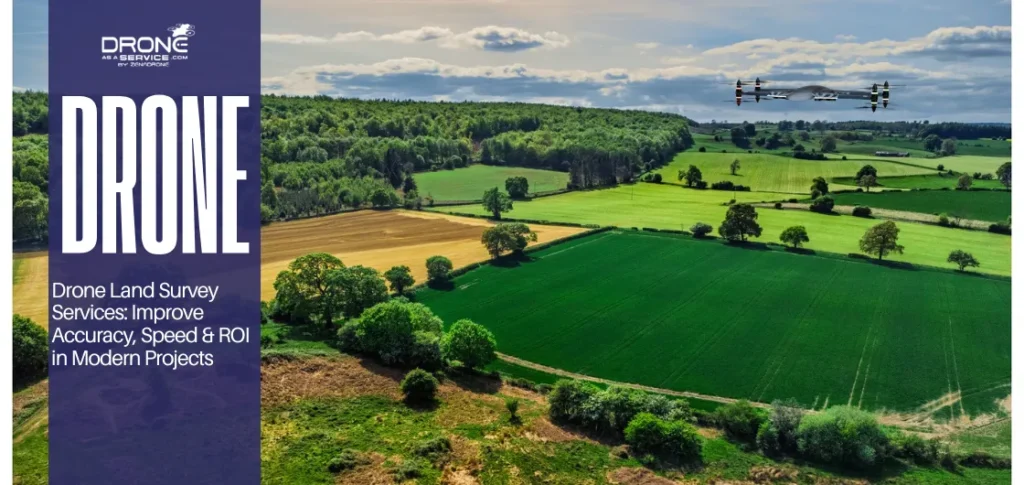

How to Hire Professional Agriculture Drone Spraying Services in 2026 – Farmer’s Complete Guide
TL; DR
Hiring the right agriculture drone spraying service can greatly impact your yield, chemical efficiency, and overall farming operation.
This complete guide shows you what to look for, which questions to ask, and the red flags to avoid when choosing a professional drone spraying provider in 2026 & beyond.
From certifications and equipment to experience and reporting quality, you’ll learn how to make a smart, confident hiring decision.
Not sure where to start? Contact our team for a free farm assessment.
Choosing the right drone spraying service is one of the most important decisions you’ll make for your farming operation in 2026.
A good provider can deliver excellent coverage, save you time, and help protect your crop investment. On the other hand, one bad spraying decision can cost you thousands in lost yield or wasted chemicals sometimes even damaging your crop. Choosing the right service provider is just as important as choosing the right product.
Many farmers still make the mistake of hiring based on price alone, without checking certifications, experience, or the quality of reporting. Others assume all drone operators are the same, only to face poor coverage, missed schedules, or no proof of application when they need it most.
This complete guide will walk you through everything you need to know to hire a professional agriculture drone spraying service with confidence. You’ll learn the key factors to evaluate, the most important questions to ask, common red flags to watch out for, and a clear step-by-step process to make the right choice for your farm.
For a complete overview of agriculture drone services, including NDVI mapping, livestock monitoring, and Drone as a Service (DaaS), check out our main guide: Agriculture Drone Services 2026 Precision Spraying, NDVI Mapping & DaaS
When Do You Actually Need Drone Spraying Services?
Drone spraying isn’t the right solution for every field and every situation. Knowing when it makes the most sense can save you both time and money.
Drone spraying is particularly valuable in these scenarios:
- Large acreage where covering everything with ground equipment would take too long
- Wet or muddy fields where tractors would cause soil compaction
- Late-season applications in tall crops like corn or soybean, where ground sprayers struggle to get good coverage
- Orchards and vineyards that require precise, low-drift application around delicate crops
- Operations that need detailed coverage maps and proof of application for records or insurance
Drone Spraying vs Traditional Methods (Quick Comparison)
- Drone Spraying: Excellent precision and access to difficult areas with minimal soil disturbance.
- Ground Spraying: Good for smaller fields and heavy application rates but can compact soil and struggle in wet conditions.
- Manned Aircraft: Fast for very large areas, but offers less precision and higher drift potential.
Key Factors to Consider Before Hiring
Before you hire an agriculture drone spraying service, it’s important to evaluate several key factors. A smart decision here can protect your crop, your time, and your investment.
Here are the most important things to consider:
Experience & Crop Specialization
Not all drone operators have the same level of experience. Ask whether they have worked with your specific crop type – whether it’s row crops like corn and soybean, or specialty crops like orchards and vineyards. A provider who understands the unique challenges of your crop will deliver better results and fewer surprises.
Equipment & Technology
The quality of drones, sensors, and nozzle systems directly affects spray precision and coverage. Look for providers who use modern equipment capable of consistent application, good tank capacity, and reliable performance across different field conditions. Advanced nozzle technology can significantly improve droplet size control and reduce drift.
Pilot Certification & Compliance
Commercial drone spraying requires proper FAA registrations/certifications. Always verify that the provider holds both Part 107 (Remote Pilot Certificate) and Part 137 (Agricultural Aircraft Operation) registrations/certifications. These are non-negotiable for legal and safe spraying operations.
NDAA Compliance
In 2026, data security is becoming increasingly important. Ask if the provider uses NDAA-compliant drone technology. While not every operation needs this, it offers better protection for sensitive farm data and may be required for certain contracts or government-related programs.
Scheduling & Turnaround Time
Peak spraying season (May through August) can get very busy. Ask how far in advance you need to book and whether they can realistically fit into your crop calendar. A reliable provider should be transparent about their availability during busy periods.
Data & Reporting Quality
Good spraying isn’t just about applying product, it’s also about knowing how well it was done. Ask if they provide detailed coverage maps and proof of application after every job. For even deeper crop insights, many farmers combine spraying with NDVI mapping.
Insurance Coverage
Always confirm that the provider carries adequate liability insurance. This protects both you and the service team in case of any unexpected issues during the operation.
Pricing Transparency
A professional provider should be willing to give you a clear, itemized quote that explains exactly what is included. Avoid providers who are vague about their pricing or unwilling to break down the details. If something isn’t clear, it’s better to ask upfront than face surprises later.
10 Important Questions You Must Ask Before Hiring
Asking the right questions upfront can save you from headaches later. Here are the 10 most important questions every farmer should ask when evaluating an agriculture drone spraying service:
1. How many acres can you spray per day?
This tells you about their capacity and efficiency. A good provider should be able to give you a realistic number based on your field size and conditions so you can plan your spraying schedule properly.
2. What drones, sensors, and nozzle systems do you use?
The quality of equipment matters. Ask about their drone models, nozzle technology, and how they ensure consistent droplet size and coverage. Modern systems usually offer better precision and drift control.
3. Are you FAA Part 107 and Part 137 registered?
This is one of the most critical questions. Commercial agricultural spraying requires both certifications. Never assume; always ask for proof of current certifications.
4. Do you provide proof of application and detailed coverage maps after every job?
Documentation is essential for record-keeping, insurance, and future planning. A professional service should provide clear maps showing exactly where and how the product was applied.
5. What is your policy for weather cancellations and rescheduling?
Weather can change quickly. A reliable provider will have a clear policy for cancellations and should work with you to reschedule without unnecessary delays or extra costs.
6. How do you handle mixed products or tank mixes?
Many applications require mixing different products. Ask how they manage tank mixes, compatibility, and cleaning procedures between different jobs to avoid contamination.
7. What kind of reports and data will I receive after the flight?
Good data helps you make better decisions. Ask what type of reports they deliver and whether they include coverage maps, application rates, or any other useful insights.
8. Are your drones NDAA compliant?
For farmers concerned about data security or working with certain programs, this is becoming an important question in 2026. NDAA-compliant technology offers better protection for your farm data.
9. Can you provide references from farms with similar crops or acreage to mine?
Past performance is a strong indicator of future results. Don’t hesitate to ask for references and actually follow up with other farmers they have worked with.
10. What is included in your quote and what is NOT included?
Always ask for a detailed, itemized quote rather than just a single number. A professional provider will clearly explain what’s included. Such as application only, flight planning, data reporting, and follow-up support. If a provider can’t answer this clearly, that’s a red flag.
What Affects Drone Spraying Cost And How to Evaluate a Quote
Understanding what influences the cost of drone spraying helps you evaluate quotes more effectively and make better decisions for your farm.
Several factors play a role in determining the final cost:
- Crop Type: Row crops like corn and soybean are generally different from specialty crops such as orchards and vineyards, which often require more precise application and slower speeds.
- Total Acreage and Field Layout: Larger fields with simple layouts are usually more efficient to spray than smaller, irregularly shaped fields with many obstacles.
- Type of Application: Applying a single product is different from complex tank mixes involving multiple products (herbicides, fungicides, or fertilizers).
- Terrain and Field Conditions: Hilly terrain, wet fields, or fields with many obstacles can affect how quickly and efficiently the job can be completed.
- Season and Timing: Peak spraying season (typically May through August) can impact scheduling and availability.
- Reporting and Documentation: Some providers include detailed coverage maps and reports in their service, while others may treat them as an additional step.
Hidden Costs to Watch Out For: Be careful of quotes that seem unusually low. Sometimes providers don’t clearly mention:
- Mobilization or travel fees
- Minimum acreage requirements
- Separate charges for data processing or detailed reporting
- Fees for repeat visits due to equipment or weather-related issues
Value vs Cheap Pricing: The cheapest quote is not always the best choice. A lower price can sometimes mean outdated equipment, insufficient insurance, poor reporting, or limited experience with your specific crop.
A professional service may cost a bit more upfront, but it often delivers better coverage, fewer application errors, proper documentation, and greater peace of mind, which can save you money and protect your crop in the long run.
Red Flags to Avoid When Choosing a Provider
When hiring an agriculture drone spraying service, it’s just as important to know what to avoid as it is to know what to look for. Here are the most common red flags that should make you think twice:
- No proper FAA certification or registration (Part 107 and/or Part 137): Commercial agricultural spraying is strictly regulated. If a provider cannot clearly show you the legal permissions, walk away.
- No liability insurance or unwilling to share proof: Proper insurance protects both you and the service provider. If they hesitate when asked for proof, it’s a major warning sign.
- Vague pricing with no itemized breakdown: Avoid providers who only give a single vague number without explaining what is and isn’t included. Transparency is key.
- No experience with your specific crop type: Experience with corn and soybean is very different from working in orchards or vineyards. Lack of relevant experience often leads to poor results.
- Cannot provide references or past client examples: Reputable providers should be happy to share references from farms similar to yours. If they can’t or won’t, that’s a problem.
- No coverage maps or proof of application after the job: A professional service should always provide clear documentation showing where and how the product was applied.
- No written service agreement: A legitimate provider will provide a clear written agreement outlining the scope of work, responsibilities, and terms. Reluctance to offer one is a red flag.
- Cannot answer basic questions about their equipment or compliance: If they dodge simple questions about drones, nozzles, or procedures, they likely don’t have the expertise you need.
Pro Tip: Trust your instincts. If something feels off or unclear during the conversation, it’s usually better to keep looking for a more professional provider.
Step-by-Step: How to Hire the Right Drone Spraying Service
Here’s a clear, practical process to help you hire a professional agriculture drone spraying service with confidence:
1. Define Your Needs Clearly: Start by writing down your specific requirements; total acreage, crop type (corn, soybean, orchards, etc.), type of application (herbicide, fungicide, fertilizer, or tank mix), and your preferred timing. The clearer you are, the better providers can respond with relevant proposals.
2. Get Multiple Quotes: Contact at least 2-3 different providers. This gives you a better sense of the market and helps you compare their approach, professionalism, and level of service.
3. Evaluate the Proposals: Use the key factors from this guide as your checklist. Compare their experience, certifications, equipment, reporting quality, and how clearly, they answer your questions. Don’t make the decision based on price alone.
4. Check References: Ask for references from farms with similar crops and acreage. Take the time to actually call or message previous clients. Real feedback from other farmers is often the most valuable information you can get.
5. Start with a Small Test Job (Highly Recommended): If you’re working with a new provider, consider starting with a smaller section of your field first. This allows you to evaluate their work, communication, and quality of reporting before committing your entire acreage.
6. Sign a Clear Service Agreement: Before the job begins, make sure you have a written agreement that outlines the scope of work, responsibilities, schedule, and terms. A reputable provider will always provide one. If they hesitate or push to skip this step, treat it as a red flag.
Following these steps will significantly increase your chances of hiring a reliable and professional drone spraying service that delivers good results for your farm.
How to Prepare Your Farm for Drone Spraying
Good preparation helps the drone spraying operation run smoothly, safely, and efficiently. Here are some practical steps you can take before the service team arrives:
- Mark Field Boundaries and Obstacles Clearly: Use flags, markers, or GPS coordinates to clearly show field boundaries, power lines, trees, storage buildings, or any other obstacles. This helps the pilot plan safe and effective flight paths.
- Identify Safe Takeoff and Landing Zones: Provide a clear, flat area near the field where the drone team can safely launch and land their equipment. This small detail can save a lot of time on the day of the job.
- Have Product and Tank Mix Information Ready: Prepare all the necessary product details, mixing instructions, and quantities in advance. Share this information with the provider ahead of time so they can plan accordingly.
- Discuss Ideal Timing with the Provider: Early morning is usually best for most spraying applications because wind speeds are lower and temperatures are cooler, which reduces drift. Coordinate the best possible window with your provider.
- Keep Livestock and Workers Clear: Make sure all livestock, people, and equipment are moved out of the spray area during the operation for safety reasons.
- Assign a Point of Contact: Designate someone on your team who will be available on the day of the job to answer any questions and coordinate with the drone team if needed.
Taking a little time to prepare beforehand can make a big difference in the quality and efficiency of the spraying operation.
FAQs
Do I need to be present during the drone spraying operation?
How far in advance should I book a drone spraying service?
What happens if weather cancels my scheduled job?
How do I know the application was done correctly?
What certifications should I ask for before hiring?
Conclusion
Hiring the right agriculture drone spraying service ultimately comes down to a few key things: proper certifications, relevant experience, equipment quality, clear communication, and reliable reporting.
Price is important, but it should never be the only factor in your decision. A professional, well-equipped, and transparent provider will help you achieve better coverage, protect your crop investment, and give you valuable documentation for your records.
In 2026 & beyond, farmers who take the time to choose their drone spraying partner carefully are the ones who benefit the most from precision application technology.
Ready to hire a professional agriculture drone spraying service you can trust?
Contact our team today for a free farm assessment and custom quote. We’ll review your crops, acreage, and application needs, and give you a clear itemized proposal with no surprises.