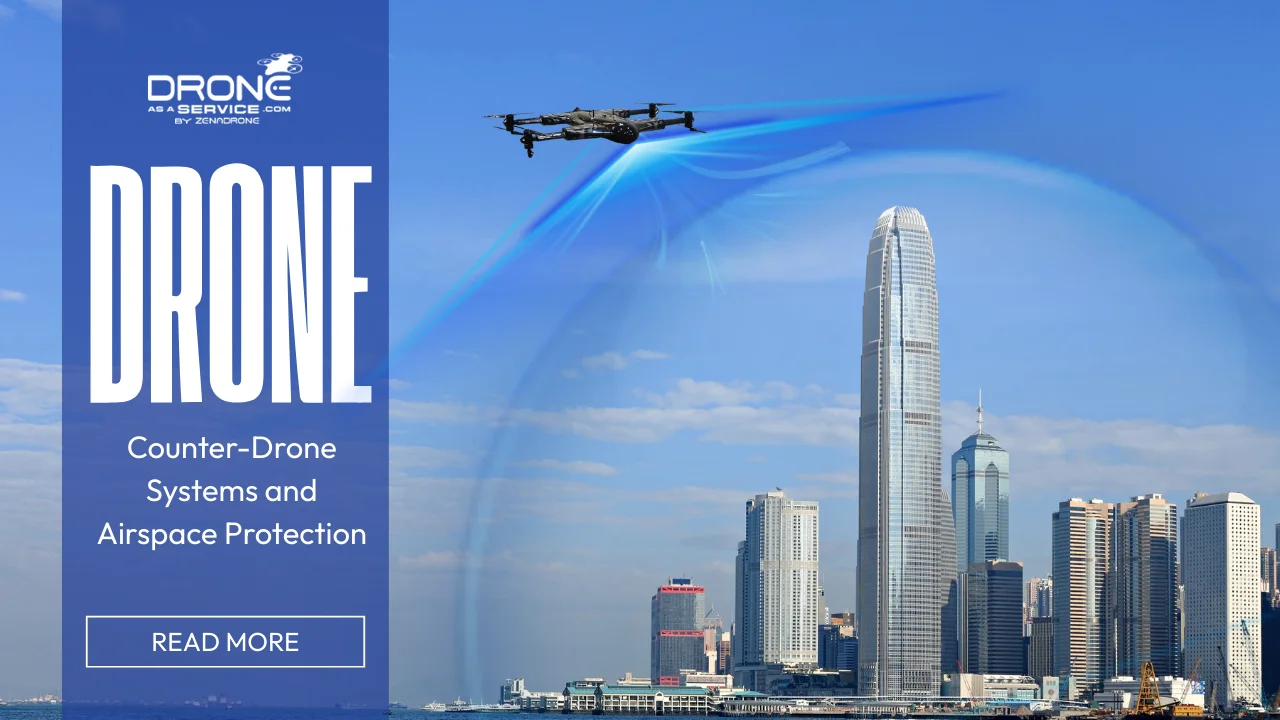
Counter Drone Systems and Airspace Protection
Introduction
The use of drones in business, recreation, and industry is continuously increasing. At the same time, the number of drone incidents grows by an average of 50% per year. The takeover of sensitive environments is becoming a major problem in terms of security. Civil aviation is being disrupted, and major public events and critical infrastructure are now being threatened by unauthorized flights that have opted to threaten not only espionage but also smuggling.
To address these threats, organizations are deploying advanced drone detection technology integrated with counter-drone systems to enable early identification and rapid response. These solutions help reduce operational time and safeguard individuals, property, and national security.
As drone capabilities continue to advance, the development of defensive strategies is also required to ensure safe, controlled operating environments and the resiliency of security operations.
Understanding Counter-Drone Systems
Counter-drone systems are designed to detect, identify, and mitigate unauthorized drones across controlled airspace. They are put to work in the military, government, and civilian fields. These systems are used today to secure airports, prisons, stadiums, and industries.
The initial counter-drone capabilities were centered on battlefield threats. Innovation and regulation convergence is now driven by civilian adoption. The most important goals are public safety and infrastructure resiliency.
A comprehensive solution comprises three functions: detection, identification, and neutralization. Each layer contributes to airspace protection.
Detection Capabilities
Detection involves continuous monitoring of airspace using drone detection technologies, including radar, radio-frequency (RF) sensors, and optical cameras. Radar identifies objects using radio waves, RF sensors analyze signals from drone controllers, and optical cameras capture images of visible or infrared light. Combining these sensing methods improves coverage, accuracy, and RF recognition and helps categorize drones and their intended use, making everything faster and more accurate.
Identification and Classification
Identification determines whether a detected object is a drone and verifies its model, flight characteristics, and potential threat level, helping to reduce false alerts. It applies AI to analyze patterns and compare drones with conventional aircraft, and provides real-time visual confirmation from electro-optical and infrared cameras, which improves situational awareness and allows for more responsible decisions.
Neutralization and Mitigation
Neutralization focuses on safely stopping illegal drone operations. Counter-drone systems use RF jamming to disrupt communications, trigger automated return-to-home, or force a controlled landing. Physical capture methods, like net-based interceptor drones, are also used in sensitive environments. There are directed-energy solutions that are restricted in civil settings, minimizing hazards to individuals and property.
Key Technologies in Counter-Drone Defense
Effective counter-drone systems use layered technologies to improve resilience. Each layer covers the drawbacks of the others, strengthening Airspace Protection.
The Radar-based detection systems.
Radar systems are able to identify drones that are past the range of sight even during bad weather and identify their direction, speed and altitude. Low-RCS targeted advanced radar systems have the potential to identify small drones at a low altitude and adaptively filter to reduce false data. Combined radar provides 24/7 perimeter-resonant monitoring of airports, frontiers and other delicate places.
Artificial Intelligence Detection and Analytics.
Artificial intelligence aids in the analysis of abnormal operations and movement of aircraft to increase awareness of the probability of detection, thus reducing false positives. Machine learning will change according to new drone designs, it has flight paths and operating conditions, offering potential danger and automated alerts, making the technology efficient and precise to where it is applied.
Multi-Layered Defense Strategies
There is no single sensor that can address all drone threats. Multi-layered counter-drone systems combine radar, RF sensing, and visual detection to ensure reliability and feed a unified command interface. These layered systems adapt to the environment and threat level, supporting long-term airspace protection.
The Role of Drone Airspace Defense in Modern Security
Modern security strategies go beyond ground security by continuously monitoring the skies to safeguard people, property, and operations. Unauthorized drones at airports or infrastructure such as power plants, data centers, and prisons can cause disruption, spying, smuggling, and sabotage.
Compliance and Control Systems
Regulatory frameworks guide the deployment of counter-drone systems in both civilian and government environments, balancing security and civil liberties. The FAA authorizes countermeasures and imposes fewer limits on detection systems in the U.S. Various international standards exist regarding privacy and proportional response. Clear regulatory structures support investment, innovation, and long-term deployment of drone detection technology.
Critical Infrastructure Applications
Airspace Protection applies in diverse environments, each with unique risks and challenges. Individual solutions ensure regulatory efficiency and compliance.
The Aviation Facilities and Airports.
Small drones may interfere with flight paths, causing delays. Counter-Drone Systems protect approach zones and perimeters, enabling early detection and rapid response. Air traffic control and multi-sensor integration minimize operational disruption and improve incident response.
Stadiums and Public Events
Unregistered drones jeopardize public safety, personal privacy, and the security of broadcasting during big events. Portable drone detection technology enables rapid deployment, flexible coverage, and command-center monitoring, reducing risks and reassuring organizers and audiences.
Government Facilities and Prisons
Counter-Drone Systems detect low-altitude intrusions, track operators, and enable rapid law enforcement response. Continuous Airspace Protection safeguards prisons and government facilities, preventing smuggling, spying, and other unauthorized activities.
Challenges in Airspace Management
Airspace security management remains complicated despite rapid development in counter-drone technology. Rural and urban environmental conditions are highly diverse, requiring adaptable systems and deployment strategies.
Rural vs. Urban Environments
In a city, the RF interference is high, the buildings reflect the signal of the high rise structure, the aircrafts are crowded within the airspace area, thus it becomes even more difficult to detect. On the other hand, rural areas have lack of signal friction and enhanced coverage area, although the response time from the distance and poor infrastructure can be long.
Adaptive Counter-Drone Systems adjust sensor configurations to suit varied terrains, ensuring reliable detection performance while scaling to environmental and operational demands.
Privacy and Civil Liberties
This question of privacy and civil liberties arises since drone surveillance assumes the collection, processing, as well as, storing of sensitive information. The surveillance devices particularly the visual and RF tracking sensors have the ability to document the actions of the individual, the communications or the patterns of location that are beyond the scope of the targeted threat. This poses legal and ethical concerns of proportionality, consent and the retention of data.
Use and collection of data should be legal, restricted and meaningful. Responsible Airspace Protection frameworks and ethical Counter-Drone Systems address these risks through strict data governance, transparency policies, and compliance with privacy regulations, helping safeguard individual rights while maintaining security.
Integration in Air Traffic Control
To make sure that air traffic is safe and uninterrupted, air traffic control agencies need to liaise effectively with the counter-drone operators and security officials. The undetermined alerts or the unauthorized drone killing operations can disrupt commercial flights, emergency flights, and legitimate flying operations. ATC system interoperability with drone detectors allows minimizing the operation risk and contributing to informed and real-time decision-making.
The common situational awareness allows much quicker verification, better communication and more accurate response decisions. Government aviation authorities have the final authority to approve interventions, and smart decision-support applications help operators make timely, informed decisions without undermining legitimate air traffic.
Case Studies of Effective Deployment
Large-scale public events and border operations have demonstrated the effectiveness of layered counter-drone systems in protecting complex airspace environments.
International and Major Sporting Events
Significant sporting events usually demand greater use of aerial security due to unauthorized use of UAVs. In 2024, as the Summer Olympics took place in Paris, the French government implemented no-drone zones and put counter-drone efforts into place over the Olympic areas. Reports state that on average per day, six drones were being intercepted by security forces around the event areas and this is through the use of the layered surveillance and mitigation measures in order to restrict as well as safeguard the people.
Border and Perimeter Security
Illegal drones are used to smuggle and spy at international borders. In Punjab, the India Pakistan border, the Indian officials had reported 53 distinct cases in three years where sergeant drones had been used to deliver arms and narcotics through the barrier.
The security forces use counter-drone devices and layered detection systems such as radar, RF systems and deploy these systems over a wide perimeter. When aerial threats have been detected, coordinated interception protocols are triggered to counter-act unauthorized activity. This layered approach to airspace protection strengthens national security while minimizing interference with lawful aviation and border operations.
Defensive Drone Solutions and New Innovations
Evolving drone threats demand modern counter-drone systems with intelligent, autonomous defenses. Innovation enables proactive airspace protection through detection, prediction, and response.
Autonomous Counter-Drone Technologies
Unauthorized UAVs are neutralized with minimal human intervention by autonomous interceptors, making them more responsive. Non-destructive tools, such as capture nets, promote civilian safety, whereas AI and onboard sensors enable safe, reliable targeting.
Swarm Defense Capabilities
The drone swarms pose a serious threat, capable of saturating individual sensors. Advanced counter-drone systems track multiple UAVs using machine learning and predictive analytics, enabling coordinated responses and enhancing long-term airspace resilience.
Defense Platforms Based on Software
Modern systems centralize multiple sensors, such as radar, RF, and camera feeds, into a unified software. Cloud monitoring, data analytics, and scalable drone detection technology enhance situational awareness and support future upgrades.
Future Trends in Counter-Drone Systems
Future systems focus on intelligence and connectivity, switching from reactive response to predictive protection.
Integration with 5G Networks
The 5G network system establishes communication connections between sensors and command centers which results in decreased connection delays and extended operational distance throughout urban environments. The system improvement creates better performance which enables Drone Detection Technology to function at its complete potential.
Predictive Threat Analysis With Machine Learning
Machine learning estimates potential risks and patterns by referring to the past drone activity. The implementation of predictive analytics decreases the frequency of false alarms while increasing the overall precision. Advanced counter-drone systems recommend response actions to operators which enables them to perform their duties better while essential human control remains intact.
Selecting the Right Counter-Drone System
There is no single solution that fits all environments. Strategic selection should be driven by operational risk and site conditions.
Cost and Budget Concessions
The detection-only is typically less costly, and complete mitigation will cost more. Two factors that make investment are risk and location. Scalable counter-drone systems offer flexibility and controlled long-term expenses.
Scaling and personalization
The systems must be extended with the growth in coverage requirements. Customized drone detection technology improves efficiency for both city and rural deployments. But also as vendor maintenance and upgrades avail long standing relevancy and futuristic counter-drone system.airspace.
Integration with Broader Security Ecosystems
Counter-Drone Systems work best within layered security frameworks, enhancing both physical and cyber defenses.
Physical Security Integration
The drone alerts trigger a rapid response from the perimeter. Cameras and access control contribute to containment, whereas coordinated actions enhance results.
Cybersecurity and Data Protection
Since most drones are based on networked communication, cybersecurity measures and encrypted data management are essential to safeguard sensitive information and strengthen Airspace Protection.
Best Practices and Implementation Strategies
Successful counter-drone deployment requires structured planning, regulatory alignment, and continuous optimization to ensure reliable Airspace Protection.
Implementation Guide (Step-by-step)
- Risk Assessment – Assess the threats of the sites, the terrain around the site, any flying traffic and any other restrictions imposed by the regulatory authorities before selecting the system.
- System Deployment – Install layered sensors, radar, RF and visual sensors to have complete coverage of detection within the areas of operation.
- Training & Operational Readiness. – Educate the train security personnel on detection schemes, incident escalation measures and coordinated response activities.
- Maintenance & Optimization – Perform regular system testing and sensor calibration and review of performance with incident and operational data.
Risk-Mitigation Tips
- Calibrate sensors to limit a false positive caused by birds or environmental interference.
- Comply with aviation regulations and data privacy policies.
- Keep audit trails and regulatory compliance records.
- Conducts post-indicent performance reviews to continuously improve system effectiveness.
This structured approach strengthens operational resilience while sustaining long-term Airspace Protection performance.
Conclusion
The increasing cases of drone misuse have become aerial threats and a continuous security concern. Counter-drone systems play a critical role in protecting sensitive environments through layered detection, accurate identification, and controlled response. Clear regulatory compliance ensures legal operation, while airspace protection strategies continue to evolve. Proactive deployment enhances resilience, decreases interference, and protects crucial assets.
Counter-Drone Project Characteristics
Our Counter-Drone Systems use advanced Drone Detection Technology, which consists of RF and radar and visual sensors, to perform AI-based threat classification. The system provides reliable airspace protection which extends to airports and public events and critical infrastructure sites through its fully integrated scalable design.
Contact us to discuss your operational needs and we will develop a customized counter-drone solution to protect your airspace.