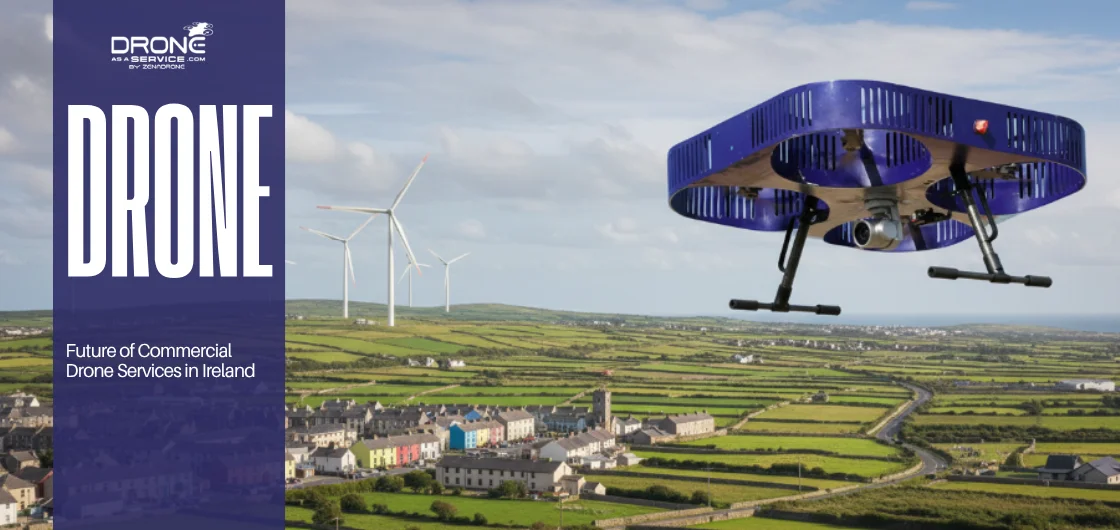
The future of drone services in Ireland reflects a shift from controlled trials to structured integration within infrastructure and energy sectors. The Irish UAV market forecast indicates steady, sector-led growth aligned with regulatory approvals and asset expansion.
This commercial drone expansion relies on updated Irish regulations and risk-based BVLOS operations. Pragmatic ROI remains the central driver for long-term adoption.
Ireland’s Drone Industry at a Turning Point
Commercial drone use in Ireland has moved beyond experimental or niche applications. Over recent years, drones have become embedded within operational workflows across infrastructure and energy sectors. This change is happening because the technology is now more reliable, and the rules for using it are clearer for everyone.
This is reflected in the Irish UAV market forecast, which indicates consistent year-on-year adoption. The market has progressed beyond early-stage testing into structured commercial deployment.
This article takes a calm look at the future of drone services in Ireland. We avoid making big promises and instead focus on the real ways drones help businesses today, such as the growth of the commercial drone industry in Ireland.
The goal is to show how these services are growing steadily and sensibly. It is about practical use and making sure the rules keep everyone safe while helping people work more efficiently. It also represents the long-term drone integration in Ireland that many experts expected.
The Current State of Commercial Drone Services in Ireland
Sector Adoption Today
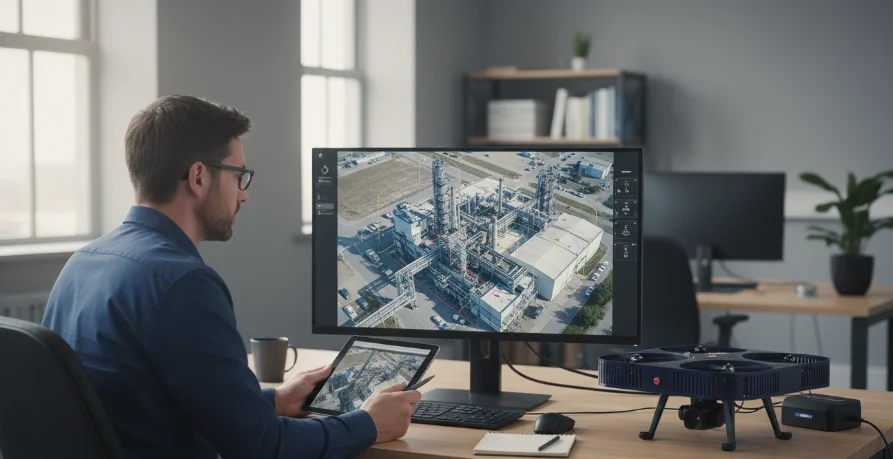
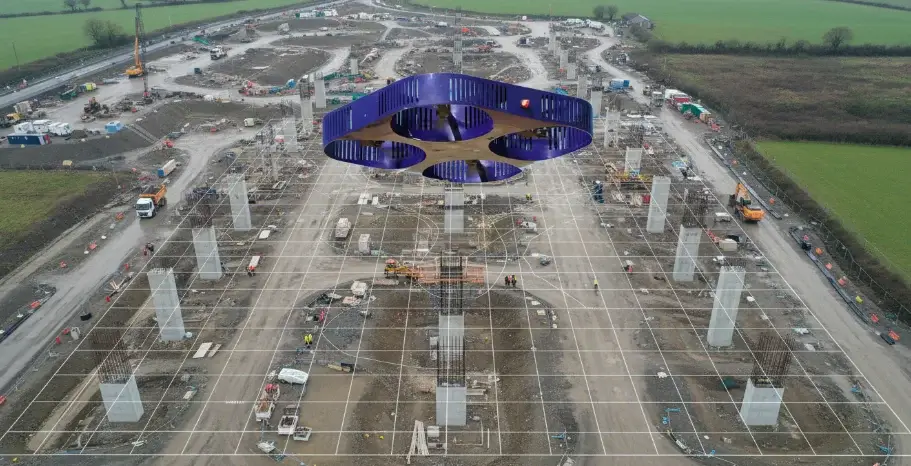
Current deployment patterns provide a baseline for evaluating future growth. In the building industry, construction drone adoption in Ireland has become a standard way to track progress. Site managers use drones for progress tracking, volumetric measurement, and site-wide visibility.
We are also seeing many drones for renewable energy in Ireland, checking wind turbines. Drone-based inspection reduces physical risk exposure and improves inspection efficiency compared to manual methods.
The drone delivery future in Ireland is also taking shape through real-world testing. Manna Aero provides a practical example of controlled delivery deployment through localized trials, having already handled thousands of local deliveries and now partnering with larger apps to bring food and medicine to people’s doors. It is a significant part of the commercial drone growth we are seeing in Ireland.
Drone applications now extend beyond imaging into inspection, measurement, and operational data collection. They are being used for serious work because they help businesses get better information while keeping their employees out of harm’s way.
Regulatory Environment and Operational Framework
Market stability is supported by the regulatory framework established by the Irish Aviation Authority. By implementing standardized European Union Aviation Safety Agency (EASA) regulations, the IAA provides a transparent and consistent environment for commercial drone operations.
These harmonized rules define clear operational boundaries, fostering investor confidence and enabling Irish companies to scale their UAV programs with regulatory certainty.
Most commercial operations fall within the Specific category as defined by the European Union Aviation Safety Agency. This category requires documented risk assessment and operational authorization prior to deployment.
Recent Irish drone regulations have also made it easier to understand how BVLOS drone operations in Ireland (flying beyond the pilot’s line of sight) will work. These flights are still limited and only allowed under strict conditions.
This careful approach ensures the industry can grow without the skies moving too fast for safety. It is all about building a system that allows drones and traditional planes to share the air without issues.
Realistic Growth Drivers (2025–2030)
Renewable Energy and Offshore Wind Expansion
Ireland’s renewable energy targets are driving infrastructure expansion, particularly in offshore wind. As we build more wind farms out at sea, we need a better way to look after them.
Drones provide a cost-efficient, repeatable method for inspecting offshore assets because they are cheaper and easier to deploy than sending a large ship or a helicopter.
This growth clearly reflects how businesses use drone services to manage expanding infrastructure efficiently. By deploying drones, utility companies can identify minor structural anomalies, such as microfractures in turbine blades, before they escalate into prohibitively expensive repairs or operational downtime.
This growth creates a consistent demand for UAV services within the Irish renewable energy sector. By deploying drones, utility companies can identify minor structural anomalies, such as microfractures in turbine blades, before they escalate into prohibitively expensive repairs or operational downtime.
By using drones, energy companies can keep their equipment running longer and save money, which is why we expect this part of the industry to stay very busy.
Infrastructure and Asset Management
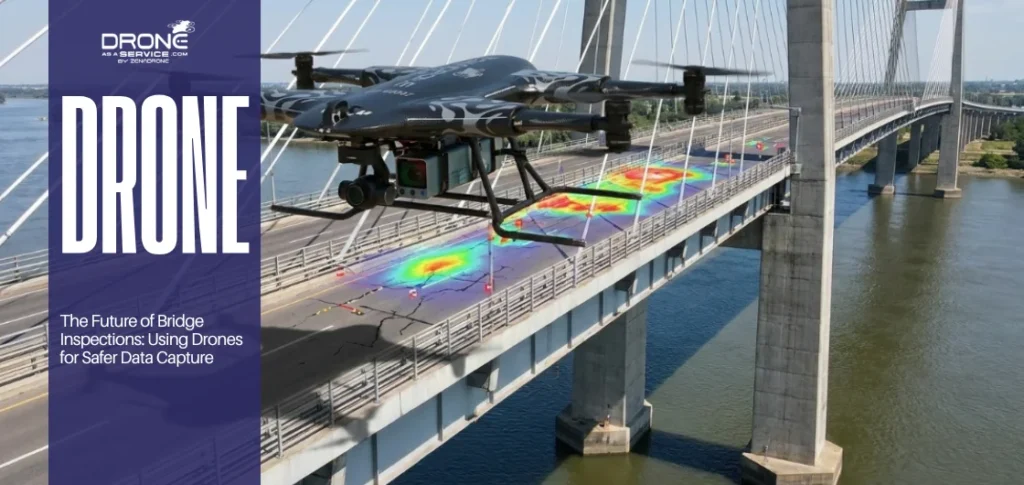
Beyond energy infrastructure, UAV deployment is improving inspection frequency and data accuracy across transportation infrastructure assets such as roads, bridges, and railways. By automating structural inspections, Irish agencies can identify maintenance needs with greater precision and minimal disruption to public transit.
Drone outputs now extend beyond imagery into structured datasets. Businesses in Ireland are using drone-based predictive analytics to create digital records of their property. This data helps them predict when a bridge might need repairs before any visible damage appears.
The future value lies in integrating drone data into enterprise asset management systems; it’s about long-term drone integration in Ireland, where drone data flows directly into a company’s computer system. When a drone finds a problem, the system can automatically alert the maintenance team. It speeds up the whole process.
Drones are becoming a key part of how Ireland keeps its infrastructure safe and modern without the need for constant, manual check-ups.
Drone as a Service (DaaS) Expansion
Irish SMEs are increasingly adopting Drone as a Service (DaaS) models, so they don’t actually need to own their own drones. Instead, they are hiring outside experts, a trend called Drone as a Service. According to Grand View Research (2025), the services segment of the UAV market is projected to grow the fastest, with a CAGR exceeding 10% through 2033.
This growth is driven by the DaaS business model, which enables businesses to outsource complex tasks such as field mapping and structural inspections to expert operators.
DaaS allows organizations to access compliant operations without the internal resource burden of high-tech aerial data or the headache of managing equipment. This outsourcing is a major driver of commercial drone growth in Ireland.
It allows more businesses to try out drone technology with less risk. While some very large companies might have their own pilots, most will likely find it easier to hire a specialized drone partner for their projects.
The Role of BVLOS and Testing Infrastructure
Controlled Expansion of BVLOS Operations
The ability to fly a drone Beyond Visual Line of Sight represents a significant operational capability for the future of drone services in Ireland. It means a drone can fly for miles to check a long power line or a railway track without the pilot having to follow it in a car. It makes the work much more efficient and covers a lot more ground.
However, deployment will remain controlled and conditional rather than widespread all at once. Growth in BVLOS drone operations in Ireland is happening slowly and carefully. Every flight must be approved based on its safety.
This step-by-step method means that as drones fly farther, we can be sure they aren’t interfering with other aircraft. It is a gradual expansion that focuses on doing things the right way.
Ireland’s Testing and Innovation Environment
Ireland provides a structured environment for controlled UAV testing, especially at the Future Mobility Campus Ireland.
These testing sites allow companies to test initiatives such as Irish urban drone mobility in a safe, controlled environment. These facilities enable controlled validation of operational scenarios to determine how drones can fly over towns safely.
These trials are important because they help set the rules for the future. While these tests are exciting, they don’t mean that every town in Ireland will have drones overhead tomorrow. Instead, they provide the data needed to make long-term drone integration in Ireland a reality.
These testing grounds are where we learn how to make drones a useful and quiet part of our daily lives.
AI Automation and Workforce Evolution
AI as an Operational Enhancer
Artificial Intelligence (AI) is helping drones perform their jobs more effectively, but it isn’t replacing people. In the world of predictive analytics, drones in Ireland, and AI functions as a processing layer for analyzing large volumes of aerial data.
It can look through thousands of photos in seconds to find a rusted bolt or a broken solar panel. This reduces post-processing time and improves inspection turnarounds.
Even with autonomous drones becoming more common in Ireland, a person is always in charge. The AI finds the potential problem, but a human expert makes the final call on what to do about it.
It keeps things safe and ensures that a person is always responsible for the decisions being made. AI is a tool that helps us process information faster and more accurately.
Workforce Transformation in Ireland
The jobs in the drone industry are changing. Modern UAV success requires technical proficiency in data analysis, regulatory compliance, and seamless software integration alongside traditional flight skills. The workforce is transitioning toward system management and data analysis roles.
It is a sign that the industry is growing. We will see more roles for people who can analyze the maps and reports generated by drones. While we still need pilots, their daily work will involve more planning and data management.
This growth is great news for the Irish job market, as it creates new types of high-tech careers for people who want to work with cutting-edge technology.
Constraints That Will Shape the Pace of Growth
Even though the future of drone services in Ireland is expected to show stable but constrained growth, several factors will moderate the pace of adoption. Getting insurance for long-distance drone flights can be tricky and expensive. Also, we need to consider drone data privacy in Ireland.
People want to know that drones aren’t taking photos they shouldn’t be, so businesses have to be very transparent about what they are doing.
The Irish weather is another big factor. On very windy or rainy days, most drones can’t fly, which can delay projects. There is also the fact that big government and company projects take time to get started.
These are the kinds of real-world details that mean commercial drone growth in Ireland will happen at a steady pace rather than overnight. Acknowledging these challenges is a key part of any realistic forecast of the Irish UAV market.
What Is Unlikely in the Near Term
Maintaining realistic expectations regarding uncrewed aerial vehicle (UAV) capabilities is essential for long-term strategic planning. While technological advancement is rapid, the nationwide scaling of autonomous last-mile delivery for consumer goods remains restricted by regulatory, technical, and safety constraints.
Furthermore, the commercial viability of Urban Air Mobility (UAM), including passenger-carrying drones or flying taxis, faces protracted timelines due to infrastructure requirements and stringent certification standards. While public discussion, including coverage by RTÉ, reflects early-stage exploration.
The technology and the rules for these kinds of Irish urban drone mobility projects aren’t ready for daily use yet. For now, drones will stay focused on helping with building sites, farms, and energy plants.
These are the areas where drones provide the most value right now. We are taking things one step at a time rather than rushing into things that might not be ready.
Long-Term Outlook: Gradual Integration, Not Disruption
The trajectory for drones in Ireland points toward a gradual, measured expansion. Drones are becoming a routine operational tool within infrastructure management. This evolution is closely linked to updates in Irish drone regulations, which are designed to ensure safety and legal compliance at every stage of development.
Ultimately, the long-term viability of the unmanned aviation sector depends on a quantifiable return on investment (ROI). Irish businesses are proving the commercial value of UAV integration by consistently achieving operational efficiencies and cost savings.
This practical strategy is helping Ireland’s drone industry grow through steady economic progress, rather than relying on fleeting trends. Prioritizing safety and practical application, this approach supports the development of a stable and economically grounded industry poised to be a valuable asset to the Irish economy for the foreseeable future.
Frequently Asked Questions
Be Part of Ireland’s Growing Drone Industry
Work with certified drone professionals who deliver compliant, accurate aerial data for construction, energy, and infrastructure projects across Ireland.