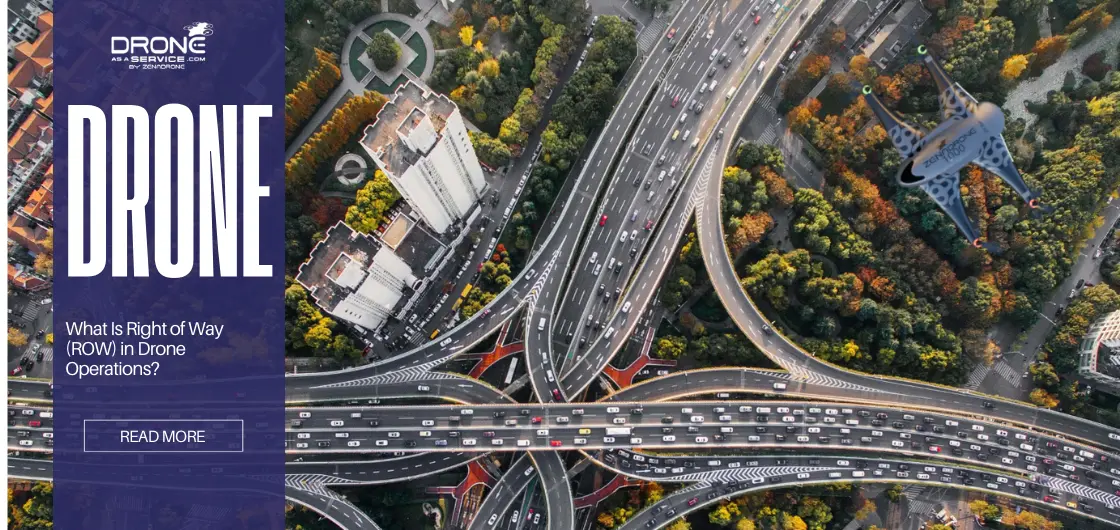
What Is Right of Way (ROW) in Drone Operations?
In recent years, the recent spike in drone commercial operations has led to more complex airspace operations. This growth has resulted in more complex airspace operations, which require pilots to master ROW (right-of-way) rules for safe drone operation. Right-of-way (ROW) is a priority system in aviation that determines which aircraft has to yield within a shared airspace. It uses an established order to create safe flight operations that all pilots can understand.
Without these rules, pilots and aircraft are more prone to accidents and unpredictable flying conditions. The risk of a mid-air collision also rises dramatically when pilots lack a complete understanding of these fundamental principles.
Understanding ROW is not just a requirement but an essential practice for safe, legal, and responsible drone operations. By prioritizing manned aviation and strictly following established yielding hierarchies, drone operators can protect their drones and ensure safe operations.
Understanding Right of Way in Aviation
The ROW system establishes aircraft flight priority, which prevents airspace conflicts and collisions during shared flight operations. It establishes a definite hierarchy that enables various aircraft to operate simultaneously, from hot air balloons to commercial jets and drones. Similar to road traffic rules, these regulations ensure that the right of way in aviation is established without direct communication.
These rules are designed to prevent conflicts and mid-air collisions between aircraft in a shared airspace.
- Predictability: Regulations enable pilots to predict how other pilots will execute their flight maneuvers.
- Orderly Flow: It maintains order by preventing disruptive conditions that occur during times of heavy airport traffic or in delivery pathways.
- Safety Over Convenience: The aviation ROW system establishes safety as its top priority, which requires less maneuverable aircraft to give way to more agile planes.
Drone pilots are the most accountable pilots in a shared airspace. FAA regulations require uncrewed aircraft to yield at all times to crewed aircraft for maximum safety.
Airspace Priority and Aircraft Hierarchy
Airspace priority depends on aircraft type and mission criticality. The FAA considers protecting human life onboard an aircraft to be the most critical requirement. Whereas, piloted aircraft always take precedence over uncrewed aerial vehicles.
Within the hierarchy, gliders gain priority over powered aircraft because their flight path depends on wind conditions. Aircraft with restricted movement capabilities present high safety risks to human beings, so they require more urgent treatment. Drones possess both remote piloting capabilities and advanced agility, which enables them to absorb operational impacts that protect overall system safety.
Regarding mission criticality, emergency operations hold the highest airspace priority. Search-and-rescue helicopters and firefighting tankers receive priority over all other aircraft. The lowest operational priority applies to commercial drone operations and recreational flights. This hierarchy prevents critical missions from being interrupted by remote-controlled devices that do not transport passengers.
Why Right of Way Is Important for Drone Safety
With increased commercial drone use, a well-defined protocol for yielding is the only way to reduce risks. Right of Way (ROW) functions as the primary safety measure that protects shared airspace users. All operators must follow this universal language to maintain safe operations. A well-defined ROW knowledge eliminates operational ambiguities, allowing pilots to make swift decisions rather than being indecisive.
Understanding and applying these rules helps prevent mid-air collisions, which are more likely to occur in crowded skies. These regulations are especially crucial during the “last mile” of flight when aircraft are landing. The main emphasis of these regulations is that they put the safety of pilots, passengers, and people on the ground first. A crashing drone or a damaged aircraft engine can lead to disaster for pilots, passengers, and ground crews.
Along with regulatory compliance, ROW regulations are essential for the “license to operate”. Each near-miss incident between a drone and an aircraft is a step backward for the industry. By following airspace safety regulations, drone pilots demonstrate that they are competent professionals deserving of increased integration into the National Airspace System (NAS).
Basic Right-of-Way Rules for Drone Operations
Every remote pilot must learn the fundamental rule, which states that drones must always give way to crewed aircraft. The FAA rule establishes this as an essential requirement that operators must follow.
- Drone operators must maintain visual separation from other aircraft throughout their entire operation because they need to handle this responsibility themselves.
- Emergency aircraft receive absolute priority in every conceivable scenario.
- Drones do not receive automatic ROW, even if they are performing a “commercial” task like a paid inspection.
- Operators must establish immediate conflict procedures, requiring them to descend or land their aircraft until the crewed aircraft leaves the area.
In practice, these rules mean a drone should never:
- Operate above which a crewed aircraft operates.
- Have a close distance to aircraft, causing potential collisions.
- Force a crewed aircraft to make flight path adjustments because of the drone’s presence.
Why Drones Must Yield in Airspace
Drones must yield in the airspace because of their build, making it hard for crewed aircraft to detect them until in proximity. Multiple physical and logistical factors force the “smaller” aircraft to change their flight path. First, pilots struggle to see drones because of their small size, which makes them hard to spot from a cockpit. A pilot flying at 100 knots has very little time to see and react to a 2-foot-wide drone.
Crews operating aircraft face limited turning capabilities when their planes reach high speeds, reducing their ability to stop and turn instantly. Pilots in a cockpit who have to deal with two tasks at once find it difficult to avoid obstacles.
Lastly, drones have superior agility and reduced danger compared to other aircraft. The FAA establishes drone right-of-way regulations to protect human life, which makes drones responsible for accidents. As a result, UAS operators must meet tighter yield requirements, which stem from these restricted capabilities. These limitations justify why drones must yield in the airspace and give right of way to crewed aircraft.
Commercial & Drone-as-a-Service Impact of ROW Rules
ROW has a significant impact on drone flight planning and implementation. Professional drone pilots must assess the local airspace before they can start each drone flight. This assessment shows them where all nearby helipads, hospital flight paths, and low-altitude corridors for crop dusting operations exist. Using the information, they can establish Standard Operating Procedures (SOP) for establishing yield and abort procedures. By establishing SOPs, companies ensure that all pilots understand their correct response to incoming aircraft.
On top of that, client expectations must match existing aviation safety limits. For example, a client’s request for skyscraper footage must be paused if a helicopter enters the airspace. Drone as a Service (DaaS)’s commercial drone operations require strict compliance frameworks to stay insured and meet standards and regulations.
These strict frameworks don’t just serve as a mandatory safety measure that companies need to maintain their business operations. They both support and prove that drone operations can cooperate with traditional aviation systems.
The Role of Drones in Maintaining Airspace Safety
One of the best ways drones maintain airspace safety is by yielding proactively to crewed aircraft. Pilots aware of ROW rules create better safety outcomes for aerial space. By being cooperative and situationally aware, drone pilots keep a safe distance from crewed aircraft, ensuring safety and nearby aircraft detection. Additionally, responsible flying supports cooperative airspace usage and helps integrate new drone technology into legacy aviation systems.
However, it’s worth keeping in mind that operational safety extends beyond rule compliance. Establishing a solid operational framework allows various aircraft to operate seamlessly in a shared airspace.
Operators who choose to protect others from danger demonstrate that uncrewed systems can operate safely within national airspace. This behavior builds trust with aviation authorities, which is critical for advanced commercial operations and the development of drone technology.
Situational Awareness and See-and-Avoid Responsibilities
See-and-avoid is the most effective way to maintain airspace safety and is a drone operator’s main responsibility. The remote pilot in command (RPIC) must maintain visual contact with the aircraft’s surroundings despite operating advanced technology.
Pilots must also exercise situational awareness to avoid unexpected airspace conflicts while staying alert to nearby aircraft movement. The commercial drone industry defines situational awareness as the ability to track crewed aircraft positions on a map through ADS-B In (Automatic Dependent Surveillance-Broadcast) technology.
However, the FAA states that electronic aids do not eliminate the human requirement to perform “see-and-avoid” functions. Situational awareness requires people to monitor crewed aircraft activity through both visual and auditory observation. To ensure awareness and safety, visual observers may act as a second set of eyes, scanning for incoming traffic.
People usually hear a helicopter before they see it. Upon detecting another aircraft, operators must be prepared to land or reroute immediately.
Operational Scenarios Where ROW is Critical
Controlled airspace and areas near airports are two particular environments where drones must follow right-of-way rules. These are the specific designated environments in which drone operations must comply with ROW.
The main reason that drones must follow right-of-way in these areas is because of the high volume of nearby aircraft. The most precarious moments for planes happen at low altitudes and slow speeds while preparing to land. Another instance where drones must follow right-of-way is during emergency response or helicopter rescue missions. Drones that refuse to yield can easily jeopardize critical life-saving missions.
On top of that, unpermitted drones can cause multiple firefighting aircraft to remain grounded, resulting in fires burning uncontrolled.
Other operational scenarios where ROW is essential include:
- Infrastructure Inspections: Drones operating on power lines require flight paths that match the height of utility helicopters.
- BVLOS Missions: The technology used for maintaining the right of way during beyond visual line of sight operations becomes essential.
- Urban Environments: Low-altitude urban airspace becomes a shared area between news helicopters and police helicopters.
- Agricultural Spraying: Drones must stay alert because crop dusters fly at very low altitudes while conducting their violent flying maneuvers.
FAA Right of Way Rules for Drones
The FAA right-of-way rules for drones are clear and leave no room for ambiguity. All crewed aircraft must be given precedence over drones, which need to yield without exception. The drone bears complete responsibility for “being at fault” when it fails to move. As a result, operators must keep the drone within line of sight throughout the entire flight.
Next, drones must keep a safe distance from crewed aircraft, including avoiding direct flights over, under, or ahead of said aircraft. This ROW rule applies to emergency aircraft in particular, since they always have absolute ROW.
If the drone cannot safely maintain ROW, the pilot must terminate the flight immediately. The FAA rule designates the remote pilot as the ultimate decision-maker who assumes all legal responsibilities for flight safety.
Conclusion
ROW establishes responsibilities that pilots need to fulfill instead of granting them operational rights. Understanding drone right-of-way is essential for safe drone operations, ensuring that, as technology advances, safety is still the priority.
Being compliant in shared airspace areas allows the drone industry to advance its operations. The FAA right-of-way regulations for drones establish a safety framework that all pilots must follow to maintain secure operations. The long-term success of DaaS providers depends on their ability to develop ROW as their primary business operation.
The future of flight will remain accessible to all people when we establish the correct order of air operations. As we advance towards autonomous flight and unified drone flight planning, the primary defense will be through the practice of yielding.
FAQS
What is Right of Way (ROW) in drone operations?
ROW determines which aircraft must yield their right of way to maintain airspace safety in a shared environment among aircraft.
Do drones ever have Right of Way over crewed aircraft?
No. According to current regulations, drones must yield to all crewed aircraft without exception.
Why must drones always yield in shared airspace?
Drones are more maneuverable and harder to detect than crewed aircraft, making them the safer party to perform avoidance maneuvers.
How does Right of Way apply in controlled vs uncontrolled airspace?
The requirement for a drone to yield to crewed traffic is a universal safety mandate regardless of the airspace classification.
What should a drone operator do when a helicopter approaches?
Drone operators must yield the right of way by descending, landing, or moving laterally away from the aircraft’s path.
Who is responsible for maintaining see-and-avoid during drone flights?
The Remote Pilot in Command (RPIC) is legally responsible for maintaining situational awareness and avoiding all other aircraft.
How do Right of Way rules impact commercial drone operations?
These rules require rigorous drone flight planning and the constant readiness to abort missions to ensure crewed aircraft safety.