Drone Power Sources Explained
The development of drones in recent years has been driven primarily by their power sources. From the rudimentary designs to industrial UAVs, the way drones are powered determines how they can perform in terms of their stamina, capacity, and ability to innovate. Having reliable power for UAV operations thus ensures longer flight times, greater payloads, and safer missions across industries.
State-of-the-art drone technologies, such as ZenaDrone 1000, IQ Nano, and IQ Square, have reinvented how an aerial system integrates smart energy management with high-performing flight systems. With drones still constantly defining the future of logistics, agriculture, and defense, it is integral to learn and discover more about their power sources to unlock their full capabilities.
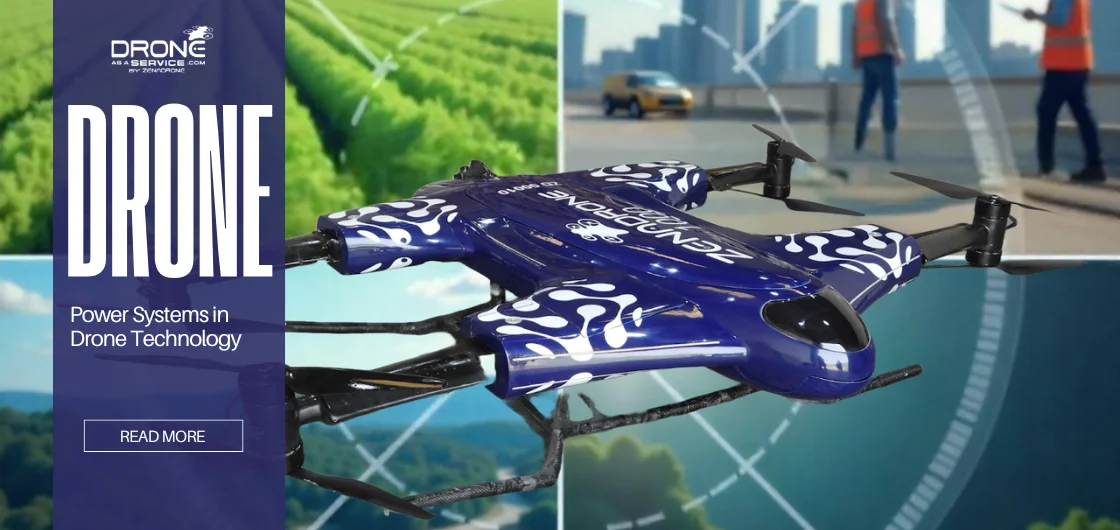
Significance of Power Systems in Drone Technology
Any drone depends on the power system. It defines the duration of a UAV in the air, the distance covered by a UAV, and its weight capacity. In the case of industrial drones, productivity and cost efficiency are directly proportional to the source of power.
Drones that are used in missions requiring long-endurance use energy systems that are highly capacitated. On the other hand, recreational models focus on lightweight and inexpensive ones. It is important that, in choosing the right drone, we look at the power setup to balance endurance, speed, and mission needs.
Typical Power Sources in Current Drones
Today’s UAVs are dependent on multiple sources of power that determine the duration of their flight, the amount of weight in terms of cargo they are able to carry, and the range of operation they can be deployed.
The correct energy sources thus guarantee dependable functioning with recreational drones and industrial UAVs. Understanding these common drone power technologies helps match capability with mission demands.
Lithium Polymer (Li-Po) Batteries
Li-Po batteries are the most common power sources in drones today. They are light, rechargeable, and can produce high discharge rates needed for strong motors.
Li-Po batteries can be designed and made into small drones because their size and shape can be adjusted to ensure that their performance is not compromised. However, they are sensitive to overcharging and temperature extremes, hence handling with a lot of caution.
Lithium-Ion Batteries
Li-ion batteries offer energy density better than Li-Po batteries. As a result, it enables the drone to cover a longer distance on fewer charges. They can be used especially in professional UAVs that need a stable energy supply.
Though heavier and relatively slower in terms of discharge, Li-ion cells offer durability and a longer lifespan, which also makes them valuable for drone power in long-term operations.
NiMH Batteries
Previously, NiMH batteries were common in older drones, but they are now found in entry-level UAVs. They are cheap and stable but lack the efficiency and light weight demanded in a modern aerial system.
Although traditional batteries still prevail in the current UAV market, their shortcomings are bringing about further innovations. Engineers continue to enhance endurance and efficiency for next-generation power sources in drones. These enhancements will pave the way to the future of advanced and alternative energy solutions.
Alternative and Advanced Power Technologies
Since drone developments continue to grow, batteries are no longer sufficient in keeping up with these developments and addressing emerging energy needs. As a response, technologies related to fuel cells, solar panels, and hybrid engines are being developed to transform drone power. These technologies are more focused on sustainability, long-range flight capability, and resiliency.
Hydrogen Fuel Cells
The use of hydrogen fuel cells is also changing the way drones are being powered today. The average flight time is more than two hours. They can transform hydrogen into electricity with the use of a clean chemical reaction, and the only byproduct of this process is water.
As a result, this makes them an environmentally friendly solution for situations of surveillance programs that need silent operation and long range. The key issues are the availability of fuel and high start-up costs.
Solar Power
Drones that can work on solar power have panels that can recharge during flight, and they are on top if we are talking about sustainability. Even though flight functionality relies on sunlight, they can still be suitable for longer missions such as mapping, border patrol, and agricultural surveillance.
Solar energy systems have the potential to reduce operational costs by establishing a sustainable factor, which makes them a growing feature that is moving to the forefront of power for UAV sustainability.
Hybrid Systems (Battery + Fuel)
Hybrid drones are powered by batteries, but they also incorporate fuel cells to extend range and minimize downtime. This hybrid style allows you to continue a mission under less favorable conditions.
Hybrid is popular primarily because drones are transporting parcels or loaded with weight, with the one common denominator being “between duration and flexibility.”
New-generation power technologies open up a new horizon of UAV performance. Not only are they able to extend the flight time, but they also reduce the environmental impact. Together, they represent the next step in sustainable power for UAV innovation.
Comparing Drone Power Sources
Below is a quick comparison of the most common and emerging drone power sources across performance metrics:
| Power Source | Flight Duration | Cost Efficiency | Environmental Impact | Applications |
|---|---|---|---|---|
| Batteries (Li-Po/Li-ion) | 20–40 mins | Affordable | Moderate | Photography, Hobby |
| Solar Power | Long (weather-based) | Cost-effective (long-term) | Low | Agriculture, Monitoring |
| Fuel Cells | 2+ hours | High upfront cost | Very Low (Green hydrogen) | Delivery, Surveillance |
Each drone power source offers a distinct advantage depending on the requirements of the mission and operational demand. Lithium batteries are the most widespread, cost-effective, and reliable, and fuel cells are superior in terms of endurance in defense and industry applications.
Solar-powered drones are sustainable and are able to serve long-term field missions, mostly in fields of agriculture and environmental surveillance. The drone’s primary use determines the final selection of the correct power system with features that are based on endurance, budget, and efficiency.
Power Management Systems and Efficiency Systems
Smart battery management systems (BMS) are the ones that monitor the cell temperature, voltage, and current, meant to improve flight safety. These systems eliminate tendencies of overcharging, overheating, and unexpected power failure.
What the AI-based optimization does is alter the power allocation in the middle of the drone flight, thus ensuring that the drone’s energy consumption is efficient in varying weather conditions. Meanwhile, thermal control systems aid drones in working successfully even in the most severe climates, while data from the drone’s IMU sensors helps maintain stability and precise orientation during power fluctuations.
Power Solutions of the ZenaDrone Models
ZenaDrone 1000
The ZenaDrone 1000 has a long range of batteries and efficient motors that are very suitable for the logistics, agriculture, and surveillance sectors. Its adaptive power management increases the flight duration without reducing the payload.
ZenaDrone IQ Nano
The IQ Nano is agile and provides efficient performance via optimal Li-Po battery consumption. It is ideal for daily aerial activities due to its small size and clever charging.
ZenaDrone IQ Square
IQ Square is the perfect fit for users who require stamina and versatility. It combines hybrid power technology with smart power controls to achieve long distances while achieving energy efficiency.
Each model showcases ZenaDrone’s commitment to innovation in drone power and sustainability.
Challenges & Limitations in Drone Power
One of the greatest limitations of drone technology today is power. Although there are swift and advanced chemical compositions of batteries and power regulation, drones are still limited in their capabilities, which affects their performance, load carrying, and productivity.
Here are some of the Challenges and Limitations in Drone Power:
Poor Battery Life
Usually, drones have a flight capacity for about 20 to 40 minutes, but this is not enough if you plan to cover long distances or stay productive.
Payload vs. Endurance
Drones with bigger payloads might be beneficial, but they come with tradeoffs because they consume more power. Operators have time to decide on the drone’s endurance and functionality.
Charging Infrastructure
The inability to recharge drones fast or at all halts their constant use, particularly in the field.
Heat and Safety Hazards
Increased missions might overheat drones, destroy batteries, and be harmful to safety.
Environmental Limitations
High temperatures and weather decrease the duration of the battery and the performance of the drones.
The above challenges present the trade-off between innovation and feasibility in UAV power systems. Further developments will be centered on stability, security, and growth to influence effective air travel.
Drones are set to experience increased advancements in the future.
The UAVs of the future will have solid-state batteries, which are of high energy density, charge fast, and are safer. It will have wireless charging pads so that it can be recharged easily.
There is also progress on rotor-based power recovery, which is a regenerative system. Such developments will ensure that drone power is more sustainable and autonomous.
Best Practices of Power Maintenance
Effective maintenance of power ensures that the drones are safe, efficient, and long-lasting. These practices will prolong battery life and health in general.
Regular Battery Inspections
Before and after each flight, the battery is to be inspected to exclude swelling, corrosion, or any damage to prevent malfunctions.
Charging Properly
Charge to the recommended voltage of the manufacturer of the chargers, and do not overcharge.
Safe Storage Conditions
Dry and cool (approximately 40 -60 per cent charge) store batteries.
Temperature
Please do not charge or fly in extreme cold or extreme heat because it can affect power significantly.
Cycle Monitoring
This allows for tracking of charge cycle, and changing the batteries when performance drops significantly to keep flight times high.
Software & Firmware Updates
Keep the Battery Management System (BMS) up to date to effectively monitor and provide safe use.
Maintenance is not only about increasing battery life, but also about the long-term mission success.
Through appropriate care, the operators will be able to enhance performance, reduce the cost of operation, and establish a sustainable power infrastructure that ensures long-term reliability.
Conclusion
The development of drone power is reminiscent of the transformation of UAV technology from a short-lived device to a vital industrial tool. With the increasing pace of innovation, energy efficiency, endurance, and environmental responsibility are of priority.
Such brands Drone as a Service (DaaS) contribute to this development, involving smart energy systems, hybrid technologies, and dynamic management tools. Drone as a Service (DaaS) is the new stage of sustainable drone power for those organizations that want to enhance their operations.