Drone as a Service

Night Vision Drones: Complete Guide

Night Vision Drones

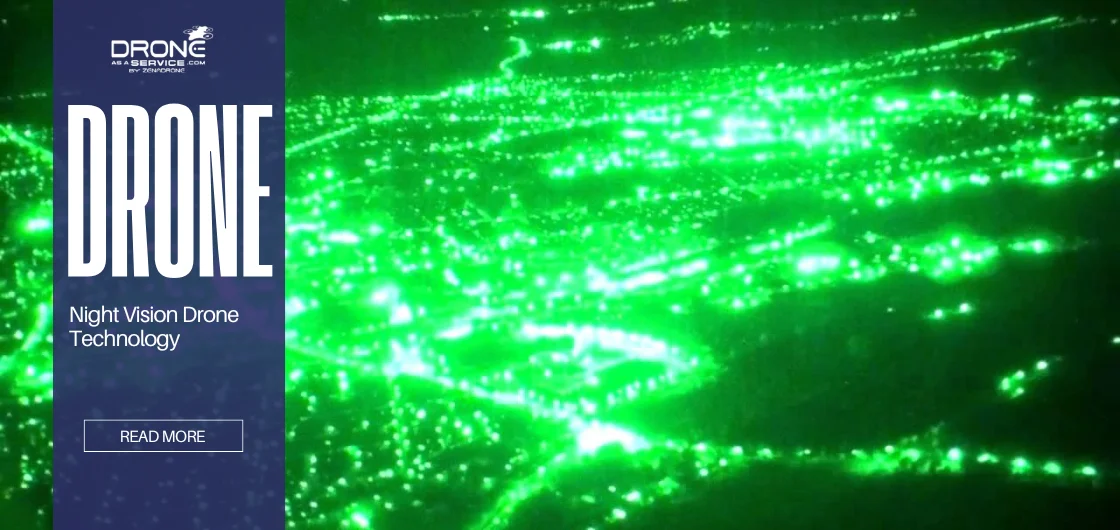
Night vision drones have changed the way we watch and explore the world after dark in the last few years. These drones have thermal or low-light cameras that let them take clear pictures in places where people can’t see. Night drones show hidden details that regular cameras often miss, whether they’re being used for surveillance or search and rescue.

This short guide explains how drone night vision technology works and why it is becoming necessary in many fields.

How Does Night Vision Technology Work?

Drones with night vision cameras can see light that is outside of the visible spectrum. Thermal (infrared) and low-light (starlight) imaging are the two main types.

  • Thermal/Infrared Cameras: Detect the heat emitted by people, animals, or objects. These sensors translate temperature differences into visible images (thermograms). Warm bodies stand out clearly against cooler backgrounds.
  • Low-Light (Starlight) Cameras: Collect faint light (such as moonlight, starlight, or urban glow) and amplify it. Sensitive sensors and digital enhancement boost these signals into a clear picture.

With both types of cameras, the drone instantly turns what it sees into a usable image. Noise is reduced and details are sharpened, so you can make out the scene clearly even when it’s completely dark.

Key Features of Night Vision Drones

Long battery life

Operators can cover large areas without having to come back often because flights can last 30 to 45 minutes or longer. Some drones say they can fly for up to 45 minutes. High-resolution cameras: Many night drones are equipped with both thermal and regular cameras. Some professional models, for example, have a 640×512 thermal sensor plus a 48MP visual camera, so you can easily switch between heat detection and full-color images.

Stabilization

Built-in gimbals and gyro systems help keep the camera steady, reducing motion blur and ensuring smooth, clear images even while the drone is in motion.

Long battery life

Extended flight times (often 30–45 minutes or more) allow operators to cover wide areas without frequent returns. Some drones promise up to 45 minutes of flight time.

Automated Flight Modes

Drones can fly safely at night because they can navigate on their own using GPS, automated flight modes, and avoiding obstacles. These features keep the course and altitude steady even when visibility is low.

Live video feed

A real-time video link lets operators see exactly what the drone sees, making it easier to respond immediately during surveillance or rescue missions.

Types of Night Vision Drones

Infrared (IR) Night Vision Drones

Use infrared illumination to enhance visibility in low-light environments. Ideal for perimeter security and basic surveillance.

Thermal Imaging Drones

Detect heat signatures instead of light, making them effective in complete darkness, fog, smoke, or dense vegetation.

Low-Light (Starlight) Camera Drones

Equipped with ultra-sensitive sensors that amplify available light such as moonlight or streetlights for clear nighttime imaging.

Multi-Sensor Night Vision Drones

Combine thermal, infrared, and low-light cameras for advanced situational awareness and professional operations.

AI-Powered Night Vision Drones

Use artificial intelligence for real-time object detection, tracking, and threat identification during night missions.

Military-Grade Night Vision Drones

Built for defense and tactical missions, offering encrypted communication, long endurance, and advanced night vision systems.

Advantages of Using Night Vision Drones

  • Covert Surveillance: Drones can monitor areas without alerting people. Night vision lets law enforcement gather intelligence on suspects after dark.
  • Search and Rescue: These drones help find missing people by detecting body heat, which can mean the difference between life and death at night.
  • Wildlife Tracking: Researchers and conservationists utilize thermal drones to count animals or detect poachers at night without disturbing their habitats.
  • Enhanced Security: Businesses and communities patrol perimeters after dark. Drones reveal intruders or hazards that static cameras or guards might miss.
  • See the Unseen: Night vision captures details that regular cameras miss. It visualizes heat differences and faint light reflections, uncovering hidden features in any night scene.

Industries That Benefit from Night Vision Drones

  • Law Enforcement: Police use night drones for patrol and crime scene reconnaissance, gathering intel after dark.
  • Search and Rescue: Emergency teams deploy them to quickly find missing persons or survivors in dark or remote areas.
  • Industrial Inspection: Factories, power plants, and pipelines can be monitored at night. Drones detect overheating equipment or faults without stopping operations.
  • Wildlife Research: Biologists use them to study nocturnal animals and protect wildlife. Thermal drones can reveal animal heat signatures in forests or help locate poachers.
  • Commercial Security: Businesses and estates add aerial night surveillance for 24/7 security. Night drones can patrol large perimeters and spot intruders that cameras or guards might miss after sunset.

How to Choose the Best Night Vision Drone

Selecting the best night vision drone requires understanding your operational needs and the technology that performs best in low-light or no-light environments. Start by defining your primary use case—such as surveillance, search and rescue, industrial inspection, or wildlife monitoring—since each application demands different imaging and flight capabilities.

The type of night vision technology is a critical factor. Thermal imaging drones detect heat signatures and work effectively in complete darkness, smoke, or fog. Infrared and low-light (starlight) camera drones rely on ambient or reflected light and are better suited for areas with some illumination. For professional operations, multi-sensor drones that combine thermal, IR, and visual cameras provide greater situational awareness.

Image quality also plays a major role. Look for drones with high-resolution sensors, strong low-light sensitivity, and minimal image noise to ensure clear visuals at night. Stable flight performance is equally important—long battery life, GPS-assisted navigation, and wind resistance help maintain control during nighttime missions.

Safety and reliability should not be overlooked. Advanced obstacle avoidance, secure communication links, and weather-resistant construction improve operational confidence in dark and unpredictable conditions. Finally, balance features with budget and ensure the drone complies with local aviation regulations for night flying.

By carefully evaluating these factors, you can choose a night vision drone that delivers reliable performance, safety, and clarity when operating after dark.

Buying Guide for Night Vision Drones

Buying FactorWhat to CompareKey Considerations
Compare ModelsCamera type, flight time, transmission range, priceResearch top-rated night vision drones and compare real-world performance.
Beginner vs ProfessionalBuilt-in thermal vs external attachmentsEntry-level drones often rely on smartphone thermal attachments, while professional and enterprise models feature integrated thermal systems.
Infrared vs Low-LightThermal, infrared, starlight sensorsChoose infrared or thermal imaging for complete darkness, low-light systems when ambient light exists. Hybrid drones offer both at a higher cost.
Maximize ValueBundles, accessories, mission fitLook for bundled accessories and ensure the drone supports your specific mission, whether indoor, outdoor, or payload-based operations.

Legal Considerations for Night Drone Flights

  • Follow Regulations: Always obey local laws. For example, in some countries, night flights require anti-collision strobes and pilot training.
  • Permissions: Obtain any required waivers or permits for night operations (especially for commercial use).
  • Restricted Zones: Never fly at night near airports, military bases, or sensitive areas.
  • Privacy & Safety: Respect privacy laws and avoid flying over people. Use caution to prevent accidents.
  • Compliance: Failing to follow night flight rules can result in fines, suspended licenses, or worse.

Tips for Flying Night Vision Drones

  • Plan Your Flight: Pre-select routes and check the weather and lighting conditions before takeoff. Avoid fog or heavy rain.
  • Test Equipment: Calibrate cameras and sensors before takeoff. Ensure that anti-collision lights and compasses are functioning properly.
  • Extra Batteries: Cold and night-vision electronics can drain power quickly. Carry spares so you don’t run out mid-mission.
  • Maintain Line of Sight: Always keep the drone in view and be aware of any obstacles. Consider flying higher or using a lit landing pad to avoid losing orientation.
  • Use Flight Aids: Rely on GPS hold and obstacle-avoidance features. Watch the live feed closely and be ready to take manual control if needed.

Common Mistakes to Avoid

  • Overestimating Range: Never fly until the battery is nearly empty. Always have a safe reserve when returning.
  • Flying in Bad Weather: High winds, rain, or fog can cause loss of control. Night conditions make crashes more likely.
  • Skipping Calibration: Night vision sensors must be calibrated and tested before each flight for reliable performance.
  • Relying Solely on Camera: Keep GPS and instruments active. In total darkness, visual cues may fail.
  • Breaking Rules: Don’t accidentally enter no-fly zones or violate altitude limits just because it’s dark.

Comparing Night Vision Drone Technologies

Different night vision methods suit different needs:

Infrared (Active IR)

Utilizes IR illumination (invisible to the human eye) to highlight objects. Effective for covert operations in complete darkness.

Thermal

Detects passive heat signatures. Warmer objects appear brighter on thermal cameras, making them ideal for spotting living things in any condition.

Low-Light (Starlight)

Amplifies faint ambient light to create a natural image. Low-light cameras preserve color detail when any light source (like the moon) is available.

Hybrid

Many advanced drones integrate both thermal and low-light sensors. Combining multiple technologies offers the most versatile night vision.

Future of Night Vision Drones

  • Operations with AI: Advanced AI will take care of night surveillance. Smart drones can find targets and spot strange things in the dark on their own.
  • Better Batteries: The next generation of batteries will probably double the amount of time a flight lasts. Recent improvements have shown that drones can fly for more than 40 minutes at -20 °C.
  • Miniaturization: Drones are becoming smaller while packing more power. Soon, even compact UAVs will carry advanced thermal or low-light sensors.
  • Autonomous Night Patrols: Drones could soon handle nighttime patrols on their own, watching over buildings, fences, or facilities while people focus on other tasks.
  • More Use: As technology gets better and prices go down, night-vision drones will be used in more places, like film, wildlife tours, and home security.

Conclusion

Night vision drones reveal what goes unseen in the dark, allowing security, rescue, and research teams to operate safely at night. They have become essential for wildlife monitoring, emergency response, and security patrols. Choosing the right drone means considering its sensors, flight time, and features. Used responsibly, this technology gives you reliable vision around the clock.

Frequently Asked Questions

What is a night vision drone and how does it work?

A drone with night vision is an unmanned aircraft that has sensors that let it see in the dark. Thermal cameras pick up the heat that things give off and turn it into pictures. Low-light (starlight) cameras collect weak ambient light and make it stronger so you can see clearly. In both cases, the onboard processors turn these signals into a live video feed for the pilot.

Are night vision drones legal in all countries?

A drone with night vision is an unmanned aircraft that has sensors that let it see in the dark. Thermal cameras pick up the heat that things give off and turn it into pictures. Low-light (starlight) cameras collect weak ambient light and make it stronger so you can see clearly. In both cases, the onboard processors turn these signals into a live video feed for the pilot.

How far can night vision drones see in total darkness?

This depends on the camera and the weather. High-end thermal drones can pick up on a heat signature the size of a person from hundreds of meters away. Low-light drones need moonlight or artificial light to work, so their range is shorter and depends on how much light is available. To figure out how far away a drone can see, always look at its specs.

What is the difference between thermal, infrared, and low-light drones?

  • Thermal drones utilize passive infrared sensors to map thermal energy. Warmer objects show up bright on thermal cameras.
  • Infrared drones often use an active infrared spotlight to illuminate the scene (invisible to the human eye). This helps in pitch darkness.
  • Low-light (starlight) drones amplify existing light (like moonlight) to produce a visible image. Thermal sees heat, IR uses IR light, and low-light boosts faint ambient light.

Can I attach a night vision camera to my existing drone?

It all depends on your drone. Some business drones can carry different types of payloads, such as thermal or low-light modules. Most consumer drones don’t allow you to attach a separate night-vision camera. In those cases, you’ll need a drone that comes with a built-in sensor designed for night-time imaging.

Which night vision drones are best for beginners or small businesses?

Entry-level users often choose small drones with built-in thermal cameras. Some consumer models come with both a thermal camera and a high-resolution visual camera in a package that is easy for beginners to use. If you have more money to spend, you can get mid-range options with high-resolution thermal and optical sensors. A dual-sensor drone is another easy-to-fly choice that strikes a good balance between cost and capability. You should compare features and read user reviews to find the best drone for your needs and budget.

Read Our Other Blogs

Item #1

THANK YOU

Thank you for booking a consultation with Drone as a Service! One of our team members will contact you shortly.