Drone as a Service

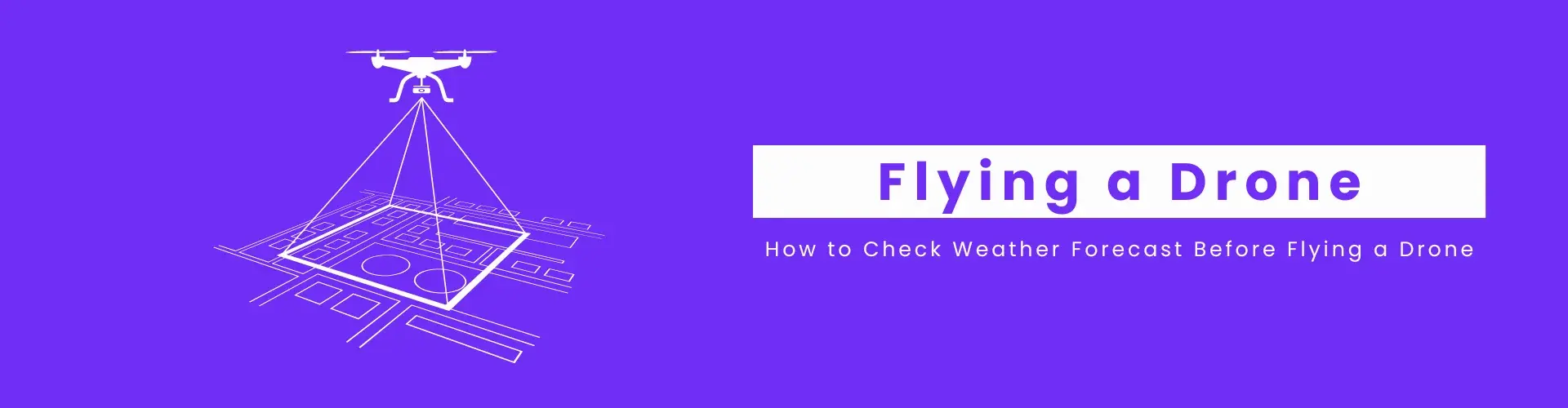
How to Check Weather Forecast Before Flying a Drone

Weather is not just a background condition for drone flying; it directly affects flight performance and pilot control. Drones may look stable at takeoff, but situations change quickly once they climb or move away from the launch point. 

One of the biggest reasons drones crash is that the wind is not steady. 
Wind stability limits vary by model, and understanding your drone’s wind resistance levels helps prevent unexpected flyaways.

Battery drain increases quickly in bad weather. When you fly into the wind, the motors have to function longer to keep the plane in the same place and at the same speed. Batteries lose power and can unexpectedly drop voltage in cold conditions, which can cause planes to land.
Cold weather especially impacts overall power sources in drones reducing efficiency and shortening total flight endurance.

When the weather is bad, GPS and visibility problems happen more often. GPS accuracy can be affected by thick clouds, fog, or storms. Poor visibility makes it difficult to judge distance, orientation, and altitude, increasing collision risk.

Checking the weather forecast before every flight is a basic safety habit. It protects your drone, your surroundings, and your ability to keep flying. 

A pilot who checks the forecast early can delay, relocate, or cancel the flight. A pilot who skips this step loses options once the drone is airborne.

Which Weather Conditions Affect Drone Flights the Most?

The weather is the most significant factor that determines drone safety. Always check these conditions before flying your drone:

Wind Speed & Gusts

Wind is the most critical factor for drone pilots as it affects stability, ground speed, battery life, and control accuracy. Moderate winds can make flights smooth and easy to forecast. Sudden gusts can cause issues, especially when they change wind direction, induce rapid tilting, or cause altitude loss. 

Gusts happen more commonly at higher altitudes between 100 and 200 feet. Pilots should check wind conditions at the desired flying altitude, not simply at ground level. Buildings, trees, and the ground can impede wind near the ground.

A lot of pilots only pay attention to wind speed and not wind direction, which might lead to problems. A tailwind helps the drone fly out faster. A headwind slows it down on the way back and drains the battery quickly. It makes it more likely the drone will not make it back. 
For safe and effective flights, it is essential to know both wind speed and direction.

Always check:

  • Wind direction
  • Wind speed at return altitude
  • Battery margin for the return trip

Wind speed limits are not suggestions. Most camera drones can hold their position and return reliably below wind speeds of fifteen miles per hour.
However, above it, the drone’s rotors work harder to remain stable in the air. Most drones often cannot overcome headwinds above twenty-five miles per hour.
A good rule of thumb: if ground speed drops below normal, head back early to avoid forced landings and flyaways.

Rain & Precipitation

Water and electronics do not mix. Even small amounts of moisture can permanently damage motors, sensors, and especially internal circuits.

Key problems caused by precipitation:

  • Motor failure due to water ingress
  • Short circuits in electronic components
  • Reduced camera visibility
  • Loss of radio signal strength

Most drones work best when the weather is not too bad. Flying close to temperature restrictions makes safety margins smaller and the chance of failure higher.

Most drones should not fly in rain or snow. Water damages motors, sensors, batteries, and internal boards. Rain also weakens radio signal strength and reduces camera visibility. Even a drizzle creates long-term damage that may not appear until later flights.

A good rule of thumb: if precipitation (rain, snow, mist, etc.) is possible during your flight window, do not fly.

Temperature (Hot & Cold)

Extreme heat or cold affects the reliability and lifespan of electronics.

Most drones operate best in moderate conditions. Flying during extreme temperatures increases the risk of failure.

The capability of the battery is also impacting the safety of the flight.  A battery loses efficiency under cold conditions, and its capacity decreases due to the lower voltage drop.  As a result, the UAV could land ahead of plan or crash due to power loss.

Meanwhile, excessive temperatures stress processors, sensors, and batteries. Using the device during these conditions can wear them down quickly.  The best practice here is always to make sure that the temperature is suitable before flying.

Visibility & Cloud Ceiling

If you can’t see your drone clearly, it’s harder to avoid obstructions, judge distance, and stay oriented.

Visibility problems come from:

  • Fog
  • Low clouds
  • Haze
  • Heavy rain

There are limits to obstacle avoidance systems. They have a hard time in fog, low light, and clouds. They don’t take the place of being aware of what’s going on around you.
The cloud ceiling also matters. Low clouds reduce vertical space and can cause accidental entry into clouds, which is unsafe and often illegal.
If you do not have a clear visual line of sight, do not fly your drone.Operating beyond direct visibility often requires regulatory approval under BVLOS (Beyond Visual Line of Sight) drone operations rules.

Safe vs Unsafe Drone Weather Conditions (Go / No-Go Guide)

Adding security measures is always a good idea to keep your drone in good condition. To ensure that it’s safe to fly your drone, follow this checklist:
Fly (Go)

  • Wind: under 15 mph
  • Gusts: under 20 mph
  • Precipitation: none
  • Temperature: 32°F–95°F
  • Visibility: clear
  • Cloud ceiling: high

Use Caution

  • Wind: 15–25 mph
  • Gusts: 20–30 mph 
  • Precipitation: slight chance
  • Temperature: near operating limits
  • Visibility: light haze
  • Cloud ceiling: moderate

Do Not Fly (No-Go)

  • Wind: over 25 mph 
  • Gusts: over 30 mph
  • Precipitation: rain or snow
  • Temperature: extreme heat or cold
  • Visibility: fog or poor visibility
  • Cloud ceiling: very low

Decision rule:

  • One No-Fly condition = Do not fly
  • Two or more Risky conditions = Do not fly

Where can I get some?

General weather applications work, but are not tailored to drone pilots. They often provide very general forecasts without detailed breakdowns of wind behavior at various heights or place emphasis on aviation-related risk factors.
Specialized tools help pilots focus on flight-relevant data. These systems have been designed to address this problem by single-mindedly targeting flight-related information. 
Instead of expecting pilots to interpret raw weather data, these systems adapt the conditions into usable go or no-go advice.

UAV Forecast

UAV Forecast is explicitly built for drone pilots, which makes it easier to evaluate conditions quickly. Rather than scanning multiple weather sources, pilots can view flight-critical information in one place.
It shows:

  • Wind at multiple altitudes
  • Gusts
  • Temperature
  • Visibility
  • Cloud cover
  • Risk indicators

Pilots trust its visualization since it communicates weather information in a manner that translates into straightforward flight decisions.  With visual indicators such as risk levels and altitude, specific wind changes, it minimizes interpretation errors and saves on planning time.

AURA (Aviation Weather)

AURA focuses on aviation-grade weather data, making it useful for operators who want information aligned with professional flight standards.
It provides:

  • Aviation-grade weather data
  • Wind profiles
  • Cloud ceilings
  • Visibility

Beyond the use of applications on a mobile phone, advanced operators can actually embed weather information directly into their systems.  Using weather APIs means a team can effectively automate checks.

Weather APIs (Brief Overview)

Advanced operators often go beyond mobile apps and integrate weather data directly into their systems. Weather APIs allow teams to automate monitoring and reduce manual checks.
They are commonly used to:

  • Automate planning
  • Create alerts
  • Monitor multiple locations

These systems pull information from reliable aviation sources and present wind by altitude, gust strength, cloud ceiling, and visibility in a flight-focused format. By delivering structured, aviation-specific data, they cut down on interpretation mistakes and make go-or-no-go decisions faster and more consistently.

Beginner vs Professional Drone Weather Limits

Skill level affects how much weather risk is acceptable.
Not every drone pilot handles weather risk in the same way.  The weather variability that a pilot can manage is influenced heavily by their skill level.  A higher skill level does not make weather risk disappear, but decreases reaction time and improves judgment.
Knowing your own limitations is as important as knowing the weather; beginners must be given large safety margins, whereas a professional must work within set parameters supported by procedures.

Hobby / Beginner Drone Pilots

Beginners should fly only in calm, stable weather. Early training flights are about building control, confidence, and awareness, not testing limits.
New pilots often have less experience handling drift and may react more slowly to sudden wind changes. Smaller drones, which many beginners use, are also affected more by wind and gusts.
For that reason, recommended beginner limits include:

  • Wind under 10–12 mph
  • No gusts
  • Clear visibility
  • Mild temperatures

Learning in safe conditions builds confidence and skill. When the weather is predictable, beginners can focus on control and orientation instead of fighting environmental forces.

Commercial / Professional Operators

Professionals may fly closer to operational limits, but they still follow strict rules. Experience allows them to manage more complex conditions, yet structured safety processes guide decisions
They rely on:

  • Defined operational limits
  • Risk assessments
  • Continuous weather monitoring

If safety margins are reduced, flights are canceled. Careful decisions are required due to insurance obligations, regulations, and operational risk assessments. Skill assists in managing the weather, but the weather ultimately determines whether a flight is conducted.

Weather Forecast vs Weather Drones – What’s the Difference?

Drone pilots use weather forecasts to decide when it is safe to fly. Researchers use weather drones to collect atmospheric data.
Forecasts already combine data from:

  • Satellites
  • Ground stations
  • Aircraft
  • Specialized drones

Common Weather Mistakes Drone Pilots Make

Incidents caused by weather seldom occur due to a lack of information from the pilot.  They are far more likely to happen when a Pilot underestimates the risks or discounts the initial warning signs or indicators. Even the most experienced operator may become complacent when it appears, on the surface, that the weather is manageable.

Understanding weather mistakes listed is key to catching dangerous actions before they cause damage to aircraft or create hazardous situations. Refraining from making these errors enhances safety and decision-making,  resulting in uniformity.

Ignoring Gusts

Sudden wind changes can quickly destabilize a drone, even when average wind speeds seem safe. 

Checking Weather Only Once

Weather conditions can shift rapidly, especially during longer operations or in the afternoon. 

Flying Short “Test” Flights in Bad Weather

Risk begins at takeoff, regardless of how short the flight is planned to be. 

Trusting Automation Too Much

Stabilization systems and return-to-home features improve safety but cannot overcome severe weather. 

Assuming Experience Removes Weather Risk

Experience improves reaction time and judgment, but does not eliminate environmental hazards. 

Final Pre-Flight Weather Checklist for Drone Pilots

A thorough weather check before takeoff using a standardized list can diminish unnecessary hazards and help your decision-making process. Even seasoned pilots find it helpful to go through a standard list instead of making assumptions, 

Weather changes rapidly, and minor errors can escalate in the air. This ultimate check is to make sure the weather conditions are now appropriate for the whole mission and not just takeoff

Wind Speed Checked at Altitude

Wind behaves differently at higher elevations than at ground level. A calm surface breeze does not guarantee stable air at 100 or 200 feet.
Always check wind speed at your planned operating altitude, making sure it is within the limitations of your drone.

Wind Gusts Reviewed

Average wind speed does not show short bursts of stronger wind. Gusts can create sudden instability and force aggressive control corrections.
Review maximum gust values before flight to avoid unexpected loss of stability mid-air.

Rain and Precipitation Checked

Most consumer and commercial drones are not designed to tolerate moisture.  Light rain can compromise optical sensors,  camera images, electronic systems, etc. Make sure there will be no rain forecast for your entire flight duration (not just at the launch time).

Temperature Within Limits

The effect of temperature on battery and aircraft performance needs to be addressed.  High temperatures can overwork the internal systems of the battery,  and cold temperatures decrease the capacity of the battery. 
Verify the ambient temperature is within the recommended manufacturer’s operating range before takeoff.

Visibility Clear

Good visibility will allow you to remain in direct line of sight and know what’s happening around you. Meanwhile, poor visibility brings problems such as obstructions, signal drop, or getting disoriented. 
Always check the drone’s flight path to ensure it is not obscured by haze, fog, or heavy cloud cover.

Cloud Ceiling Acceptable

Low cloud ceilings limit safe operating altitude and can reduce GPS and signal reliability. Flying too close to cloud layers also reduces visibility and spatial awareness. Ensure the cloud ceiling is high enough to conduct your planned mission safely.

The Weather Is Stable for the Entire Flight

Conditions may be safe at take off, and then worsen throughout the mission, with wind speed, gusts, or rain intensifying more rapidly than anticipated. Check forecasts and monitor conditions in real time for stability from launch to landing.

Frequently Asked Questions

Can you fly a drone in 20 mph wind?

Most consumer drones struggle in winds above 20 mph, especially during return flights into headwinds. Battery drain increases and stability decreases, making it risky.

Most consumer and commercial drones are not waterproof. Even light rain can damage motors and internal electronics.

Use drone-specific weather tools like UAV Forecast that show wind speeds at multiple altitudes.

Conclusion

Weather determines whether a drone flight is safe, compliant, and worth the risk. The rule is simple: If the weather is uncertain, don’t fly.
Following wind restrictions, avoiding precipitation, and verifying visibility safeguards are more than just about your drone. They protect people on the ground and your regulatory status. 
Efficient pilots care about safety,  adhere to mandatory compliance rules, and keep the equipment in a safe condition at all times.  When circumstances are doubtful, then postponing the flight is the safest action.

Ready to Maximise Your ROI?

Move forward and start using the best tools available to keep your business successful for years to come.

THANK YOU

Thank you for booking a consultation with Drone as a Service! One of our team members will contact you shortly.