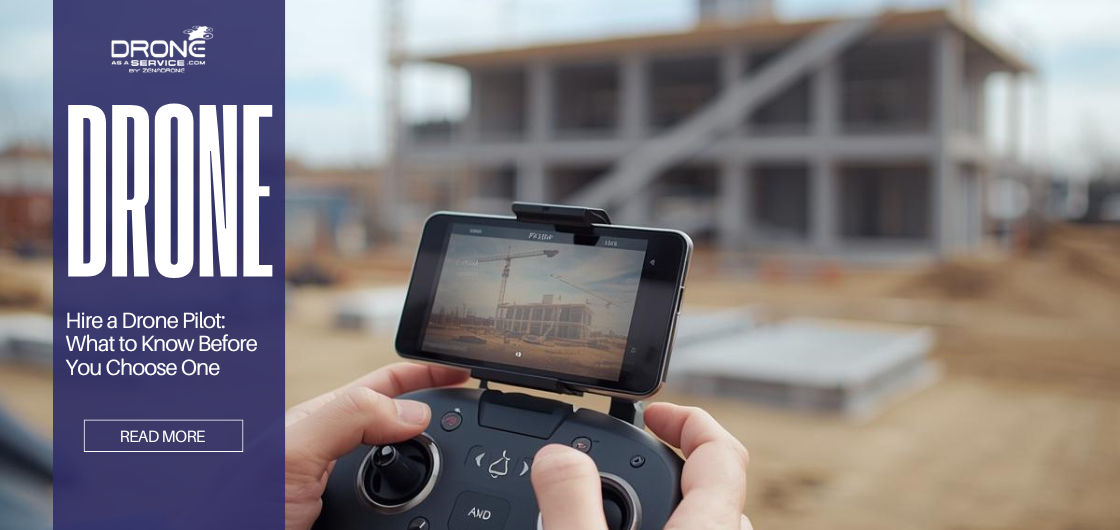
Hire a Drone Pilot: What to Know Before You Choose One
Hiring a drone pilot is no longer just for filmmakers or tech companies. Today, businesses across real estate, construction, agriculture, inspections, and marketing rely on drone operators to collect data and create visuals that would otherwise be expensive or impossible to obtain.
But not all drone pilots offer the same level of skill, equipment, or legal compliance. Choosing the wrong one can lead to poor-quality results, safety risks, or even regulatory issues. This mini guide explains what a drone pilot really does, when you should hire one, how to evaluate your options, and how to make sure your project is handled legally and professionally.
What Does a Drone Pilot (or Drone Operator) Do?
A drone pilot is responsible for much more than simply flying a drone. In professional projects, the pilot is also an operator who plans the flight, manages safety, and delivers usable results.
Typical responsibilities include:
- Planning flight paths and checking airspace restrictions
- Inspecting the drone and camera equipment before takeoff
- Capturing aerial photos, videos, or sensor data
- Processing and editing the collected footage or data
- Delivering final files in formats suitable for business use
In other words, a professional drone operator provides a complete service: preparation, execution, and post-production. This is very different from recreational flying, where the goal is simply to enjoy the flight.
When Should You Hire a Drone Pilot Instead of Flying Yourself?
Many people consider flying their own drone to save money. In some cases, that can work for personal use. But for business or commercial purposes, hiring a professional drone pilot is usually the safer and more effective option.
Reasons to hire a professional include:
- Legal compliance: Commercial drone flights in the US must follow FAA regulations, which most casual users are not trained to handle.
- Quality results: Professionals use better equipment and understand lighting, angles, and data accuracy.
- Risk reduction: Experienced pilots know how to manage weather, obstacles, and emergency situations.
- Time efficiency: Instead of learning flight rules and editing software, you can focus on your core business.
If your project involves clients, property, or valuable data, professional drone services are usually worth the investment
Legal Requirements for Hiring a Drone Pilot in the US
In the United States, commercial drone operations fall under FAA Part 107 rules. This is the legal framework that governs how drones can be used for business purposes.
A qualified drone pilot should:
- Hold an FAA Part 107 license
- Understand airspace classifications and restrictions
- Follow operational rules related to altitude, visibility, and flight zones
- Carry appropriate insurance coverage
Some locations, such as areas near airports or controlled airspace, may require additional authorization. A professional drone operator knows how to check these restrictions and apply for approval when needed.
If you take interest, you must read this article: 10 Illegal Drone No-Fly Zones in the United States
Anyhow, hiring someone who ignores these rules can expose both the pilot and the client to fines or legal problems. That is why verifying licensing and compliance is a critical step in the hiring process.
Types of Drone Pilots You Can Hire
Not all drone pilots specialize in the same kind of work. Choosing the right type depends on your project goals.
Aerial Photography and Video Pilots
These pilots focus on visual storytelling. They capture cinematic footage for marketing, tourism, and media projects. Their skill lies in camera movement, framing, and post-production editing.
Real Estate Drone Pilots
These operators create exterior property shots, neighborhood overviews, and promotional videos. They understand how to highlight buildings, landscapes, and surroundings in a way that attracts buyers.
Construction and Site Monitoring Pilots
These pilots document project progress, measure site changes, and provide aerial updates for project managers. Accuracy and consistency are more important here than cinematic style.
Surveying and Mapping Pilots
These specialists use drones equipped with advanced sensors to create maps, models, and measurements. Their work supports land development, engineering, and planning.
Agricultural Drone Operators
They capture crop data, irrigation patterns, and plant health imagery. Their focus is on data collection rather than visuals.
Inspection Drone Pilots
These pilots inspect roofs, towers, solar panels, and infrastructure. Precision and safety are more important than artistic footage.
Understanding your project category helps you find a pilot with relevant experience instead of hiring someone whose skills do not match your needs.
You may read also: How Drones Are Transforming Data Capture and Analysis?
How to Find a Drone Pilot?
Finding a drone pilot may seem simple at first, search online, pick a name, and book a service. But many people quickly realize that not every pilot offers the same skills, equipment, or level of professionalism.
Choosing the wrong source can lead to delays, poor results, or compliance issues. That’s why knowing how to find a lost drone is a critical skill every drone pilot should master before something goes wrong.
There are several ways to locate drone pilots for hire:
- Local independent operators
- Online marketplaces and directories
- Agencies offering drone services
- Managed service providers that coordinate multiple pilots
When reviewing profiles or websites, look for:
- A portfolio related to your type of project
- Clear service descriptions
- Examples of previous commercial work
- Evidence of licensing and insurance
Finding a drone pilot is easy. Finding the right drone pilot requires attention to detail.
How to Evaluate a Drone Pilot Before Hiring
Once you find a few drone pilots, the next challenge is deciding which one is actually qualified for your project.
A strong online presence or a low price does not always mean the pilot is experienced or suitable for your needs. Without proper evaluation, you risk hiring someone who cannot deliver the quality or accuracy your project requires.
Understanding what to look for in a drone pilot helps you make a confident and informed choice. So, before making a decision, evaluate the pilot’s qualifications and experience.
Important factors include:
- FAA licensing and compliance
- Insurance coverage
- Equipment and sensor capabilities
- Relevant past projects
- Editing and data processing skills
- Communication and turnaround time
A pilot who has experience in your specific industry is usually more valuable than one who only has general flying experience.
Questions to Ask Before Hiring a Drone Operator
Asking the right questions can prevent misunderstandings later.
Many problems in drone projects happen because expectations were never clearly discussed. Clients assume one thing, and pilots assume another. This can lead to confusion about deliverables, timelines, or even legal responsibility.
Asking the right questions before hiring a drone operator helps set clear expectations and ensures both sides understand the scope of work from the beginning.
Helpful questions include:
- What type of drone and camera will you use?
- What deliverables will I receive and in what format?
- Who handles airspace approval if required?
- How do you manage weather delays?
- Who owns the footage or collected data?
Clear answers help define expectations and avoid disputes.
How Much Does It Cost to Hire a Drone Pilot?
Drone pilot pricing varies depending on several factors:
- Type of project
- Location and airspace complexity
- Pilot experience level
- Equipment and sensors used
- Editing and processing time
- Urgency of delivery
Some projects only require basic photography, while others involve advanced drone mapping or drone inspection work. This is why prices differ significantly between pilots and services.
Common Mistakes to Avoid When Hiring a Drone Pilot
Hiring a drone pilot without proper research can result in wasted money, unusable footage, or even legal trouble. Many of these issues come from simple mistakes, such as focusing only on price or ignoring licensing and experience.
Learning from common hiring errors can help you avoid unnecessary risks and ensure your project is completed safely and professionally.
Common hiring mistakes include:
- Choosing the cheapest option without checking credentials
- Not verifying FAA licensing
- Failing to define deliverables clearly
- Ignoring airspace and location restrictions
- Hiring a pilot with irrelevant experience
Avoiding these mistakes improves both safety and project quality.
The Future of Drone Services
Drone services continue to expand across industries. Construction, agriculture, and inspections increasingly rely on aerial data. Automation drone and artificial intelligence are improving mapping and analysis, while managed service models are making drone operations easier for businesses to scale.
This trend means hiring drone professionals will become more common and more specialized over time.
Frequently Asked Questions
Do I need a licensed drone pilot for commercial projects?
Yes. In the United States, any drone flight conducted for business purposes must follow FAA Part 107 regulations. Hiring a licensed drone pilot helps ensure the operation is legal, safe, and compliant with airspace rules.
How can I verify if a drone pilot is licensed?
You can ask the pilot for proof of their FAA Part 107 license or check their credentials through official FAA records. A professional pilot should be willing to share this information without hesitation.
What is the difference between a drone pilot and a drone operator?
A drone pilot typically refers to the person flying the drone, while a drone operator often manages the full process, including flight planning, safety checks, data capture, and post-processing. In professional services, the two roles are often combined.
Can I hire a drone pilot for one-time projects?
Yes. Many drone pilots offer services for single projects such as real estate photography, roof inspections, or construction site documentation. Others specialize in long-term or recurring work.
What industries commonly hire drone pilots?
Common industries include real estate, construction, agriculture, infrastructure inspection, surveying, mapping, marketing, and media production.
How long does a typical drone project take?
Project length depends on the scope of work. Simple photo shoots may take a few hours, while mapping or inspection projects can require more time for data capture and processing.
Who owns the footage or data collected by a drone pilot?
Ownership depends on the contract or agreement. This should be clarified before the project begins so both parties understand how the footage or data can be used.
Is insurance necessary when hiring a drone pilot?
Yes. Professional drone pilots usually carry liability insurance. This protects both the pilot and the client in case of property damage or accidents.
What is Drone as a Service (DaaS)?
Drone as a Service (DaaS) is a managed model where businesses receive end-to-end drone operations without hiring individual pilots themselves. Services are delivered by operators working under FAA Part 107 regulations and designed for consistent, scalable use.
Why Consider Drone as a Service (DaaS)
For businesses that need drone services regularly or across multiple locations, Drone as a Service (DaaS) offers a managed approach.
With DaaS:
- Drone operations are handled end-to-end
- Operators work under FAA Part 107 regulations
- There is no need to recruit or manage individual pilots
- Quality and compliance are maintained consistently
- Services can scale across multiple projects and regions
- Different industries can be supported through a single solution
Instead of coordinating multiple freelancers, businesses can rely on a structured service model designed for professional use.
Conclusion
Hiring a drone pilot is about more than finding someone who can fly. It is about choosing a professional who understands safety, legal compliance, and your specific project needs.
By understanding the types of drone pilots available, knowing what questions to ask, and recognizing the value of compliant operations, you can make informed decisions that protect your business and improve results.
For organizations that need reliable and scalable drone solutions, managed models to provide an efficient way to access professional drone operations without added complexity.