
Drone Utility Inspection: Complete Operational Guide for Grid-Scale Infrastructure
How UAV inspection programs detect faults, map corridors, and prevent outages across transmission, distribution, and pipeline networks from sensor selection to AI-driven maintenance workflows.
|
⏱ 22 min read
|
🔧 Operational Guide
|
🎯 Enterprise + Field-Level
- 01 What Drone Utility Inspection Actually Involves
- 02 Why Utilities Are Replacing Helicopters and Ground Crews
- 03 Infrastructure Assets Drones Inspect and Where They Fall Short
- 04 Core Sensor Systems and Payload Technologies
- 05 Thermal Imaging: Calibration, Anomaly Detection, and Solar Loading
- 06 LiDAR Mapping, Corridor Analysis, and Digital Twin Generation
- 07 AI-Powered Defect Detection, Classification, and Predictive Analytics
- 08 FAA Part 107, BVLOS, NERC CIP, and the Compliance Framework
- 09 Drone vs Helicopter vs Manual: Side-by-Side Comparison
- 10 Operational Workflow — Pre-Flight to Maintenance Ticket
- 11 Operational Mistakes That Compromise Inspection Programs
- 12 ROI, Total Cost of Ownership, and the Enterprise Business Case
- 13 Future of Drone Utility Inspection
- 14 Field-Tested Insights Most Vendors Won’t Tell You
- 15 Frequently Asked Questions
- Drone utility inspection detects thermal anomalies, vegetation encroachment, conductor sag, corona discharge, and structural fatigue at a fraction of helicopter inspection costs.
- Thermal cameras with radiometric accuracy of ±2°C isolate hotspot differentials across conductors, transformers, insulators, and splice connections, but only when emissivity and solar loading are calibrated correctly.
- LiDAR-equipped UAVs generate point clouds at 150+ points/m², mapping vegetation clearance violations and conductor positions to ±3 cm RMSE for NERC FAC-003 compliance verification.
- AI classification engines process thousands of inspection images per hour, scoring defect severity and auto-generating maintenance tickets in CMMS and GIS platforms like ArcGIS and Esri.
- The single largest ROI driver is outage prevention; not helicopter cost savings. One prevented transmission failure offsets the full annual cost of most drone programs.
- BVLOS operations remain the operational threshold for enterprise-scale corridor inspection. As of 2026, FAA waiver approval timelines average 8–14 months.
- Effective programs integrate drone inspection data with SCADA systems, asset health indices, and reliability-centered maintenance (RCM) frameworks for condition-based decision-making.
What Drone Utility Inspection Actually Involves — Beyond the Marketing Pitch
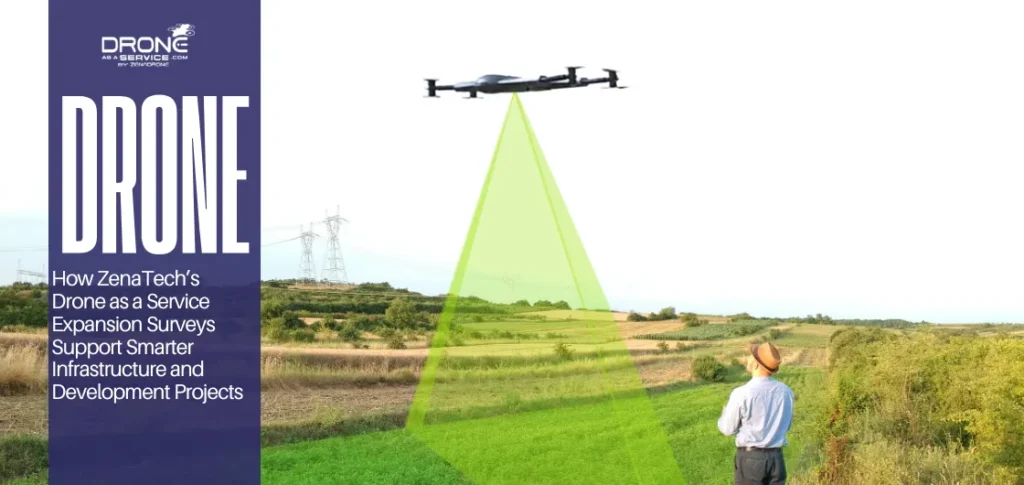
Drone utility inspection is the systematic deployment of unmanned aerial vehicles: multirotor, fixed-wing, or hybrid VTOL platforms equipped with specialized sensor payloads to assess, document, and quantify the physical condition of utility infrastructure assets. That covers transmission lines, distribution networks, substations, pipelines, wind turbines, solar arrays, telecom towers, and associated right-of-way (ROW) corridors.
But here’s what the vendor brochure typically skips: Drone inspection is not just “flying a camera near power lines.” It is a multi-stage operational workflow that spans mission planning, airspace authorization through LAANC, RTK or PPK geospatial calibration, sensor synchronization, autonomous waypoint execution, edge data capture, cloud-based post-processing, AI defect classification, GIS integration, and automated maintenance ticket generation inside enterprise platforms like IBM Maximo or SAP EAM.
The data outputs define the value. A single corridor flight generates radiometric thermal imagery, centimeter-accurate LiDAR point clouds, high-resolution RGB photography, and geo-tagged anomaly records. These feed directly into asset lifecycle management systems, SCADA overlays, and digital twin models that utility operations managers use to prioritize maintenance, forecast failures, and validate regulatory compliance particularly NERC CIP and NERC FAC-003 vegetation management standards.
The distinction between a drone inspection “project” and a drone inspection “program” matters operationally. A project is a one-time flight. A program is an enterprise-scale, recurring inspection cycle integrated into the utility’s reliability-centered maintenance (RCM) framework with defined inspection frequencies, AI model training pipelines, historical trend analysis, and SCADA-correlated asset health scoring.
Why Utilities Are Replacing Helicopters and Ground Crews with Drones
Traditional utility inspection relied on three methods: manned helicopter patrols, vehicle-based ground inspections, and line worker climbing. Each carried operational constraints that drone utility inspection directly addresses, though not without tradeoffs.
The Helicopter Problem
Helicopter line patrols cost between $150 and $500+ per mile depending on terrain, weather windows, and crew requirements. They fly at altitudes that limit sensor resolution, require expensive insurance and pilot certifications, and generate significant safety exposure. The fatal accident rate for utility helicopter operations historically exceeds that of most other commercial aviation sectors.
Drones don’t eliminate helicopters entirely. For long-distance corridor reconnaissance exceeding 80–100 miles in a single day, manned helicopters still cover ground faster. But for detailed, close-range thermal and structural inspection, the kind that actually detects splice failures, corroded hardware, and insulator contamination, multirotor UAVs operating at 15–30 meters from conductors capture data at resolutions that helicopters at 100+ feet simply cannot match.
The Manual Inspection Bottleneck
Ground-based and climbing inspections provide hands-on verification that drones cannot replicate hardware torque checks, contact resistance measurements, physical component replacement. But they are dangerously slow. A two-person ground crew inspects 3-5 structures per day on a transmission line. A single drone covers 30-60 structures in the same window.
The operational shift isn’t replacement. It’s triage. Drone inspection identifies and classifies anomalies across the entire network. Human crews then deploy surgically to the highest-priority defects. This condition-based maintenance (CBM) approach, where inspection data drives repair scheduling reduces unnecessary truck rolls by 40-60% in programs we’ve reviewed across mid-size investor-owned utilities.
Grid Modernization and the Data Imperative
The deeper driver behind drone adoption isn’t cost reduction alone. It’s grid modernization. FERC (Federal Energy Regulatory Commission) and state public utility commissions are pushing utilities toward smart grid infrastructure: real-time monitoring, predictive analytics, and digital asset management. Drone inspection programs generate the geospatial and condition data that feeds these systems. Without high-frequency, sensor-grade inspection data, predictive maintenance models have nothing to train on.
Infrastructure Assets Drones Inspect and Where They Fall Short
Transmission Lines (69kV – 765kV)
Drones inspect conductor condition, hardware connections, insulator strings, damper systems, shield wire integrity, and tower structural members. Thermal sensors isolate overheating splices, degraded compression connectors, and failing insulators by mapping temperature differentials across the span. LiDAR simultaneously captures conductor sag, clearance measurements, and span geometry for sag analysis validation against NESC clearance tables.
Distribution Networks (4kV – 34.5kV)
Distribution inspection focuses on pole-top hardware, crossarms, transformer condition, fuse cutout status, and vegetation contact risk. Distribution network operators (DNOs) increasingly use drone-captured RGB and thermal data to build pole-by-pole asset registries that feed GIS-based outage prediction models.
Substations
Substation inspection maps transformer hotspots, bushing thermal anomalies, breaker contact degradation, and oil leak indicators. Solar loading creates significant false positive risk in substation thermal scans, a point we cover in detail in the thermal section.
Pipelines (Oil, Gas, Water)
UAVs equipped with methane detection sensors, thermal cameras, and multispectral imagers survey pipeline corridors for gas leaks, ground subsidence, third-party encroachment, and coating degradation indicators. Integration with pipeline SCADA systems correlates aerial anomaly data with inline inspection pig results.
Wind Turbines
Blade inspection for leading-edge erosion, lightning strike damage, surface cracking, and internal delamination. Standard RGB inspection detects surface defects. Thermal imaging identifies subsurface delamination by mapping differential heating patterns but only under specific solar exposure conditions.
Solar Arrays
Thermal drone inspection of photovoltaic panels identifies hotspot cells, bypass diode failures, string-level underperformance, and soiling patterns. A single flight covers a 50 MW solar farm in 2-3 hours, a task that would require 2-3 weeks of manual ground inspection.
Where Drones Cannot Fully Replace Human Inspection
Hardware torque verification. Internal switchgear inspection. Contact resistance measurement. Phase conductor transposition verification at dead-end structures. These require physical crew access. Drones triage. Humans verify and repair.
Core Sensor Systems and Payload Technologies That Define Inspection Quality
The drone platform itself is just a delivery vehicle. Inspection quality depends almost entirely on the sensor payload, its calibration, and the data processing pipeline downstream.
Thermal Imaging Cameras
Radiometric thermal cameras; such as the FLIR Vue TZ20, DJI Zenmuse H20T, or Workswell WIRIS Pro measure surface temperature across every pixel in the frame. Key specifications:
- Thermal sensitivity (NETD): 30-50 mK range. Lower NETD values detect smaller temperature differentials essential for isolating early-stage conductor degradation.
- Radiometric accuracy: ±2°C typical. Matters when classifying anomaly severity against maintenance priority thresholds.
- Resolution: 640×512 pixels is current industry standard.
- Emissivity range: Adjustable 0.1–1.0 for calibrating against different material surfaces.
LiDAR Sensors
Survey-grade LiDAR units; Velodyne Puck, Leica BLK series, Riegl miniVUX generate dense 3D point clouds. Operational attributes:
- Point cloud density: 100–300+ points/m² depending on flight speed and altitude.
- Multi-return capability: Captures first-return (canopy top) and last-return (ground surface) simultaneously.
- Range accuracy: ±2–3 cm typical with RTK/PPK correction.
- Wire detection: Identifies conductor positions at distances up to 100 meters.
RGB Cameras
High-resolution visual cameras (42–61 MP full-frame sensors) capture structural detail at sub-centimeter GSD. Image overlap at 75–80% frontal and 65–70% sidelap feeds Structure from Motion (SfM) photogrammetric processing. DJI Zenmuse P1 and Phase One iXM-100 dominate enterprise deployments.
Multispectral and Gas Detection
Specialized payloads for methane (CH₄) detection, partial discharge UV imaging, and corona discharge visualization. Growing in pipeline and transmission applications particularly for PHMSA inspection mandates and insulator contamination monitoring.
Platform Selection: DJI Matrice 350 RTK, Skydio X10, Flyability Elios 3
Enterprise inspection programs overwhelmingly deploy the DJI Matrice 350 RTK for outdoor corridor and substation inspection. Its 55-minute flight endurance, IP55 weather rating, triple-redundant propulsion, and FPV camera make it the current operational standard. Skydio X10 competes with superior autonomous obstacle avoidance. Flyability Elios 3 fills the confined-space niche for internal inspection with its collision-tolerant cage design.
Emerging and Specialized Platforms: ZenaDrone IQ Series
ZenaDrone IQ Square offers a multifunction VTOL platform for outdoor inspections, surveying, and security applications. It provides flexibility through modular payloads, AI-assisted navigation, and multi-industry deployment capability. ZenaDrone IQ Nano targets indoor warehouse environments, focusing on inventory scanning, barcode automation, and digital asset tracking rather than confined-space physical inspection.
Platform specs matter less than most procurement teams think. The sensor payload, calibration discipline, and data processing pipeline determine 80% of inspection value. We’ve reviewed programs running $30,000 drone platforms that produced worse actionable data than a $12,000 setup with better-calibrated sensors and tighter processing SOPs.
Thermal Imaging for Utility Inspection: Calibration, Anomaly Detection, and the Solar Loading Problem
Thermal inspection is the single highest-value data layer in drone utility inspection. It identifies failure precursors that RGB cameras cannot see overheating splice connections, degraded compression fittings, failing insulators with internal moisture paths, and transformer hot-spot formations.
How Thermal Anomaly Detection Works in Practice
The process isn’t pointing a thermal camera and looking for “hot stuff.” Radiometric imaging captures calibrated surface temperatures at every pixel. Analysts or AI classification engines evaluate temperature differentials (ΔT) between:
- A component and its ambient environment
- A component and identical adjacent components
- A component and its historical thermal baseline
A splice connection running 18°C above an adjacent connection on the same phase conductor flags as a significant anomaly. Context determines severity classification, not absolute temperature.
Why Emissivity Calibration Makes or Breaks Thermal Data
Different materials emit infrared radiation at different rates. Galvanized steel (emissivity ~0.28), weathered aluminum conductor (~0.55), and porcelain insulator (~0.92) all register different apparent temperatures even when at identical actual temperatures. If the thermal camera’s emissivity setting doesn’t match the target material, every temperature reading is wrong.
Most false positives in utility thermal inspection trace back to emissivity mismatch, not sensor limitations. Programs that skip per-material emissivity calibration generate 3–5x the false positive rate of calibrated programs.
The Solar Loading Problem That Most Guides Ignore
Solar radiation heats conductive surfaces unevenly. South-facing sides of equipment, horizontal bus bars, and transformer tanks absorb solar energy at different rates depending on surface orientation, paint color, and ambient wind. Near substations, this creates apparent thermal anomalies that mimic genuine overheating.
The mitigation is scheduling. Thermal inspections conducted within 2 hours of sunrise or 1 hour before sunset minimize solar loading interference. Experienced programs document solar conditions alongside every thermal capture and train AI classifiers to weight solar loading probability into anomaly confidence scoring.
Corona Discharge and Partial Discharge Detection
Corona discharge – the ionization of air around high-voltage conductors, indicates insulator contamination, damaged hardware, or excessive electric field gradients. UV-sensitive cameras detect corona visually. Partial discharge detection typically requires acoustic or UHF sensors rather than thermal imaging alone, though combined sensor approaches are advancing rapidly.
Corona discharge detection accuracy degrades significantly in humid conditions above 80% relative humidity. The ionization signature disperses faster, and UV sensors register lower contrast. Scheduling corona surveys for dry conditions isn’t just preferable, it’s operationally necessary for reliable classification.
LiDAR Mapping, Corridor Analysis, and Digital Twin Generation
LiDAR transforms drone utility inspection from visual assessment into precise geospatial measurement. While thermal and RGB cameras show you what something looks like, LiDAR quantifies where everything is to centimeter accuracy and how it’s changing over time.
What LiDAR Actually Measures in Utility Corridors
A drone-mounted LiDAR scanner sweeping a transmission corridor simultaneously captures:
- Conductor position: XYZ coordinates of every wire at multiple points per span, resolving sag profiles under actual loading conditions.
- Clearance measurements: Vertical and horizontal distances between conductors, ground, structures, buildings, and vegetation.
- Vegetation canopy height: Multi-return LiDAR penetrates tree canopy to model both canopy surface (DSM) and bare earth (DTM).
- Structure geometry: Tower lean, arm deflection, foundation exposure, and guy wire tension indicators.
Vegetation Encroachment Modeling for NERC FAC-003 Compliance
NERC FAC-003 mandates transmission vegetation management programs with defined clearance requirements. LiDAR-derived vegetation encroachment models don’t just identify current violations, they forecast future encroachment by correlating growth rate data with species classification and clearance thresholds.
Programs that integrate LiDAR encroachment modeling with GIS platforms like ArcGIS or Esri reduce reactive clearing events by 30–45% and demonstrate NERC compliance proactively rather than defensively.
Sag Analysis and Clearance Verification
Conductor sag varies with temperature, current loading, ice accumulation, and wind pressure. LiDAR captures actual sag profiles under real-time conditions. Engineers then model sag at maximum operating temperature to verify clearance violations won’t occur under worst-case thermal loading.
Traditional survey methods measured sag at maybe 3–5 points per span. LiDAR captures hundreds of measurements per span. The data density fundamentally changes the accuracy of clearance analysis.
Digital Twin Construction and GIS Integration
Repeated LiDAR corridor scans build digital twin models, 3D replicas of the entire utility corridor that update with each inspection cycle. These integrate with GIS mapping platforms, SCADA operational data, and asset management databases. Year-over-year comparison detects foundation settlement, structure lean progression, conductor creep, and vegetation growth acceleration.
Processing Pipeline: From Point Cloud to Actionable Intelligence
Raw LiDAR data requires significant post-processing before it’s operationally useful:
- Noise filtering – removing bird returns, atmospheric scatter, and multipath artifacts.
- Ground classification – separating ground points from vegetation and structure returns.
- Wire extraction – isolating conductor returns from surrounding clutter.
- Georeferencing – applying RTK or PPK corrections for centimeter-accurate positioning.
- Feature extraction – identifying towers, poles, crossarms, and attachment points.
- Clearance analysis – computing conductor-to-ground, conductor-to-vegetation distances.
- Export – delivering classified point clouds into GIS platforms (ArcGIS, QGIS) and engineering tools (PLS-CADD, AutoCAD Civil 3D).
Raw data collection might take 2 days for a 50-mile corridor. Processing, classification, QA, and deliverable generation can take 2–4 weeks. Software platforms like Pix4D, DroneDeploy, DJI Terra, and Terrasolid automate portions, but human QA on wire extraction and clearance analysis remains necessary in 2026.
AI-Powered Defect Detection, Classification, and Predictive Analytics
The data volume from drone utility inspection programs overwhelms manual review at scale. A single 100-mile transmission corridor flight generates 15,000–30,000+ images. Manual review of that volume takes weeks and introduces analyst fatigue errors. AI changes the throughput equation, but it introduces its own failure modes.
How Computer Vision Classifies Utility Defects
Computer vision models trained on labeled utility inspection datasets identify and classify defects: cracked insulators, missing cotter pins, corroded hardware, bird nesting, gunshot damage, vegetation contact, broken crossarms, leaning poles, and conductor strand separation.
Current enterprise systems achieve 85–93% detection accuracy on well-defined defect categories. False positive rates for corrosion-class defects still run 15–25% in most production systems.
Thermal Anomaly Classification and Asset Health Scoring
AI analytics engines process radiometric thermal data to score anomalies by severity:
| Severity Level | Temperature Differential (ΔT) | Maintenance Action | Response Timeframe |
|---|---|---|---|
| Low | 1–10°C above reference | Monitor at next scheduled cycle | 6–12 months |
| Medium | 11–25°C above reference | Schedule targeted inspection | 1–3 months |
| High | 26–50°C above reference | Priority repair required | 1–4 weeks |
| Critical | >50°C above reference | Immediate de-energization assessment | 24–72 hours |
Predictive Maintenance: From Detection to Forecasting
The operational shift from time-based maintenance to condition-based maintenance (CBM) and eventually to predictive maintenance depends on drone inspection data feeding machine learning models that forecast failure timelines.
Reliability-centered maintenance (RCM) frameworks use drone-sourced anomaly trends, combined with SCADA load data, weather exposure history, and manufacturer degradation curves, to predict which assets will fail within defined confidence intervals.
Edge Computing vs Cloud Processing
Edge computing – processing data onboard the drone or at a field-deployed compute node enables real-time anomaly flagging during flight. Critical for BVLOS operations where immediate mission adjustment is necessary. Cloud processing handles the heavy lifting: full AI classification, point cloud reconstruction, report generation, and GIS integration. Most enterprise programs use hybrid architectures.
The Human-in-the-Loop Reality
No utility in 2026 trusts fully autonomous AI defect classification without human validation for safety-critical assets. Every AI-flagged anomaly on transmission infrastructure above 230kV passes through human review before generating a maintenance work order. The AI handles volume. Humans handle accountability.
The most overlooked AI program cost is training data. Building a reliable defect classifier requires 5,000–15,000 labeled examples per defect category. Most utilities don’t have this data in year one. The first 12–18 months of AI deployment is primarily data collection and model training, not production classification.
FAA Part 107, BVLOS, NERC CIP, and the Regulatory Compliance Framework
Regulatory compliance determines what you can fly, where you can fly, how close you can operate, and what data you must protect. Drone utility inspection sits at the intersection of aviation regulation (FAA), grid reliability standards (NERC), worker safety (OSHA), and telecommunications (FCC).
FAA Part 107: The Operational Baseline
FAA Part 107 governs all commercial small UAS operations under 55 pounds in the United States. Key operational limitations under standard Part 107:
- Maximum altitude: 400 feet AGL (or within 400 feet of a structure if higher).
- Visual line of sight (VLOS) required at all times.
- Daylight operations only (night operations permitted with anti-collision lighting since 2021).
- Airspace authorization required in controlled airspace via LAANC.
- Remote ID compliance mandatory as of March 2024.
BVLOS: The Enterprise Scale Barrier
BVLOS (Beyond Visual Line of Sight) operations represent the critical operational threshold where corridor inspection becomes economically viable at transmission-scale distances. Under standard Part 107, VLOS limitations restrict practical corridor coverage to roughly 1–2 miles per launch point.
As of 2026, BVLOS requires an FAA waiver. Typical waiver requirements include:
- Detect-and-avoid (DAA) system capability.
- Redundant command-and-control communication links.
- Specific Operations Risk Assessment (SORA) methodology compliance.
- UTM (UAS Traffic Management) integration where applicable.
- Lost-link contingency procedures with pre-programmed return corridors.
Waiver approval timelines average 8–14 months. Some utility programs have waited 18+ months.
NERC CIP and Grid Security
NERC CIP (Critical Infrastructure Protection) standards govern cybersecurity and physical security of the bulk electric system. Drone inspection programs that connect to utility SCADA systems, GIS platforms, or operational networks must address CIP-003 through CIP-013 requirements: particularly around electronic access controls, data encryption, and supply chain risk management.
Drone inspection data contains geolocated asset positions, structural vulnerability information, and operational status indicators that constitute BES Cyber System Information under NERC definitions. Programs that treat drone data as generic “inspection photos” without CIP-compliant handling risk enforcement action.
OSHA, IEEE, and Field Safety
OSHA 1910.269 governs electric power generation, transmission, and distribution worker safety. Operating drones within minimum approach distance (MAD) of energized conductors triggers the same safety requirements as human approach including qualified person designation and arc flash risk assessment.
IEEE standards (including C2 – National Electrical Safety Code) define clearance requirements that LiDAR sag analysis must validate against. EPRI publishes drone inspection guidelines that many utilities adopt as internal standards. IEC standards particularly IEC 62271 for switchgear inspection, inform technical parameters for international compliance.
Drone vs Helicopter vs Manual Inspection: Side-by-Side Operational Comparison
The question isn’t which method is “best.” It’s which method matches specific operational conditions, asset types, corridor distances, and data requirements. Each method has genuine strengths the others cannot replicate.
| Factor | Drone (Multirotor) | Drone (Fixed-Wing) | Helicopter | Manual (Ground/Climbing) |
|---|---|---|---|---|
| Cost per mile | $25–$75 | $15–$45 | $150–$500+ | $300–$1,200+ |
| Coverage speed | 4–8 miles/day | 25–60 miles/day | 50–120 miles/day | 1–3 miles/day |
| Image resolution | Sub-cm GSD | 2–5 cm GSD | 5–15 cm GSD | Direct visual |
| Thermal capability | Excellent (close-range) | Good (medium-range) | Limited (altitude) | Handheld only |
| LiDAR quality | Very high density | High density, fast | Good but expensive | N/A |
| Safety risk | Low | Low | Moderate–High | High (fall, arc flash) |
| Weather dependency | High (wind, rain) | Moderate | Moderate | Low–Moderate |
| Best for | Detailed structure inspection, substations | Long corridor mapping | Rapid corridor reconnaissance | Contact verification, repair |
| Biggest limitation | Endurance (25–55 min) | Cannot hover for detail | Cost, safety, resolution | Speed, access, safety |
LiDAR vs Photogrammetry for Utility Corridor Mapping
| Factor | LiDAR | Photogrammetry (SfM) |
|---|---|---|
| Vegetation penetration | Yes (multi-return) | No (surface only) |
| Accuracy | ±2–3 cm (with RTK/PPK) | ±3–8 cm (with GCPs) |
| Wire detection | Reliable (active sensing) | Difficult (passive, thin targets) |
| Processing time | Moderate (specialized software) | Long (compute-intensive rendering) |
| Sensor cost | $40K–$250K+ | $5K–$30K |
| Best use case | Vegetation compliance, clearance analysis | Visual documentation, 3D modeling |
| When to use both | Combined flights capture LiDAR for precision measurement AND photogrammetric RGB for visual defect documentation simultaneously reducing total flight sorties by 40–50%. | |
RTK vs PPK Geospatial Positioning
| Factor | RTK (Real-Time Kinematic) | PPK (Post-Processed Kinematic) |
|---|---|---|
| Accuracy | ±1–2 cm (real-time) | ±1–2 cm (post-processed) |
| Base station needed? | Yes (real-time link) | Yes (data logged, processed later) |
| Remote corridor suitability | Limited (needs continuous radio link) | Excellent (no real-time link needed) |
| Failure mode | Link loss = position accuracy degradation during flight | Base station data loss = no correction possible |
| Best for | Substations, short corridors with base access | Long remote corridors, mountainous terrain |
RTK GPS can lose fix within 40–60 meters of large steel lattice transmission towers due to multipath interference. PPK avoids this because corrections are applied post-flight using algorithms that identify and reject multipath-contaminated epochs. For transmission corridor work specifically, PPK is operationally more reliable than RTK despite the additional processing step.
Operational Workflow: From Pre-Flight Planning to Maintenance Ticket Generation
A disciplined operational workflow separates reliable drone inspection programs from expensive data collection exercises that generate reports nobody acts on. Here’s the complete sequence:
| Phase | Step | Key Activities | Critical Outputs |
|---|---|---|---|
| Pre-Flight | 1. Mission Planning | Define corridor segments, set waypoints, calculate overlap, estimate battery/sortie requirements | Flight plan file, sortie schedule |
| Pre-Flight | 2. Airspace Authorization | LAANC authorization, TFR check, controlled airspace coordination, geofence validation | Authorization confirmation, no-fly zone map |
| Pre-Flight | 3. RTK/PPK Calibration | Base station deployment, GNSS initialization, coordinate system verification, GCP placement | Calibrated positioning system, GCP survey log |
| Pre-Flight | 4. Sensor Synchronization | Thermal emissivity setting, LiDAR scan rate configuration, RGB exposure/overlap, IMU calibration | Calibrated sensor payloads ready for flight |
| Pre-Flight | 5. Safety Briefing | Crew roles (RPIC, VO, safety officer), EMI risk zones, emergency procedures, lost-link protocol | Signed safety brief, emergency procedure card |
| Flight Execution | 6. Launch & Corridor Flight | Autonomous waypoint navigation, manual override for complex structures, real-time telemetry monitoring | Raw sensor data capture (thermal, LiDAR, RGB) |
| Flight Execution | 7. Edge Data Capture | Onboard edge AI flags critical anomalies in real-time, adjusts flight path for closer inspection if needed | Real-time anomaly alerts, adjusted capture log |
| Flight Execution | 8. Battery/Sortie Management | Hot-swap batteries, verify data integrity between sorties, log environmental conditions per sortie | Complete corridor coverage confirmation |
| Post-Processing | 9. Data Upload & Organization | Cloud or server upload, metadata tagging, georeferencing verification, data backup | Organized, georeferenced dataset |
| Post-Processing | 10. AI Processing & Classification | Computer vision defect detection, thermal anomaly scoring, LiDAR point cloud classification | Classified defect inventory with severity scores |
| Post-Processing | 11. Human QA Review | Analyst validates AI classifications, reclassifies false positives, confirms critical anomalies | Validated defect report |
| Post-Processing | 12. Report & GIS Integration | Generate inspection report, export to GIS (ArcGIS/Esri), upload to CMMS, tag against asset registry | GIS-integrated defect map, exportable report |
| Action | 13. Maintenance Ticket Generation | Auto-generate work orders by severity, assign to crews, schedule based on priority matrix | Prioritized work orders in CMMS/EAM |
| Action | 14. SCADA Correlation | Cross-reference anomalies with SCADA operational data (load, temperature, outage history) | Contextualized asset health assessment |
| Action | 15. Historical Comparison | Compare current inspection against previous cycles, track degradation trends, update digital twin | Trend analysis report, updated digital twin model |
Steps 9–12 are where most programs hemorrhage time and budget. Data collection for a 50-mile corridor takes 2–3 days. Post-processing, AI classification, human QA, and report generation take 2–4 weeks. First-year programs routinely underestimate processing labor costs by 40–60%.
Operational Mistakes That Compromise Drone Utility Inspection Programs
Every mistake below comes from real programs. And every one has real consequences from wasted budget to regulatory exposure to missed failures that later caused outages.
1. Flying Thermal Inspections During Peak Solar Loading
Thermal scans captured between 10 AM and 4 PM in direct sunlight register solar-heated surfaces as apparent anomalies. Result: 3–5x false positive rates, overwhelmed analysts, and maintenance crews dispatched to non-issues. Schedule thermal flights predawn to 2 hours after sunrise, or 1 hour before sunset.
2. Skipping Emissivity Calibration Between Material Types
Using a single emissivity value (say 0.95) across porcelain insulators, aluminum conductors, and galvanized steel hardware produces systematically wrong temperature readings on 2 of those 3 surfaces. Per-material calibration is not optional for quantitative thermal analysis.
3. Ignoring EMI Effects Near High-Voltage Infrastructure
Electromagnetic interference from 345kV+ transmission lines and switching stations can desynchronize drone compass modules without triggering onboard warnings. The drone flies, it just doesn’t fly where it thinks it’s flying. Enforce minimum 15-meter standoff distances from energized conductors. Always verify compass calibration before each flight near high-voltage infrastructure.
4. Treating Data Processing as an Afterthought
Programs that budget extensively for drone hardware and pilot salaries but allocate minimal resources for data processing, AI model training, and GIS integration generate impressive raw data and useless actionable intelligence. Processing is not a support function; it is the primary value-creation stage.
5. Relying on AI Classification Without Human Validation
Current AI defect classifiers achieve 85–93% accuracy. That means 7–15% of classifications are wrong. For routine distribution pole inspection, that error rate may be acceptable. For 345kV transmission hardware? Unacceptable without human review. Know where your confidence threshold sits and enforce human-in-the-loop review above it.
6. Underestimating BVLOS Waiver Timelines
Programs that plan for “BVLOS by Q3” and submit waiver applications in Q1 are typically disappointed. 8–14 months is realistic. 18+ months is not uncommon for complex corridor approvals. Factor this into program roadmaps from day one.
7. Using Wrong Platform for the Mission Profile
Deploying a multirotor for a 40-mile corridor survey wastes time and batteries, fixed-wing covers 10x the distance per flight hour. Deploying a fixed-wing for detailed substation inspection misses the hover capability needed for close-range structural assessment. Match platform to mission, not brand loyalty to capability.
8. Ignoring Cold Weather Battery Degradation
LiPo battery capacity degrades 30–40% below -10°C. A drone rated for 45-minute endurance in standard conditions delivers 27–31 minutes in winter conditions. Programs that don’t adjust sortie planning for temperature-dependent endurance run out of battery mid-corridor — over rivers, in remote terrain, with no recovery access.
9. Not Securing Drone Data Under NERC CIP Requirements
Geolocated asset imagery, thermal anomaly data, and structural vulnerability maps constitute BES Cyber System Information. Storing this on unsecured cloud platforms, unencrypted field laptops, or consumer-grade file sharing services violates NERC CIP-011 requirements. Enforcement carries six-figure penalties.
10. Failing to Integrate Inspection Data Into Maintenance Systems
If drone inspection reports sit in PDF folders rather than flowing into CMMS/EAM work order systems, GIS asset databases, and maintenance priority matrices, the inspection program generates cost without value. Data that doesn’t trigger action is just overhead.
ROI, Total Cost of Ownership, and the Enterprise Business Case
The business case for drone utility inspection isn’t complicated, but it’s frequently miscalculated because programs focus on the wrong value driver.
The Cost Side
Year-one total cost of ownership for a mid-scale enterprise drone inspection program (2–3 pilots, dual platform, thermal + LiDAR):
- Hardware: $80,000–$180,000 (platforms, sensors, ground stations, spare batteries).
- Software: $15,000–$50,000/year (flight planning, processing, GIS, AI analytics).
- Personnel: $180,000–$320,000/year (pilots, data analysts, program manager).
- Regulatory: $10,000–$30,000 (certifications, BVLOS waiver preparation, insurance).
- Data processing: $40,000–$120,000/year (often the most underestimated line item).
Total year-one: roughly $325,000–$700,000 depending on program scope and corridor mileage.
The Value Side: Where Most Analyses Get It Wrong
The dominant value driver is outage prevention. A single unplanned transmission outage on a 230kV or 345kV line costs $500,000 to $2M+ in:
- Emergency restoration labor (overtime crews, mutual aid).
- Replacement equipment (emergency transformer delivery, conductor replacement).
- Regulatory penalty exposure (NERC reliability standard violations).
- Customer interruption costs (large industrial customers with contractual reliability guarantees).
- Reputational damage with regulators and rate case intervenors.
One prevented outage offsets the entire annual cost of most drone programs. Two prevented outages put the program into positive ROI territory that no other inspection method achieves at the same cost structure.
In-House Program vs Drone as a Service (DaaS)
Drone-as-a-Service (DaaS) providers deploy turnkey inspection programs at per-mile or per-asset pricing, eliminating capital expenditure and staffing overhead but sacrificing data ownership control and long-term cost efficiency at scale.
The breakeven point: utilities inspecting more than 500–800 corridor miles annually typically reach economic advantage with in-house programs within 18–24 months. Below that threshold, DaaS frequently wins on total cost.
When building the business case for executive approval, lead with outage prevention value; not helicopter cost savings. Executives and board members respond to risk mitigation and reliability metrics. The helicopter comparison is a supporting data point, not the headline.
Future of Drone Utility Inspection: BVLOS Normalization, Autonomous Networks, and Smart Grid Integration
BVLOS at Scale (2026–2027)
The FAA’s evolving rulemaking toward routine BVLOS authorization will fundamentally change the economics of corridor inspection. When BVLOS becomes standard rather than waiver-dependent, inspection cost per mile drops by an estimated 40–60% due to eliminated vehicle repositioning, reduced crew requirements, and dramatically increased daily coverage.
Drone-in-a-Box Autonomous Stations (2026–2028)
Permanently deployed autonomous drone stations: Percepto, Skydio Dock, Asylon DroneSentry positioned at substations and along transmission corridors launch automated inspection missions on schedule or triggered by SCADA anomaly alerts. No pilot required on-site. The drone launches, flies a pre-programmed route, lands, uploads data, and recharges. This transforms drone inspection from a scheduled activity into continuous monitoring.
AI Without Human Review: When?
Fully autonomous AI defect classification without human-in-the-loop review is technically approaching feasibility for low-consequence asset categories. For high-consequence transmission assets particularly 230kV and above, human validation will remain standard practice through at least 2028, driven by liability concerns and regulatory caution rather than technical limitation.
Swarm Inspection and Multi-Agent Coordination
Research programs are testing coordinated multi-drone inspection where 3–5 UAVs simultaneously survey different spans of the same corridor, sharing real-time positioning data to maintain separation and optimize coverage. Practical enterprise deployment is 3–5 years away, but coordination algorithms are maturing faster than the regulatory framework to authorize them.
5G and Real-Time Analytics
5G connectivity along utility corridors would enable real-time high-bandwidth data streaming from drone to cloud eliminating the current bottleneck of post-flight data upload and enabling live AI analysis during inspection flights. Several utilities are partnering with telecom providers to deploy private 5G networks along transmission corridors specifically for this purpose.
Smart Grid and SCADA-Driven Inspection
The convergence point: smart grid infrastructure feeds real-time load data, fault indicators, and outage history into analytics platforms that automatically trigger drone inspection missions for specific assets showing degradation signals. Inspection becomes reactive to operational data, not just scheduled on a calendar. This is the end state that grid modernization programs are building toward.
Field-Tested Insights Most Vendors Won’t Tell You
The biggest ROI in drone utility inspection isn’t the inspection itself, it’s what happens to the data afterward. Programs that pipe classified anomaly data directly into GIS and CMMS platforms generate 3–4x the operational value of programs that deliver PDF reports.
Fixed-wing platforms cover 8–10x the corridor distance of multirotors per flight hour. But they cannot hover. For transmission corridors exceeding 25 miles per inspection day, fixed-wing dominates. For detailed structure-level hardware assessment, multirotor is non-negotiable. Most mature programs run both.
Pilot fatigue is a real operational risk that rarely appears in program plans. Flying complex infrastructure at close range for 6+ hours generates cognitive fatigue that degrades decision-making. Rotate pilots every 3–4 hours on intensive inspection missions. And never schedule the most complex structures for the last flights of the day.
Most thermal false positives come from emissivity mismatch not from sensor quality. A $5,000 thermal camera with correct emissivity settings produces more accurate data than a $25,000 camera with default settings. Calibration discipline outweighs hardware specifications every time.
BVLOS waiver applications that include detailed lost-link contingency plans, pre-programmed return corridors, and demonstrated DAA system testing get approved faster. The FAA reviewers’ primary concern is “what happens when things go wrong”, not your normal operations plan.
Data storage scales faster than anyone expects. A single 50-mile corridor inspection with combined thermal + LiDAR + RGB generates 200–500 GB. Over 12 months of quarterly inspections across a 1,000-mile system, you’re managing 15–30 TB. Plan your data architecture before your first flight, not after your servers are full.
Vegetation management departments, not just transmission operations are among the biggest internal champions for drone inspection programs. LiDAR-based vegetation encroachment modeling directly reduces their NERC FAC-003 compliance risk. Build cross-departmental support early. The budget approval comes faster when multiple departments benefit.
Organizational change management is as important as technical integration. Field crews accustomed to 30 years of visual patrol don’t automatically trust drone data. Include field supervisors in the data review process early. Let them see what the drones capture and more importantly, what the drones catch that their patrols missed. Buy-in follows evidence.
Scaling Drone Inspection Across Your Infrastructure Portfolio
Organizations running enterprise-scale drone utility inspection programs benefit from consistent protocols, reliable data quality, and a reduced operational risk profile. Whether you are launching your first UAV inspection program or transitioning from ad-hoc surveys to a managed corridor inspection system, the framework here: sensors, calibration, AI analytics, regulatory compliance, and ROI modeling is what separates programs that deliver actionable maintenance intelligence from ones that generate expensive data nobody acts on.
The operators and programs that hold up well against these criteria tend to be the ones who have already thought through the same questions themselves.
Frequently Asked Questions About Drone Utility Inspection