Drone vs. Manual Inspection: The Future of Energy Asset Management
The rapid expansion of renewable energy infrastructure—spanning vast solar arrays, offshore wind turbines, and hydroelectric facilities—has necessitated more robust maintenance protocols. Ensuring the safety, performance, and long-term reliability of these high-value assets requires rigorous, recurring assessments. In the past, workers did this by hand, but now many companies use aerial inspection technology like drones to help. Right now, both the old way and the new way are used to keep our power running.
It can be hard to know which way is better for your business. This article looks at drone inspection vs manual inspection energy assets to show you how they both work. We will compare them simply so you can see which choice is best for looking after your energy equipment.
What Is Drone Inspection?
Industrial drone inspection refers to the use of Unmanned Aerial Vehicles (UAVs) to evaluate energy assets remotely. Unlike traditional methods, these systems act as mobile sensor platforms that gather high-resolution data without requiring physical contact with the machinery. The process begins with a pilot or automated system launching the aircraft to follow a pre-programmed flight path. This ensures every inch of the structure is captured consistently.
Here are the tools they use:
- Normal Cameras (RGB): These take clear pictures to show if something is broken or rusted.
- Heat Cameras (Thermal): These show if a part is getting too hot. This is helpful because a part that is too hot is usually about to break.
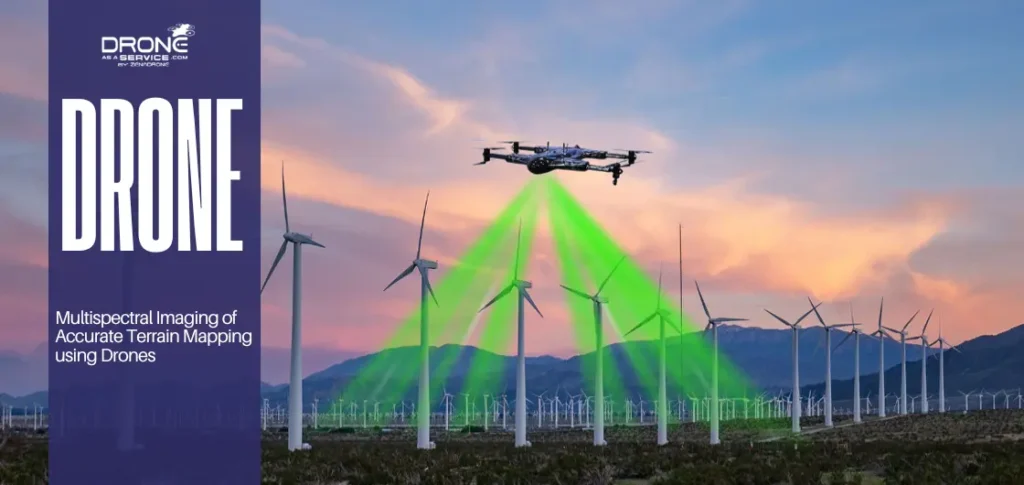
- Laser Scanners (LiDAR): These use light to make a 3D map of the equipment. It is like a high-tech version of tracing a shape to see exactly how it looks.
Using industrial drone inspection is great because it is faster and much safer than having people climb tall poles or buildings. It gives the bosses very clear information so they can fix problems quickly. This makes it easier to keep the power running without putting anyone in danger.
What Is Manual Inspection?
Manual inspection is still a labor-intensive method that requires professionals to be physically present to check energy assets. In the power sector, this often means doing things that are really dangerous, including using ropes to go to wind turbines or putting together complicated scaffolding for structural assessments. While these methods provide a hands-on view, they are increasingly scrutinized for their lack of financial efficiency.
Here is why manual checks are often a bad deal:
- Lost Money: When a worker is climbing a machine, that machine has to be turned off. This means it isn’t making any power or money.
- Higher Costs: A famous study by McKinsey & Company showed that businesses using only manual checks spend 30% more on repairs and safety than those using new technology.
- Safety Dangers: It is very dangerous to have people climbing high up or working near big, moving machines.
Using only manual inspection infrastructure makes it much harder to keep everything running without spending too much money or putting workers in danger.
Drone vs Manual Inspection: Direct Comparison Table
A rigorous evaluation of industrial drone inspection against traditional manual techniques reveals a significant disparity in operational efficiency. While manual audits allow for physical tactile testing, they fail to match the speed and safety benchmarks established by automated systems. The following table summarizes the core metrics that define the current shift toward aerial inspection technology in the energy sector.
| Feature | Drone Inspection | Manual Inspection |
|---|---|---|
| Inspection Speed | High (Hours) | Low (Days/Weeks) |
| Safety Risk | Minimal (Ground-based) | High (At-height/Rope access) |
| Data Accuracy | Precise (Digital Sensors) | Variable (Human Observation) |
| Accessibility | Total (Hard-to-reach areas) | Limited (Structural barriers) |
| Downtime Impact | Low (Online inspections) | High (Full asset shutdown) |
| Long-term Cost | Scalable (Low per-asset) | High (Labor/Insurance/Equipment) |
Detailed Comparison Analysis
A deeper investigation into drone inspection vs manual inspection of energy assets highlights the technical superiority of automated systems in complex environments.
Speed and Efficiency
Drones are much faster than people. A drone can fly over a whole energy field in a very short time. If a person had to walk the same area or climb the towers, it would take many days to finish the same job.
Worker Safety
Transitioning to aerial inspection technology provides a significant leap in occupational safety. By keeping technicians on the ground, firms remove the inherent risks of “at-height” work and rope access. This shift is not just ethical; it reduces the legal and insurance liabilities that arise when employees work in high-risk zones.
Data Quality and Detection Capability
While a manual inspector relies on visual notes, industrial drone inspection utilizes high-resolution sensors to see what the human eye cannot. Using thermal imaging allows for the detection of “hot spots” or electrical faults inside equipment. This data acts like a machine’s X-ray, providing a level of detail that manual walkthroughs simply cannot match.
Operational Costs Over Time
Using drones helps a company save money. A famous study by McKinsey showed that businesses using people for every check-up spend 30% more money than those using drones. This makes it a very smart choice for your budget.
Scalability for Large Energy Projects
As energy portfolios grow, manual labor becomes a bottleneck because costs increase linearly with every new asset. Drones offer superior scalability for large energy projects because a single pilot can manage an entire site’s data in the time it would take a manual crew to inspect a single tower.
Technology Advantages of Drone Inspections
New drone technology does more than take pictures; it helps experts “see” into the machines. These flying tools use special sensors to find problems that a person simply cannot see with their own eyes. According to the experts at McKinsey, using these smart tools helps businesses save 30% on their repair costs because they find and fix issues much faster.
- Thermal Imaging Detects Hidden Defects: Drones use heat-sensing cameras to find parts that are getting too hot. This is a key part of energy asset monitoring because a hot part is usually a sign that something is about to break or fail.
- 3D Mapping Monitors Structural Changes: Using LiDAR or photogrammetry, drones create high-precision “digital twins” of assets. These models act like a structural history book, allowing engineers to track minute shifts or wear in infrastructure with millimeter accuracy.
- Repeatable Data and Trend Tracking: Because drones are robots, they can fly the same path over and over. This lets a company see how their machines change as they get older, so they are never surprised by a sudden problem.
- Supports Predictive Maintenance Planning: All this information helps with predictive maintenance planning. This just means you can plan your repairs months in advance, which is much cheaper than fixing something after it has already stopped working.
When Manual Inspection Is Still Necessary
Drones are helpful tools, but they do not replace the need for skilled workers. There are many times when a person must be there to touch the equipment or perform a repair. For example, once a drone finds a problem, a worker is needed to verify the physical repair and ensure the fix is strong and safe. Drones help by showing workers where to look, but the human inspector is still the person who does the hard work of fixing things.
There are also the operational rules to consider. Many regulatory compliance checks still require a human to sign off on a site’s safety. It is about more than just seeing a picture; it is about having a certified professional walk the grounds and sign the safety report. This keeps your project in line with local laws and ensures nothing is missed by the software.
Here are the main times when a person is needed instead of a drone for energy asset monitoring:
- Internal Components Examination: Checking the oily gears and motors inside a machine where a drone cannot go.
- Tactile and Sound Testing: Using their ears to hear strange noises or their hands to feel if a part is shaking too much.
- Physical Repair and Torque Verification: Drones can find a crack, but only a person can use tools to fix it and make it safe again.
- Commissioning and Hands-on Sign-off: A worker must check the wires and switches by hand before the machine is allowed to start running again.
Industry Use Cases
Many famous energy companies are already using drones to look after their equipment. For example, a company called Ørsted uses drones at sea to check on its giant wind turbines. Another company, Enel Green Power, uses flying cameras to look at its solar farms all over the world. These businesses have found that using industrial drone inspection is much smarter and safer than the old way of doing things.
These real-world applications focus on high-impact data acquisition:
- Solar Farms: Companies like NextEra Energy use drones equipped with radiometric thermal sensors to scan thousands of panels per hour. This lets you find string failures or cell faults right away, which cause heat loss and lower production.
- Wind Turbines: Iberdrola uses drones to look for tiny cracks in the big blades of wind turbines. This is a key part of energy asset monitoring because it finds small problems before they become big, expensive accidents.
- Dams and Water Power: For large-scale dam monitoring, drones provide high-resolution mapping to detect seepage or concrete displacement. This level of energy asset monitoring is critical for maintaining the safety of hydroelectric facilities without putting divers or climbers at risk.
Cost And ROI Comparison
Choosing between a drone and a worker often comes down to which one saves the most money. Drones are much cheaper to use than hiring large teams of people with expensive climbing gear. This section shows how drone-based energy asset monitoring helps a company retain more of its profits while keeping all its equipment safe and in good working order. By leveraging aerial inspection technology, firms can achieve a more sustainable balance between rigorous safety standards and fiscal responsibility.
Optimized Inspection Frequency and Labor Costs
The transition to industrial drone inspection fundamentally restructures the operational budget by replacing expensive, slow manual labor with rapid digital data collection. Traditional audits often involve large teams and costly equipment like cranes or scaffolding, whereas a single drone pilot can complete the same scope in roughly 25% of the time. This saves businesses between 50% and 70% on their bill. Because it is much cheaper, companies can check their equipment more often to ensure everything is working perfectly.
Significant Downtime Reduction
In the energy sector, downtime is a direct drain on profitability. Manual inspections typically require a full asset shutdown to ensure worker safety, leading to days of lost generation. Drones, however, can perform comprehensive visual and thermal checks while the assets remain online. This helps businesses keep their profits high and avoids the 90% loss of money that usually happens when they have to stop everything for a manual check.
Long-term Asset Protection and ROI
The long-term financial benefits of aerial inspection technology extend far beyond the immediate survey. By fixing small things early, the equipment stays in good shape for many more years. McKinsey found that companies using this tech save about 30% on their total maintenance bills. When you add up the saved labor, the extra energy produced, and the longer life of your gear, the drone services ROI is incredibly clear.
Environmental And Operational Impact
The transition to aerial inspection technology offers a measurable improvement in the sustainability profiles of energy providers. In the past, workers had to use big trucks and heavy machines to reach tall towers or faraway fields. These big machines used a lot of gas and created pollution. Drones run on batteries and are very small, which means they help keep the air cleaner and reduce the use of oil and gas.
Beyond carbon reduction, drones provide a much higher level of minimal environmental disturbance. This is important because it means they do not scare away animals or damage the grass and trees. Because they can fly right to the equipment, companies do not need to build roads or bring in big, heavy tools that might damage the ground. Using industrial drone inspection is a smart choice for any business that wants to be kind to the environment.
How To Choose The Right Inspection Method (Decision Guide)
Selecting the appropriate framework requires a balanced evaluation of operational requirements and site-specific risks. While industrial drone inspection is the preferred choice for high-volume data collection, a hybrid model is often the most effective strategy for complex facilities. Use the following criteria to determine the necessity of each method for your next energy asset monitoring project.
- Asset Size and Scope: For large-scale infrastructure like 100-acre solar farms or multi-mile transmission lines, drones are the only viable option for rapid, comprehensive coverage.
- Accessibility Constraints: If the asset is at height or in a hazardous environment, aerial inspection technology should be deployed to eliminate human exposure.
- Safety Risk Level: High-risk tasks, such as rope access for wind turbine blade checks, should be transitioned to drones to reduce liability and ensure worker safety.
- Required Data Accuracy: When sub-visual data like thermal heat signatures or 3D LiDAR models are needed, drones are essential. Manual inspection is reserved for tactile verification.
- Budget and Time Constraints: Consider drones for routine surveys where a 50% reduction in labor costs is required. Manual audits should be budgeted for deep-dive structural testing.
- Inspection Frequency: If the goal is predictive maintenance planning with monthly or quarterly checks, the repeatability and lower per-flight cost of drones make them the superior financial choice.
Future Of Energy Asset Inspection
The trajectory of energy asset inspection is moving toward a state of total digital autonomy. As we progress through 2026, the focus has shifted from simple data collection to “intelligent action,” where unmanned systems operate with minimal human oversight. This evolution is driven by the convergence of high-speed connectivity and sophisticated edge computing.
Autonomous Drone Operations and BVLOS
The landscape of industrial drone inspection is being redefined by the expansion of Beyond Visual Line of Sight (BVLOS) operations. In 2026, regulatory progress has enabled “drone-in-a-box” systems to operate autonomously from remote docking stations, allowing for routine patrols of vast solar farms and pipelines without on-site pilots.
AI-Based Analysis and Edge Computing
Drones now have very smart computers inside them. When the drone flies, it can “think” about what it is seeing. If it sees a part that is broken or getting too hot, it knows right away that it is a problem. It doesn’t just take a picture; it understands what the picture means. This helps with energy asset monitoring because the drone can alert the workers immediately if something looks wrong.
Real-Time Integration with EAM Platforms
The true value of 2026 drone technology lies in its seamless integration with Enterprise Asset Management (EAM) and Digital Twin platforms. Inspection data is automatically fed into systems like SAP or IBM Maximo, where it updates the “digital health score” of the asset. This link facilitates predictive to prescriptive maintenance, allowing the system to identify failures and automatically generate work orders along with specified repair activities.
Conclusion
The rapid expansion of global energy infrastructure necessitates a shift toward more sophisticated energy asset monitoring strategies. As portfolios scale, traditional manual methods alone can no longer meet the demands for speed, safety, and data precision. Drones are changing the way we work by doing the dangerous jobs high in the air. This keeps workers safe and helps find problems much faster than before. Using energy asset monitoring with drones is a smart way to make sure our power stays on and our costs stay low.
However, the human element remains a cornerstone of successful infrastructure management. While drones excel at high-volume data acquisition and risk mitigation, manual inspections are still required for tactile verification and complex physical repairs. The best choice for any company is to use both drones and workers together. By choosing the right method for each job, you can make sure your machines stay in good shape for a long time. It is all about using the best tools to keep the work safe and simple.
(FAQs)
Are drone inspections safer than manual inspections?
Are drone inspections more accurate?
Do drones replace human inspectors?
How much do drone inspections cost?