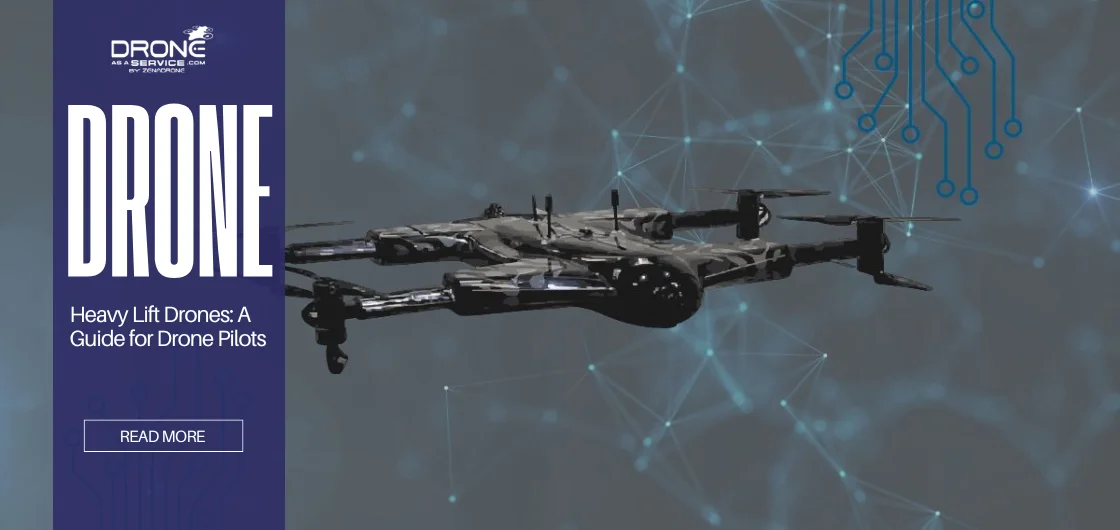
Heavy Lift Drones: A Guide for Drone Pilots
Heavy lift drones are uncrewed aerial vehicles (UAVs) built to carry heavy payloads, transforming industrial and commercial operations by improving safety, speed, and efficiency. They can transport cameras, sensors, cargo, and other equipment with ease, driving market growth and adoption.
This guide explains the types, features, and applications of heavy lift drones and provides tips for evaluating and selecting the best high-capacity drone for professional drone pilots.
What Is a Heavy Lift Drone?
A heavy lift drone is a high-level UAV that can transport over 10kg of payload while maintaining stability and accuracy. These drones are not ordinary commercial and industrial drones but are more potent in terms of motors, frames, and mounting systems, and can safely and efficiently carry heavier and bigger loads.
Difference Between Standard Commercial and Industrial Drones
Drones commonly used in commerce are light. They’re applied in photography, aerial mapping, or small-item deliveries, with payloads not more than 2 kg.
On the other hand, industrial heavy lift drones are designed with greater payload capacity, extended flight times, and stronger durability. These features allow them to carry substantial loads for infrastructure inspection, cargo shipping, and agricultural spraying.
Payload Capacity and Maximum Takeoff Weight (MTOW)
Payload capacity refers to the weight a drone can carry beyond its frame and batteries. It is vital for professional use, as exceeding this limit can overload motors, reduce stability, and increase operational risks. Commercial drones typically carry 0.5–10 kg, while industrial heavy-lift drones handle 20–200 kg or more, depending on design. Proper payload management ensures stable flight and prolongs drone lifespan.
Maximum Takeoff Weight (MTOW) is the drone’s total weight at takeoff, including batteries and payload. Knowing both MTOW and payload capacity allows operators to determine the safest weight limits, avoid motor strain, and maintain optimal flight performance.
- High-Resolution Cameras: Premium aerial cameras on drones to significantly reduce drifting, smooth, and professional filming and cinematography.
- LiDAR and Survey Sensors: State-of-the-art sensors that are applicable in 3D mapping, terrain modeling, as well as fine surveying of the construction or infrastructure location.
- Farm Sprayers: Machines that are used to spray fertilizers, pesticides, or nutrients instead of spreading them through the area of the farm land.
- Medical Cargo: Controlled storage facilities are used to deliver packages, medical supplies, or emergency relief supplies to remote and inaccessible areas.
- Engineering Inspections Tools: Special instruments like thermal cameras or ultrasonic sensors are used to examine bridges, towers, and other industrial buildings safely.
Heavy Lift Drones: How Much Weight Can They Carry?
There are various factors that affect the lift capacity of a drone. These factors include motor power, propeller efficiency, and the drone’s overall design.
Powerful motors generate the thrust to hoist heavier cargo. Larger, streamlined propellers enhance efficiency and stability. A lightweight but solid build guarantees that the drone can be loaded with weight without affecting its performance.
Light payloads of 2.2 to 4.4 lbs (1 to 2 kg) are the norm with consumer drones. It is enough for photography, recreational flying, and personal purposes.
Contrastingly, heavy lift drones can carry 44 lbs (20 kg) for standard operations to 440 lbs (200 kg) in specialized applications. With long-lasting batteries, sturdy composite frames, and customized motor-propeller systems, they’re ideal for construction, logistics, agriculture, and disaster recovery workloads.
Leading models of heavy lift drones include:
- DJI Matrice 600 — up to 13 lbs or 6 kg
- Freefly Alta X — up to 33 lbs or 15 kg
- ZenaDrone 1000 — up to 88 lbs or 40 kg
- Griff 300 — up to 440 lbs or 200 kg
While heavy lift drones can carry sizable loads, they also usually have a lower flight duration and slightly less stability at maximum payload. Additionally, flight altitude and environmental factors, like wind, snow, dust, and rain, significantly affect a drone’s lifting capacity.
Drone pilots must always consider these flight parameters during mission planning and execution to ensure a safe and successful operation.
Types of Heavy Lift Drones
Heavy-lift drones are available in various specialized types, with each one of these types focusing on the specific needs of the industry, business, and logistics. The knowledge of these types of drones assists organizations in selecting an appropriate platform depending on the range of missions, cargo, agility, and weather conditions.
Multi-Rotor Drones
These drones have multiple rotors, which enable strong lift capacity and precise maneuverability. These drones are perfect for construction, inspections, and the transportation of cargo, as they offer stability, easy handling, and a modular payload.
Fixed-Wing Drones
A fixed-wing drone is capable of working over long distances and is effective in mapping, surveying, and environmental inspections. Their aerodynamic design, plus energy efficiency, makes them ideal for covering large areas.
Hybrid VTOL Drones
Hybrid VTOL drones combine the vertical takeoff and landing capabilities of multi-rotors with the efficiency of fixed-wing drones. They’re applicable in long-range delivery, agriculture, and environmental monitoring, providing increased range, versatile vertical takeoffs, and consistent flight performance.
Custom-Built Drones
Custom-built drones are especially designed for specific industrial and business applications, which standard models cannot handle. They offer optimized payload, specialized sensor, and mission-specific capability to ensure efficiency and reliability.
Comparison of Heavy Lift Drone Types
There are several types of heavy-lift drones, each of which is developed to meet a particular task. The choice of the correct drone is also determined by tasks, payload mass, range of flight, and environment.
| Drone Type | Flight Duration | Payload Capacity | Ideal Use Case | Cost Range |
|---|---|---|---|---|
| Multi-Rotor | 20–40 min | 5–25 kg | Filming, delivery, inspection | $5K–$15K |
| Fixed-Wing | 60–120 min | 10–50 kg | Surveying, mapping, endurance | $10K–$20K |
| Hybrid VTOL | 60–90 min | 10–40 kg | Cargo, rescue, agriculture | $15K–$30K |
| Custom-Built | Variable | Up to 200 kg | Research, industrial projects | $25K–$60K+ |
What Are Heavy Lift Drones Used For?
Heavy lift drones support a broad scope of professional industries. Many consider them effective solutions, proving their worth by eliminating risky manual labor, saving time, and reducing project expenses.
Infrastructure & Engineering Projects
Heavy-lift drones facilitate bridge inspection, land surveying, and mapping structures faster and safely than conventional techniques. These drones are capable of creating detailed 3D models that engineering teams can use by capturing high-level LiDAR, GPS, and visual data.
Cargo/Delivery
The drones have the potential to provide a large cargo of supplies, such as medical kits, rescue gear, or communication equipment, and deliver them to the location of the remote or dangerous area.
Agriculture
Farms can utilize industrial drones for spraying fertilizers, pesticides, and nutrients across large and remote fields. A drone with multispectral sensors is used to scan the crops and soil to enable farmers to make data-driven decisions. It has a significant impact in minimizing labor and input costs and enhancing yield and sustainability.
Military
Military drones are critical to defense and protection forces because they facilitate surveillance, communication, and logistics of tactical equipment. These drones may perform their tasks in distant, hazardous, and disputed areas and do not put personnel at risk.
Disaster Relief
Drones can move fast in emergencies to deliver life-saving supplies such as food, water, and medicine to the disaster-affected regions. Their on-demand and non-permanent infrastructure flight capabilities can be particularly helpful in the disaster-prone areas that can move instantly.
Components of a Heavy Payload Drone
Learning about the components of a heavy payload drone helps drone pilots choose the right drone for safe, long-term functionality.
- Motors: Brushless motors are also used by engineers to offer constant lift and lift heavy loads.
- Propellers: Propellers made of carbon fiber are stable and resistant to extreme pressure.
- Gimbal Systems: Gimbals improve the stability of cameras and sensors so that there are clear images or correct readings in the air.
- Battery Systems: Big lithium or hybrid batteries are functional in more extended missions, supported by advanced drone battery and power sources.
- Frames & Arms: The frames are mostly carbon fiber or reinforced aluminum, which are used as heavy-lift frames.
- Modular Design: Most sophisticated drones have modular designs enabling them to be upgraded, repaired, and loaded faster.
Flight Time and Battery Life Considerations
The weight of the payload directly decreases the length of the flight and the overall drone performance, since the heavier the load, the more power is needed to stay in the air.
Compare drones of different payloads: A drone with a light payload of 2-5 kg can be flown 50-60 minutes, and the same drone with a heavy payload can have only 20-30 minutes of flight time. Talk of innovations like the dual-battery systems or even replaceable batteries that can allow much longer or continuous performance, even with heavy loads. Promote energy-efficient technologies and hybrid fuel technologies that can achieve range and heavy lift capacity.
Recommend pre-flight drone payload and battery inspections to make sure the drone is not overweight and has enough energy to accomplish its mission.
Factors that influence the Flight Time
Payload Size
A heavier payload consumes more power, and the flight duration is shorter. The heavy-lift drones used in industries should be able to consider the maximum payload as a way of maximizing the efficiency of the missions.
Motor Efficiency
Energies of the same thrust are used by the more efficient motors, leading to the flight time being increased, whereas older or less efficient motors burn up batteries.
Weather Conditions
Intense wind, precipitation, or even extreme temperatures consume more energy to create a stable condition, reducing the flight range in general.
Battery Health
The damaged batteries have less energy capacity, which directly decreases the flight time and necessitates replacement.
Aerodynamic Design
Efficient transmission lines and streamlining minimize air resistance and save energy, giving drones a more extended range of flight, and inefficient designs make them less efficient.
All of these aspects should be taken into consideration in the planning of the heavy-lift drone flights to guarantee the best operation of the drone and prevent interruptions during the flight.
Best Practices on Battery Safety
- Medical examinations before every mission.
- Store batteries with a 50- 60% charge.
- Store batteries in cool and dry regions
- Do not fly in extreme temperatures.
Drone Payload Capacity and Performance
Payload capacity is a key specification for heavy-lift drones, defining how much weight they can safely carry. It is calculated as:
Payload Capacity = MTOW − Drone Empty Weight − Battery Weight
MTOW (Maximum Takeoff Weight) determines the total safe weight a drone can handle, including batteries and payload. Proper balancing of battery and structural weight is crucial to maximize flight duration and efficiency. Optimizing payload allows drones to carry full loads per flight, reducing sorties and increasing operational ROI, making missions more economical and reliable for clients.
The Importance of Payload Capacity
Having the appropriate payload capacity is crucial to heavy-lift drones, as it will eliminate the strain on the motor and provide more reliable and safer flights.
Well-configured loads ensure stable handling, increase the service life of the drone and its components, and reduce the likelihood of dropping the drone during the flight or the equipment breaking by a significant factor, which contributes to an increase in overall operational efficiency.
Environmental Factors that Affect Performance
Thin air at high altitudes
At higher altitudes, the lower air density decreases the lift provided by rotors, which can reduce the payload capacity or increase the power required. In the case of drones in the DaaS offered by ZenaTech, it may imply that missions in mountainous areas or elevated ones require more careful planning or specially tailored flight paths.
Strong wind resistance
When the wind is strong, it will result in a drone being unstable, more difficult to maneuver with precision, and it will consume more power. In the case of the ZenaTech service model, the ability of drones to withstand adverse conditions in relation to wind is essential in ensuring safety and reliability in inspections and transportation.
Temperature changes
Extreme temperatures, whether hot or cold, influence the manner in which batteries work, the level of performance in the motor, and aerodynamic characteristics, which might decrease air travel or dependability. In the case of the clients of ZenaTech, the local thermal conditions are understood to achieve optimal mission schedules and avoid failure of missions during flight.
Humidity levels
High humidity may cloud over delicate electronics or degrade the parts, whereas arid air may affect the effectiveness of cooling. By considering the humidity in a DaaS mission planning, ZenaTech guarantees the safety and durability of its heavy-lift drones.
Recommended Ratios for Payload
High-tech detectors installed in modern industrial drones continuously track load stress to prevent system damage. Table 2: Payload vs Flight Time Overview
| Payload Weight | Example Drone | Average Flight Time | Recommended Use | Power Type |
|---|---|---|---|---|
| 5 kg | DJI Matrice 350 RTK | ~40 min | Filming, inspection | Battery |
| 15 kg | Freefly Alta X | ~30 min | Cinematography, delivery | Battery |
| ≈30 kg | ZenaDrone 1000 | ~50 min* | Industrial heavy cargo | Hybrid/Battery* |
Safety and Legal Regulations for Heavy Lift Drones
Operating heavy-lift drones requires strict adherence to national and regional aviation regulations to ensure safety, legal compliance, and protection of property and bystanders. Key considerations include:
- Licensing and Certification: Obtain all necessary commercial permits, pilot certifications, and UAV operator approvals according to local laws.
- Altitude, Range, and No-Fly Zones: Follow limits on flight altitude, distance, VLOS/BVLOS rules, and avoid restricted or densely populated areas without clearance.
- Insurance: Maintain liability and mission-specific coverage for operational risks and third-party damage.
- Pre-Flight Checks & Flight Records: Inspect motors, propellers, batteries, and communication systems before each flight, and maintain detailed flight logs.
Pre-Flight Safety Steps
To ensure mission success and regulatory compliance:
- Motors & Propellers: Confirm propulsion systems are functional to prevent in-flight failure.
- Battery Levels: Ensure batteries are balanced and fully charged for safe operation.
- Weather & Wind Checks: Verify conditions to avoid handling issues or crashes with heavy payloads.
- Link Communication: Test control station connection for responsive and safe operations.
- Payload Balance & Mounting: Secure and evenly mount cargo to maintain stability and structural integrity.
Regular consultation with local aviation authorities is recommended to stay updated on regulations and avoid legal issues.
Factors to Consider Before Buying a Heavy Lift Drone
Choosing the proper setup will be based on your industry, environment, and payload requirements.
1. Purpose of Use
Having an autonomous AI-guided flight, a heavy-lift drone will become more adaptable and mission-responsive. Be it mapping, inspection, delivery, or surveying, AI can optimize flight paths and behaviors to the application needed to allow ZenaTech DaaS product (their ZenaDrone 1000) to be used in various businesses.
2. Payload Compatibility
Test the system of mounting and make sure it is suitable for your payload. The drone is enhanced to manage different loads by smart load-checking sensors.
These sensors are accurate in monitoring weight, balance, and stress, and the system adjusts automatically and remains stable.
Doing so guarantees safe transportation of heavy or sensitive items (e.g., inspection equipment, delivery products) using the DaaS model.
3. Flight Duration and Battery Life
The length of flights reduces the number of interruptions in the missions. Hybrid fuel systems (e.g., combining traditional energy sources with more efficient ones) can almost double the flight range of purely electric systems.
They minimize the number of mission disruptions and extend the range of long-periodic tasks – precisely the type of service that allows a pay-per-use heavy-lift DaaS to be more useful.
4. Flight Control Range
With a powerful GPS and proper connection, it will help to make the operations more precise, particularly when using drones that carry weight and have a long range.
The AI-supported autonomous navigation, combined with the high-end GPS and communications, improves the control and precision during long-range or problematic conditions.
It enables the drone to work consistently in distant areas (offshore infrastructure locations), which corresponds to the ZenaTech philosophy of serving complex or large-scale enterprise consumer segments.
5. After-Sales Support
Find brands that have spare parts available, a warranty, and professional service, particularly when drone missions are of high stress and heavy payload.
These advanced systems (AI, hybrid power, smart sensors) do not directly involve hardware innovation. Still, they can be remotely monitored, real-time diagnostics can be performed, and maintenance can be predicted in advance.
In the case of a DaaS provider such as ZenaTech, it entails improved fleet maintenance, effective service cycles, and more dependable missions to the clients.
6. Compliance With Local Laws
Make sure that the drone is not overweight and fulfills commercial use requirements. Composites are used to reduce the weight of drones to levels that may not be subject to strict regulation by the regulatory authorities on commercial use.
These inventions enable ZenaTech to reduce the weight of its DaaS drones and, therefore, meet local aviation and commercial drone regulations in the United States of America.
7. Budget, ROI Expectations, and Cost Variations
Prior to investing, have a mission goal in place before you decide on what you need to focus on.
These state-of-the-art innovations lower operational costs in the long term. Long battery life will minimize the cost of a single mission, intelligent sensors will prevent damage, and autonomy will reduce the costs of constantly supervising human activities. They reflect the DaaS model’s cost-effective services.
Top Heavy Lift Drones for Services in 2026
Below are some of the leading models that professionals consider to be some of the best heavy lift drones in today’s industry.
1. ZenaDrone 1000
The ZenaDrone 1000 is an eight-rotor heavy-lift VTOL drone by ZenaTech that is fully autonomous. It is equipped with AI, multispectral sensors, and a 40kg carry capacity. It is designed to be perfect for infrastructure inspections and cargo delivery.
Price: The ZenaDrone 1000 will begin at around 55,000 euros (incl. charging pad, installation, and training).
Usage: The flagship heavy-lift drone of ZenaTech will have an AI-controlled autonomous operation, multispectral sensors, and a 40kg load capacity.
Best used for: Industrial inspections, heavy-cargo transportation.
Payload Capacity: 40 kg
Flight Time: 50 minutes (hybrid)
Pros:
- Self-driving AI.
- High stability rates with heavy loads.
- High hybrid battery performance.
Cons:
- Requires trained operators
- Higher upfront cost
2. Freefly Alta X
A high-end cinematography drone has a modular structure, aerial maneuverability, and the capability to carry up to 15kg of camera gear – ideal in high-end filming, aerial cinematics, and creative payloads.
Price: Approximately US $32495 of the base Alta X + Pilot Pro package.
Features: Professional-grade cinematography/industrial drone, has a maximum payload of 15kg, smooth flight control, and payload mounting options. It finds application in aerial filming, LiDAR mapping, and industrial transportation.
Best used for: Cinematography and high-level filming.
Payload Capacity: Up to 15 kg
Flight Time: ~30 minutes
Pros:
- Smooth, professional-grade handling.
- Modular design
- Powerful neighbourhood and technical assistance.
Cons:
- Licensed operators are necessary to perform best.
- Its structure and performance make it one of the best heavy lift drones for production crews that need stable camera movements.
3. DJI Matrice 350 RTK
A rough-terrain enterprise drone that will be used to map, survey, inspect the industry, and perform RTK-precise missions. It is multi-payload (LiDAR, thermo, visual) with a stable build.
Price: US $13,000-15,000 depending on the setup.
Use: Rugged enterprise drone with RTK GPS, hot-swappable batteries, and compatible with a variety of payloads (e.g., LiDAR or thermal cameras). Popular in surveying, infrastructure inspection, and in patrol missions of people.
Best for: Inspections, surveying, mapping.
Payload Capacity: Around 5–6 kg
Flight Time: ~40 minutes
Pros:
- Rugged build
- Advanced RTK positioning
- A large variety of compatible sensors.
Cons:
- Limited lifting power compared to larger industrial drones
4. Griff 300
An authentic heavy-lift platform designed to perform industrial-scale cargo movement and heavy transportation operations – it can transport extremely massive and heavy loads due to a strong and strengthened frame.
Price: Extremely high – about USD250,000 or more, depending on setup.
Purpose: Heavy-duty multirotor that is optimized to carry up to 200kg of payload, and has a reinforced body that is capable of withstanding harsh industrial use. Its uses are in the transportation of cargo in an industry, disaster relief, and military logistics.
Best used for: Heavy-duty lifting.
Payload Capacity: Up to 200 kg
Flight Time: ~20–30 minutes
Pros:
- Exceptional strength
- Reinforced body
- Fit to withstand heavy engineering.
Cons:
- Very high operational costs Flights are required to be given special permissions.
Future of Heavy Lift Drones
Advancements in design, power systems, and automation will significantly enhance the performance of heavy lift drones. The development of AI navigation, hybrid fuels, light materials, and the use of smart sensors is increasing the performance of heavy-lift drones and making them more reliable and efficient for a long time.
uch advancements should lead to enhanced use in offshore operations, logistics, and emergency rescue, allowing quicker, safer, and more economical operations for the next few years.
Hands-free AI-controlled navigation
With the development of AI at an advanced stage, drones will be able to plan the routes on their own, avoid obstacles, and adjust to environmental conditions. It lowers the workload of pilots, ensures the safety of missions, and enables heavy-lift drones to be efficient in complex or remote locations.
Doubled endurance
New hybrid power technologies will increase the flight time length much higher, enabling the use of heavy-lift drones to carry heavier cargoes over longer distances. It has a direct positive impact on offshore logistics, large-scale construction sites, and emergency response missions, which need a wide range of operations.
Lightweight recycled composite materials
Stronger, lighter, and more sustainable composite materials will reduce the total drone weight and enhance their durability. They increase payload capacity, improve performance, and reduce maintenance expenses in the long run.
Processing 5G and edge computing in real-time
Instant connectivity and on-board processing of sensor data will enable drones to examine sensor data in real-time on the fly. This results in increased responsiveness to time-sensitive missions like infrastructure monitoring or disaster response, more accurate inspection, and faster decision-making.
Smart load-monitoring sensors
Future sensors will accurately track the weight load, tension, and stability when lifting or moving. It leads to safer lifts and more secure heavy-cargo deliveries, particularly with industrial logistics and rescue operations.
New versions of industrial drones may perform long-lasting flight durations, utilize purified energy systems, and achieve safer performance through automatic systems. There will be increased adoption of drones that carry weight in more industries that will engage in mass transport, logistics, and emergency assistance.
Maintenance and Care Tips
Regular maintenance ensures that heavy lift drones perform reliably during professional missions.
Motor and Propeller Inspection: Check motors for debris and examine propellers for cracks or bending.
Clean Sensors and Gimbals: Dust, mud, and moisture disrupt the sensor readings and accuracy of the camera.
Battery Care: Batteries in stores should be charged at 50-60 percent every day, and they should not be exposed to extreme temperatures.
Firmware Updates: Constantly update firmware to get access to enhanced safety features, connection enhancements, and enhanced flight stability.
Maintenance Logs: Record all the repairs, inspections, and technical modifications. Such logs can prove very handy with commercial teams and regulated industries.
Cost and ROI of Heavy Lift Drones
A lot of users choose the best heavy lift drones because they lessen the need for heavy machinery, manual labor, or expensive field operations.
| Drone Category | Cost Range |
|---|---|
| Introduction-level Professional | $5,000–$10,000 |
| Mid-Range Industrial Systems | $15,000–$30,000 |
| High-End / Custom Builds | $40,000–$60,000+ |
| Ultra-Heavy Lifting Systems | $100,000+ |
How Heavy Lift Drones Improve ROI
Heavy-lift drones can save labor, fuel, and operational costs in the long term:
Cost reductions in labor
With the DaaS offered by ZenaTech, the companies do not need to employ and train full-time drone pilots or ground crews. Instead, drones with heavy load capacities can be requested on demand, substituting a number of workers in order to transport, lift, or inspect an object.
Reduction in fuel and rental costs
Drones that use heavy-lifting capabilities do not require or limit the use of fuel-consuming vehicles (e.g., trucks, cranes) and expensive rental machines. They ultimately reduce repetitive operating expenses.
Increased operational efficiency
Drones will be able to perform missions in fewer hours due to automated flight planning and operations supported by AI.
Applications of ROI in real-life industries
Infrastructure inspections
With ZenaDrone 1000 under their DaaS offering, power utilities or telecommunication companies can survey towers, powerlines, and remote infrastructure without having to send crews up cherry pickers or helicopters to inspect- reduce downtime and cost of inspection and safety risk.
Delivery & logistics
DaaS makes it possible to perform delivery operations (e.g., the transportation of supplies or remote cargo) without having a fleet. It saves on capital expenses, maintenance, and staff expenses compared to traditional ground or air transport.
Automation, Accuracy & Speed
Automation and intelligent mission scheduling allow for real-time decision-making, which enables faster project completion compared to manual or semi-automated methods.
Better precision
AI and high-accuracy sensors (e.g., LiDAR, multispectral imaging) are associated with higher reliability of the information collected by heavy-lift drones, eliminating the need to make costly errors or reread surveys, maps, or inspections. The DaaS model by ZenaTech utilizes this technology to provide high-quality and repeatable outcomes.
Enhanced Safety
Automation removes human beings from risky activities (such as climbing towers), improving worker safety and reducing liabilities or insurance premiums.
ROI Calculation Approach Tips
- Compare mission hours: Determine ROI by comparing the cost of drone mission hours against the cost of manual labor, fuel, and equipment rental.
- Consider fixed and variable costs: To have the complete picture, also consider mission costs and the savings from less downtime and fewer accidents.
- Payback period of the project: Estimate the number of missions or hours needed compared to normal operations, then predict long-term savings depending on the projected usage.
Comparison: Heavy Lift vs Regular Drones
Knowing the difference between heavy lift drones and standard models helps buyers make more informed decisions:
| Feature | Regular Drone | Heavy Lift Drones |
|---|---|---|
| Payload Capacity | 0.5–2 kg | 10–200+ kg |
| Flight Power | Low | High-thrust industrial motors |
| Use Case | Basic filming, mapping, delivery, agriculture | Mapping, delivery, agriculture |
| Cost | $300–$2,000 | $10,000+ |
| Strength Building | Light plastic | Reinforced carbon/aluminum |
| Stability Under Load | Limited | Designed to carry heavy cargo |
Heavy-lift drones offer significantly higher payload capacity (10–200+ kg) and industrial-grade motors compared to recreational drones (0.5–2 kg). Their stability, robust construction, and advanced power systems make them ideal for professional applications such as industrial inspections, cargo delivery, precision farming, and large-scale surveying.
Recreational drones have limited lifting capacity, flight range, and stability, making them suitable for hobbyists and small-scale aerial tasks like photography or light mapping. The choice of drone depends on the user’s purpose: novices prioritize low cost and ease of use, while professionals require reliability, efficiency, and mission-critical performance.
Industrial heavy-lift drones, like the ZenaDrone 1000, feature advanced materials, intelligent flight automation, long-duration operations, and high payload capacity. The Drones-as-a-Service (DaaS) model allows companies in agriculture, energy, logistics, and infrastructure to leverage drone capabilities without hardware ownership, enabling cost-effective, scalable, and safe solutions.
Conclusion
Heavy-lift drones improve efficiency, safety, and accuracy in industrial operations, replacing manual labor for complex or hazardous tasks. Optimized payload, hybrid power systems, and smart AI enable faster, reliable, and scalable operations—transforming the way organizations operate.