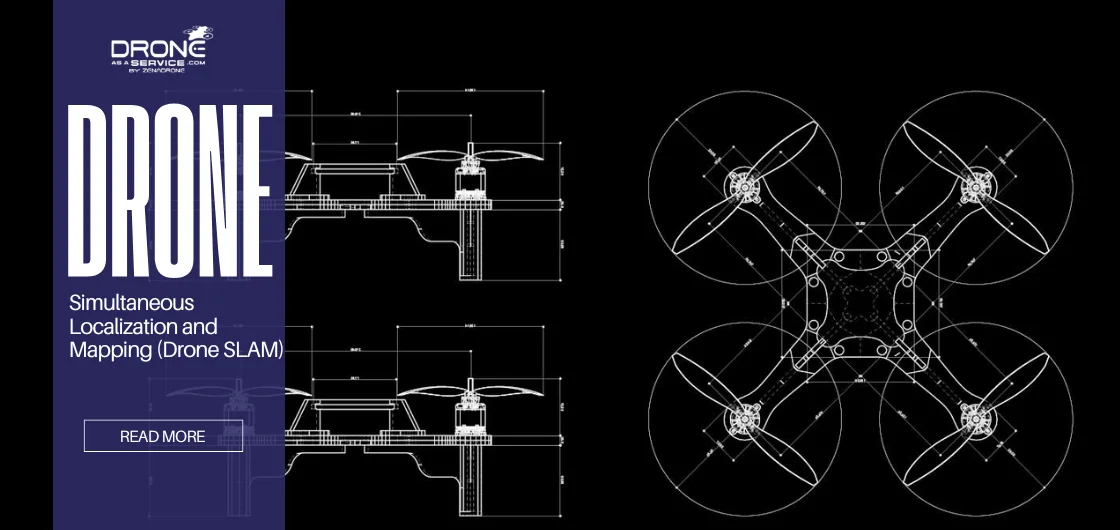
Drone SLAM: Simultaneous Localization and Mapping
Imagine flying a drone in a dark tunnel, and the GPS signal is just lost without any further signals. Previously, it would have been a lost drone or a devastating crash, but now, the mission is safely underway.
This capability is possible thanks to Drone SLAM, a technology that allows aircraft to “see” without satellite help. Creating real-time digital maps serves as the backbone of modern autonomous drone systems.
What is Drone SLAM?
Simultaneous Localization and Mapping (SLAM) is a complex method used in robotics. It allows a machine to map an unknown environment, and at the same time, it tracks its own location within that map. This dual process is critical for genuine autonomy.
Defining the Core Technology
Drone SLAM is not just a single sensor, but a continuous method of processing complex data that acts as the brain behind the flight. It provides a feedback mechanism to move confidently even in complete darkness through answering two critical questions all the time: What does the world look like? And where am I in it?
The Role in Autonomous Drone Navigation
Unlike standard drones that become unstable without GPS, drone navigation technology using SLAM anchors the aircraft using the physical environment itself. The drone uses walls, floors, and obstacles as local navigation satellites by which it is locked in order to maintain a high degree of stability even without GPS signals.
Why GPS-Denied Environments Make SLAM Essential
Many critical missions happen where GPS signals cannot penetrate.
- Concrete Structures: Thick walls block satellite connection effectively.
- Underground Tunnels: Deep mines have zero GPS reception.
- Metal Infrastructure: Large tanks cause signal interference.
- Urban Canyons: Tall buildings can block or scatter signals.
In these zones, SLAM for drones is not a luxury but a strict requirement for flight stability, protecting expensive equipment, and ensuring the aircraft returns home safely.
How SLAM Works in Drones
The magic of Drone SLAM lies in its processing speed. The drone processes massive amounts of data in milliseconds.
Core Components: Sensors, Cameras, LiDAR, IMUs
To “see,” the drone needs advanced hardware components.
- Visual Sensors: High-resolution cameras capture textures and colors. They identify distinct features like corners or patterns.
- LiDAR Scanners: These shoot laser beams to measure exact distances. They create a precise 3D shape of the room.
- IMUs (Inertial Measurement Units): These internal gyroscopes feel movement. They track speed, rotation, and acceleration, making drone IMU technology essential for stable and precise flight.
These components work together to replace the need for satellites. They form the sensory system of autonomous drone systems.
The Real-Time Mapping Process
The sensors of the drone scan the area as it enters a room or a tunnel to define the exact distances and find the landmarks. The onboard computer recalculates the position of the drone by constantly examining the variation in angles of these landmarks during movement in an unending conversation between sensor and system.
Sensor Fusion and AI Integration
Single sensors are limited, as cameras fail in glare and LiDAR sensors in drones cannot easily detect transparent glass surfaces. Autonomous drone systems use ‘Sensor Fusion’ to unite this data, while AI acts as the decision-making brain. It dictates the accurate sensor, and as such, navigation can go on in case a system fails.
SLAM Techniques Used by Drones
Not all SLAM is created equal. Engineers choose different techniques based on the specific mission.
Visual SLAM (vSLAM)
This lighter and more cost-effective method relies on onboard cameras to identify and track high-contrast points in the video feed frame by frame.
- Pros: Great for texture-rich environments.
- Cons: Fails in low light or on blank white walls.
It is ideal for well-lit indoor spaces as it uses less power than laser systems.
LiDAR-Based SLAM
Considered the heavy hitter of Drone SLAM, this method uses laser pulses to measure time-of-flight, building a precise ‘point cloud’ of the surroundings.
- Pros: Works in total darkness. Extremely accurate distance measurements.
- Cons: Sensors can be heavier and more expensive.
LiDAR is the standard for industrial mapping. It provides the highest level of detail.
Hybrid SLAM Approaches
The most robust drones employ a hybrid approach that integrates the color detail of cameras with the depth accuracy of LiDAR to ensure operational redundancy. It gives a backup mechanism where LiDAR can work in the dark and cameras solve simple geometry, which is the best solution to complex drone navigation technology.
SLAM Solutions for Autonomous Drones
Choosing the right solution depends on your resources. You can build your own or buy a proven platform.
Off-the-Shelf vs. Custom SLAM Systems
Building a SLAM drone from scratch is difficult and requires deep robotics knowledge, while advanced drone platforms offer a faster path to operation without needing an engineering degree. However, custom systems remain valuable for specialized payloads, allowing you to tailor sensors to your specific needs.
Software Solutions and Algorithmic Approaches
While hardware acts as the body, the software is the mind that requires efficient algorithms to conserve limited battery power. Good code optimizes every calculation, while reliable drone mapping software manages data flow smoothly to prevent mid-flight freezes.
Integration with Autopilot
The SLAM map must communicate instantly with the flight controller—signaling ‘wall ahead’ so the autopilot stops forward motion—because any lag results in a crash. High-quality SLAM for drones integrates these systems seamlessly, creating an automated response that feels natural to the pilot.
Service-Based Options
Drone service solutions provide a strong alternative to companies that cannot afford the expensive maintenance of fleets. In this model, you pay for the ability rather than the equipment, and it is SLAM benefits at no cost and with the ability to scale.
Best Use Cases of Drone SLAM
This technology unlocks new industries. It allows drones to go where humans cannot.
Indoor Navigation in Warehouses
In warehouses filled with metal racks where GPS fails, Drone SLAM enables autonomous aisle patrols to scan barcodes and verify inventory overnight, saving hundreds of hours while reducing human error.
GPS-Denied Operations
In scenarios like collapsed tunnels where normal drones would crash, SLAM-equipped units enter safely to map rubble and locate survivors with thermal cameras. These units will save lives in areas that are too hazardous for people.
Industrial Inspection
Infrastructure requires constant monitoring and maintenance.
- Bridges: Drones fly under the deck to check for rust.
- Power Lines: Drones inspect lines without risking human climbers.
- Solar Farms: Thermographic cameras spot defects autonomously.
These inspections are safer and faster with drone navigation technology. Workers stay safely on the ground.
Surveying and High-Resolution Mapping
Surveyors need centimeter-level accuracy for their models. SLAM for drones provides this precision and creates “Digital Twins” of construction sites.
Architects can see progress day by day and can measure stockpile volumes remotely, which turns physical sites into digital data.
Benefits and Advantages of Drone SLAM
Why should you invest in this technology? The returns are significant for businesses.
Fully Autonomous Operation Without GPS
You gain a significant advantage by no longer being tethered to satellites, significantly expanding your operational window so autonomous drone systems can fly independently in any environment.
High-Precision Navigation and Mapping
SLAM eliminates the risks of manual piloting by holding the drone in an exact position, ensuring perfectly overlapping scans and professional-grade mapping results.
Increased Safety and Reliability
This capability enables drones to detect obstacles and automatically plan safe paths using active collision avoidance systems, protecting both hardware and personnel while lowering insurance liabilities.
Enhanced Efficiency in Complex Environments
The efficiency also increases because the missions go faster and more dependably; the drone takes the best path each time, so there is no need to have the pilot compensate for the engine to record the same data all the time.
Challenges and Emerging Innovations
The technology is powerful, but it is not magic. There are hurdles to overcome.
Hardware and Computational Limitations
Drone SLAM requires intensive processing with resulting heat and power consumption, creating a trade-off of heavy, high-end processors that decrease flight time. Engineers are in a constant battle to reduce weight to find the ideal balance between onboard brain power and battery life.
Sensor Calibration and Maintenance
Sensors require perfect alignment, as a single bump can knock a camera out of focus and cause data conflicts that confuse the drone. Regular maintenance is therefore essential to prevent errors, particularly since performance naturally degrades in low-light conditions.
AI-Driven Predictive Navigation
By learning from past flights, new AI models can predict obstacle locations, which speeds up mapping and reduces processor load. This advancement allows autonomous drone systems to become faster and more reactive in real-time environments.
Collaborative SLAM
Swarms will be used in the future of multi-drone operations, mapping various areas at the same time and combining information in the cloud. This teamwork strategy can cover vast regions in real time and achieve exponential growth in operational efficiency.
Future Trends and Industry Adoption
The industry is shifting to the semantic SLAM, which allows drones to interpret reality, including the ability to identify a door or a human being more than simple forms. Such environmental knowledge will transform safety and bring the technology of drone navigation to resemble human perceptions.
Conclusion
Drone SLAM serves as an initial step in the evolution of future flight and makes aircraft something more than a simple remote-controlled toy.
Recap of SLAM’s Importance
We have observed how Simultaneous Localization and Mapping is used in the replacement of GPS, how the sensors that facilitate this process work, and the concept of sensor fusion. It is what opens up GPS-denied environments, and it is quickly becoming the new industry standard.
Key Takeaways
- Techniques: Visual, LiDAR, and Hybrid methods offer flexible solutions.
- Solutions: Buying a proven platform saves development time.
- Applications: From mining to inspection, the use cases are vast.
The Future Impact
The self-driving drone systems are here to stay and will shortly become the norm in all major industries. Firms implementing SLAM in drones currently will have a competitive edge in the industry, and those that stick to GPS will be left behind.
Are you ready to modernize your workflow? Do not let technical barriers stop you, and take these steps:
- Explore our autonomous enterprise drones for your heavy-duty needs.
- Consider our flexible service options for immediate scalability.
- Trust our cloud-based drone software to keep your data secure.
Contact us today. Let us help you navigate the future of autonomous flight.