TL;DR
- Drone roof inspections provide a safer alternative by eliminating the need for climbing and reducing fall risks.
- High-resolution and thermal imaging help detect hidden damage like leaks, moisture, and insulation issues early.
- Drones complete inspections faster while delivering more accurate and detailed data than manual methods.
- Advanced features like GPS mapping and 3D modeling improve reporting and repair planning.
- Early issue detection reduces long-term repair costs and supports insurance documentation.
Introduction
A drone roof inspection offers a safer, faster way to evaluate structures without requiring workers to climb onto high surfaces. These advanced aerial tools give high-resolution images and data, which ensure that every shingle or tile is examined for possible damage.
Traditional techniques entail steep slopes and fall risks, which in most cases result in severe workplace injuries or accidents. Manual climbing often leads to human error, such as small cracks or leaks being overlooked by a sore or busy inspector.
Using a drone for roof inspection purposes eliminates the need for ladders, harnesses, and heavy equipment on residential properties. Contractors can now stay firmly on the ground while the drone captures every angle of the building safely.
Early detection of structural issues is much easier when homeowners choose to utilize professional roof inspections with a drone today. This proactive technology identifies minor wear before it turns into a costly disaster that requires a complete and expensive replacement.

Why Traditional Roof Inspections Are Risky
Climbing tall or steep residential roofs is inherently dangerous and accounts for a high percentage of construction-related falls annually. Statistics show that falls from heights remain a leading cause of serious injury for workers in the modern roofing industry.
Human inspectors can overlook concealed damages such as minor leaks, broken shingles, or insulation problems as they are working on a very unstable surface. Physical constraints and natural fear of falling can make the individual unable to examine each part of the surface in detail.
Manual inspections are more time-consuming to install and implement, thereby postponing urgent repairs and adding to labor expenses. Moving a heavy ladder around the house may also lead to unintended destruction of landscaping or the home exterior.

How Drone Roof Inspections Eliminate Safety Risks
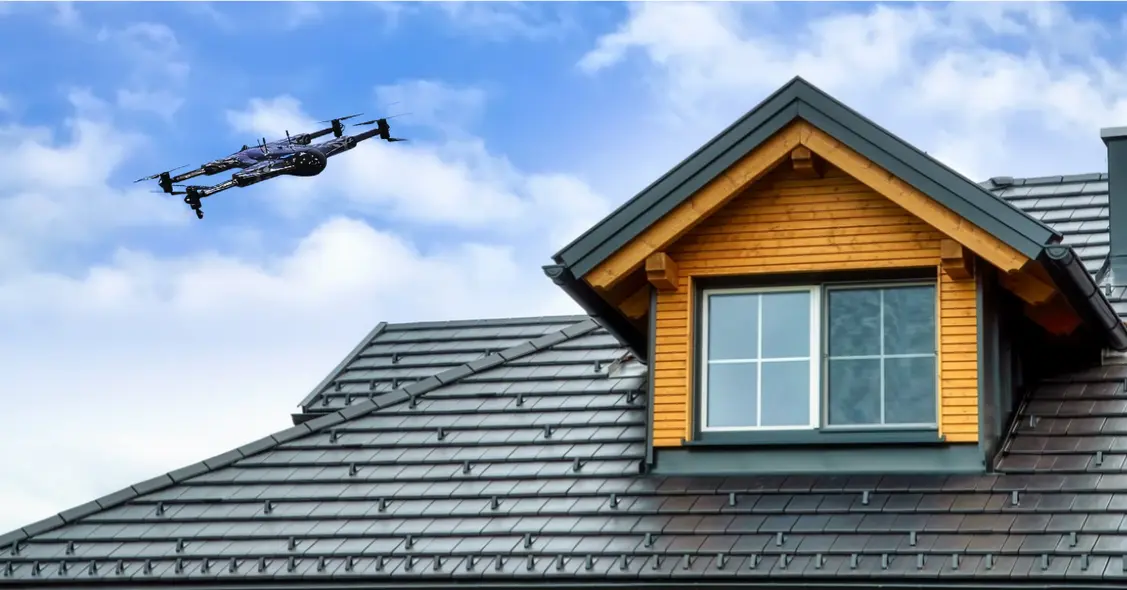
Drones perform comprehensive drone roof inspections without anyone needing to physically step onto potentially unstable or rotting surfaces. This shift to robotic flight keeps the workforce safe while maintaining a very high standard of visual data and reporting.
High-resolution cameras capture every detail from the air, ensuring that no structural flaw goes unnoticed during the inspection. Digital zoom allows the pilot to examine close-up views of damage without flying too near the building.
Meanwhile, drone roof inspections with thermal imaging help reveal hidden water damage or insulation problems that may be invisible to the naked eye. This technology detects temperature variations, highlighting moisture beneath the roof surface or inside the attic area.

Key Features of Modern Drones for Roof Inspections
Modern drones have made roof inspection safer and more efficient for homeowners and professionals alike. The following are the main aspects why drones are an invaluable asset to modern roof checks.
-
Camera Quality
The best drone for roof inspections uses high-resolution cameras to capture every small shingle crack or missing fastener clearly. These visual sensors allow pilots to document structural issues without needing to step onto a dangerous or steep roof surface.
-
Thermal Imaging
Specialized thermal roof inspection tools identify moisture traps and heat loss that are entirely invisible to a standard camera. These radiometric sensors translate heat signatures into maps that help identify where the roof insulation is currently failing.
-
GPS and Mapping
A professional roofing drone can be used to map the area with GPS and aerial imaging to produce 3D models and accurate measurements of the property for inspection reports. Such spatial data is necessary to aid in creating repair estimates and give homeowners a complete overview of the roof condition.
-
Flight Stability
Modern flight stability and automation systems minimize human error by avoiding collisions with trees, chimneys, and overhead electrical power lines. Automated flight paths help ensure consistent collection of data, and the whole inspection process is repeatable and reliable in long-term structural monitoring.
Step-by-Step Process for a Drone Roof Inspection
A professional roof inspection using drones follows a structured process to ensure that every flight is always safe, accurate, and well documented. All these steps are intended to provide accurate findings and bring owners of houses a clear picture of the actual condition of their roofs.
-
Pre-Inspection Planning
Pilots have to review local drone regulations, pay attention to weather forecasts, and create safety zones around the work area. The first step towards a professional aerial survey is to ensure the airspace is legal and is not obstructed.
-
Equipment Check
Make sure the drone for roof inspection works properly, check the batteries, and calibrate the thermal sensors. Bring extra power sources and clean the camera lenses to avoid delays or poor image quality during the job.
-
Aerial Survey
The pilot captures high-resolution images and videos from multiple angles to create a complete visual record of the property. Following a grid pattern ensures that every square inch of the roof is documented for the client’s final review.
-
Thermal Scan
A drone thermal roof inspection is used after the visual scan to identify concealed leakages or moisture in the building. The second pass gives the technical information to locate problems that cannot be viewed with an ordinary camera.
-
Data Analysis
The team prepares comprehensive reports, annotates images, and submits final findings to the insurance company or homeowner. These digital reports contain a map of necessary repairs and act as a permanent record.
Common Challenges and How Drones Overcome Them
Roof inspections are usually subjected to challenges that may slow down the project schedules or affect the quality of the data taken during the inspection. With the adoption of drone mapping technology, teams can overcome these constraints without compromising personnel safety.
- Weather Restrictions and Efficiency: Strong winds or rainy seasons frequently postpone traditional inspections because of the inability to access the structures safely during a manual inspection. This is solved by scheduling flights to the best weather conditions and using the speed of drones to perform tasks more quickly.
- Physical Barriers and Navigation: Trees, power lines, and chimneys create hazardous obstructions to the navigation of human inspectors on the roof. High-level obstacle avoidance sensors and real-time video feeds will enable the pilot to keep a safe distance and also record clear photographic mapping data.
- Battery Life and Coverage Area: Large commercial roofs pose a challenge for limited battery life, and in many cases, need frequent stop and go. Using drones with extended flights or multiple battery sets enables inspectors to cover areas without serious downtimes and delays.
- Data Accuracy and Human Error: Manual checks may not be able to detect little cracks or missing fasteners, and thus, inaccurate reporting and structural failure can occur. AI-assisted analysis and specialized software provide a level of detail that is represented as a digital elevation model (DEM) to ensure that every issue is detected.
Benefits of Using Drones for Roof Inspections
Recent drone mapping technology offers a safer, quicker, and more precise alternative to the traditional manual methods of roof inspection. These advanced tools employ photographic mapping to provide high-resolution data and minimize the operational risks and project cost.
- Safety and Risk Mitigation: Manual climbing on steep or slippery surfaces poses a significant danger of life-altering falls for workers. Keeping feet on the ground protects personnel while simultaneously reducing the liability for the property owner.
- Precision and Digital Records: Manual inspections often miss small problems that cannot be easily detected by the human eye. Digital records give an objective perspective that can be zoomed in on, enhanced, and examined by experts to provide full accuracy.
- Time Saving and Efficiency: Surveying usually consumes hours of manual work to cover a single structure section. Drones can complete these jobs in minutes and contractors can effectively serve more customers per day effectively.
- Cost-Effectiveness and Insurance: High-cost repairs often stem from unidentified issues that lead to major structural damage over time. Identifying problems early and reducing worker insurance claims makes the business more profitable and highly competitive.
Use Cases for Drone Roof Inspections
Residential homes benefit from regular surveys to help identify leaks early, document storm damage, and monitor the natural wear of asphalt shingles. Homeowners can see the condition of their own roof without climbing a ladder.
Commercial properties utilize drones to inspect large or complex roof systems that would be difficult and time-consuming to walk across. Flat roofs on warehouses are perfect candidates for thermal scans to find trapped moisture that ruins expensive internal building insulation.
Insurance inspections use aerial data to document roof conditions accurately for claims processing and to verify the extent of damage. High-resolution photos provide the “before and after” evidence needed to ensure that settlements are fair and based on factual data.
Solar panel or new roofing projects require pre-installation surveys, which depend on drone maps to evaluate roof condition and measurements before installation begins. Being aware of the precise size and shape of the roof helps installers plan the project more accurately.

The Future of Roof Inspections
AI-powered inspections may support predictive maintenance by analyzing how roof wear changes over time using repeated aerial surveys. This data can help contractors estimate maintenance needs based on historical inspection records.
Mapping software can also be used with drone data to build 3D roof models. These models help contractors plan repairs, estimate materials, and visualize project requirements before work begins. They also make it easier to explain the scope of a project to building owners. Thermal roof inspection technology continues to improve as sensors become more detailed and accurate. Higher-resolution thermal cameras help inspectors detect hidden moisture or insulation problems that may not be visible on the surface, allowing teams to locate possible leak sources more effectively.
Conclusion
Drone roof inspections provide a safer, faster, and more accurate way to assess roof condition. Partnering with a professional drone survey company ensures that these inspections are performed efficiently and safely, delivering actionable insights to keep the property dry and secure. By identifying issues early, drones save time for contractors and reduce repair costs for homeowners. Homeowners and contractors should consider drone-based inspections as a smarter, safer way to evaluate roof conditions.