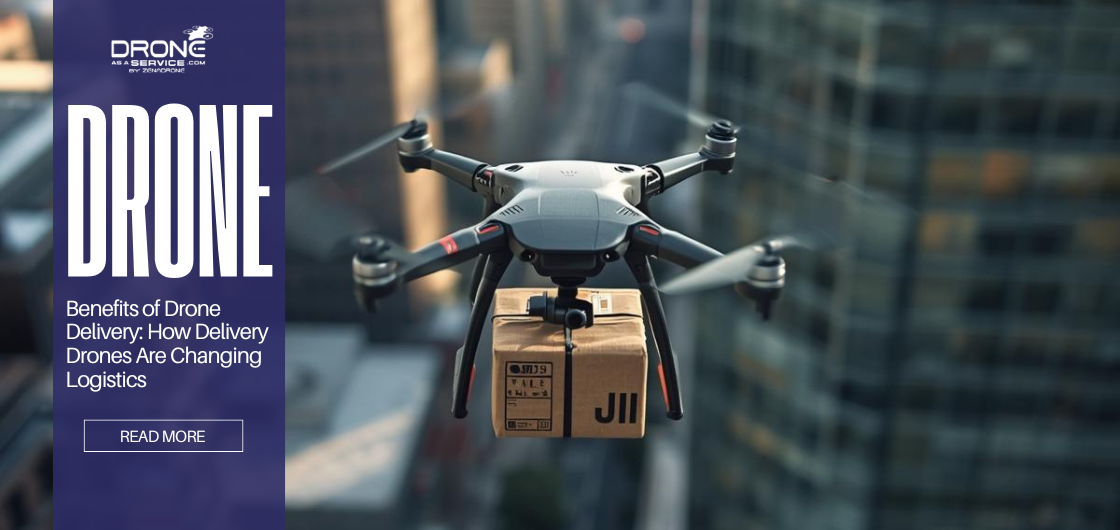
Benefits of Drone Delivery: How Delivery Drones Are Changing Logistics
Introduction
Drone delivery is emerging as a powerful solution for modern logistics challenges. Instead of relying only on road-based vehicles, companies are using drones to transport packages through the air, avoiding traffic congestion and reducing delivery times.
The benefits of drone delivery go beyond speed. Delivery drones help companies lower operational costs, reduce environmental impact, and reach locations that are difficult to serve with traditional vehicles. As technology and regulations continue to evolve, drone delivery is becoming an important part of future logistics systems.
In this blog, we’ll explore the key benefits of drone delivery and explain how delivery drones are improving speed, cost efficiency, and accessibility in modern logistics.
Key Benefits of Drone Delivery
Delivery drones offer several practical advantages over traditional delivery methods. These benefits explain why businesses and logistics providers are increasingly exploring drone delivery services.
Faster Delivery and Shorter Transit Times
One of the main benefits of drone delivery is speed. Drones can travel directly from warehouses to customers without being affected by road traffic, signals, or congestion. This allows companies to complete deliveries in minutes or hours instead of days, which is especially valuable for urgent shipments such as medical supplies and perishable goods.
Lower Operational and Fuel Costs
Drone delivery systems reduce the need for delivery vehicles, drivers, and fuel consumption. Since most delivery drones run on electricity, they cost less to operate than fuel-powered vans and trucks. Over time, this can significantly lower logistics and transportation expenses for businesses.
Environmentally Friendly Delivery
Another major benefit of drone delivery is its positive environmental impact. Electric drones produce fewer carbon emissions compared to conventional delivery vehicles. By reducing fuel usage and traffic congestion, drone delivery supports sustainability goals and helps companies reduce their carbon footprint.
Improved Access to Remote and Hard-to-Reach Areas
Drones can deliver packages to locations that are difficult for vehicles to access, such as rural regions, islands, or disaster-affected areas. This makes drone delivery especially useful for emergency response, healthcare logistics, and last-mile delivery in areas with poor infrastructure.
Better Customer Experience
Drone delivery improves customer satisfaction by offering faster delivery times and more flexible delivery options. Customers benefit from real-time tracking, shorter waiting periods, and fewer failed delivery attempts, which leads to a more reliable delivery experience.
Safer and Contactless Delivery
Drone delivery provides a contactless delivery option, reducing direct human interaction. This improves safety for both customers and delivery staff, particularly when transporting medical supplies or during public health emergencies.
Top Benefits of Drone Delivery at a Glance
-
Faster direct delivery routes
-
Lower fuel and labor costs
-
Reduced carbon emissions
-
Access to remote locations
-
Improved customer satisfaction
-
Safer, contactless delivery
Why Delivery Drones Are Superior to Traditional Delivery Methods
|
Feature |
Delivery Drones |
Traditional Delivery Methods |
|
Delivery Speed |
Fly directly to the destination without traffic delays |
Dependent on road traffic, signals, and congestion |
|
Operational Cost |
Lower fuel and labor costs due to electric operation |
Higher fuel, maintenance, and driver costs |
|
Environmental Impact |
Low carbon emissions and energy-efficient |
High emissions from fuel-powered vehicles |
|
Accessibility |
Can reach remote and hard-to-access areas |
Limited by road infrastructure and terrain |
|
Customer Experience |
Faster delivery and real-time tracking |
Longer delivery windows and higher risk of delays |
|
Safety & Contactless Delivery |
Minimal human contact, safer for medical and sensitive items |
Requires human handling at multiple stages |
|
Scalability for Small Parcels |
Ideal for lightweight and urgent packages |
Better suited for bulk and heavy deliveries |
Challenges of Drone Delivery
Despite its many advantages, drone delivery also comes with certain challenges. One of the main limitations is battery life, which restricts how far a drone can travel in a single flight. This makes long-distance deliveries more difficult compared to traditional vehicles.
Weather conditions such as strong winds, heavy rain, or fog can also affect drone operations and cause delays or flight cancellations. Unlike trucks that can operate in most weather conditions, drones are more sensitive to environmental factors.
Another challenge is regulatory restrictions. In many countries, drone delivery is subject to strict aviation rules related to flight altitude, airspace usage, and safety. These regulations can slow down large-scale commercial adoption.
There are also payload limitations, as delivery drones can only carry lightweight packages. Heavy or bulky items still require traditional delivery vehicles.
Finally, security and safety concerns remain important. Risks such as package theft, signal interference, and technical malfunctions must be managed through better tracking systems, automation, and safety protocols.
Top 5 Drone Delivery Companies that Support Delivery Drones
Commercial drone services are growing in popularity. Retail and logistic companies provide efficient delivery methods with drones. Although delivery drones have restrictions, these companies are pioneering UAV delivery and the future.
Delivery Companies Shaping the Future of Logistics
Zipline
Zipline is a U.S.‑based drone delivery pioneer known for carrying medical supplies like blood, vaccines, and prescriptions to hospitals and clinics in remote regions. Over time, its service has expanded to retail deliveries (for partners like Walmart and Panera Bread), flying thousands of deliveries across continents.
Amazon Prime Air
Amazon’s own drone delivery arm, Prime Air, aims to deliver Amazon packages directly to customers in around 30 minutes. It uses specially designed autonomous drones to fly lightweight parcels and has started limited commercial operations in select U.S. cities, with plans to grow to more markets globally.
Wing (Alphabet/Google)
Wing is the drone delivery subsidiary of Alphabet (Google’s parent company). Its autonomous drones deliver small goods like snacks, coffee, and essentials directly to people’s yards in multiple countries. Wing works with major retailers like Walmart and is expanding rapidly in suburban and urban areas.
UPS Flight Forward
Part of UPS, Flight Forward focuses on integrating drones into traditional logistics networks. It was among the first to get advanced regulatory approval in the U.S. and delivers a mix of medical samples, supplies, and small packages, often working alongside healthcare systems and logistics providers.
Flytrex
Flytrex specializes in drone delivery for suburban neighborhoods, flying food and consumer goods directly to customers’ backyards. It operates in parts of the United States and partners with companies like Uber Eats and DoorDash to bring fast, autonomous delivery to everyday orders.
The Future of Logistics Industry with Drone Delivery Technology
It’s fascinating to think about how drones are reshaping the logistics industry. While legal frameworks and regulations are still catching up, drone delivery by unmanned aerial vehicles (UAVs) has already taken off in several sectors. What began as experimental programs has evolved into real commercial services in many parts of the world.
Drone delivery technology now supports a wide range of applications. In congested urban areas, drones help bypass traffic bottlenecks, and in rural or remote regions they shorten delivery times for critical goods. Transportation and logistics companies are increasingly recognizing the advantages of professional drone services for faster, more efficient delivery.
Emergen Research says “Many businesses are turning to UAVs to improve delivery speed, extend delivery range, and gain a competitive edge. According to industry market research, the global drone delivery service market was valued at USD 520.0 million in 2019 and is forecast to grow to USD 9.51 billion by 2027, expanding at an impressive compound annual growth rate (CAGR) of about 44.2 percent over that period. This rapid projected growth reflects strong demand for faster, automated delivery solutions across e‑commerce, healthcare, and logistics sectors.”